Ron Ayers in conversation with Gillian. Recorded at his home in 2018.
Автор: BrooklandsMemberstv
Загружено: 2024-11-23
Просмотров: 563
Описание:
Ron Ayers, the engineer and aerodynamicist involved in land-speed record-breaking cars and guided missile design died in May aged 92.
Working at the Handley Page company, and then in the guided weapons division of the Bristol Aeroplane Company (now part of BAE Systems), in the 1950s and 60s, the engineer and aerodynamicist Ron Ayers became one of Britain’s most experienced supersonic and high-speed aircraft designers.
Following retirement in 1988, he took on a volunteer role at the Brooklands Museum, Weybridge, and was fascinated to discover, among the aviation archives held there, aerodynamic and wind tunnel work on the prewar generation of land-speed record-breaking cars. This led to Ayers meeting Ken Norris, designer (with his brother Lew) of Donald Campbell’s Bluebird car and jet-powered boat. With these two vehicles, in 1964, Campbell had achieved world records, for land speed of 403.1mph (648.73 km/h), and for water speed of 276.3mph (444.71km/h).
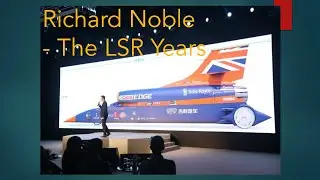
Norris had also been manager of more recent world-record-breaking runs by the self-styled “adventurer and engineer” Richard Noble with Thrust, a car that gained a world record of 633mph (1018.7 km/h) in the Nevada desert in 1983. When Ayers bumped into Noble by chance, while they were both passing through Bournemouth airport in 1992, he found that Noble’s next project was the Thrust SSC, a jet-powered “car” intended to break the sound barrier on land – at a speed of about 767mph. “Don’t be an idiot – you’ll kill yourself,” Ayers said.
The problem is that a land-speed car is an “interface vehicle” running between air and earth. Designing a stable supersonic shape for that regime is quite different to making an aircraft or missile that could achieve supersonic flight safely in free air. On land, where would the supersonic shock waves around the vehicle go and how might they upset it? What would the airflow underneath it be like and how might it lift or destabilise it? There were no precedents. But, intrigued by the challenge, Ayers mulled over the problem and, a little later, got back to Noble saying that he thought he could see a way to do it.
There are no wind tunnels capable of modelling this situation, but between them, they called in favours and all their contacts to win time for day-long simulations that ran on Britain’s most powerful supercomputer (a Cray machine), in parallel with physical experiments with a scale model attached to an 800mph rail-mounted rocket sledge at the Defence Research Agency’s establishment at MOD Pendine in Wales.
The research paid off, and on 15 October 1997 the RAF pilot Wg Cmdr Andy Green finally achieved a supersonic world record of 763.035mph (1,227.986 km/h) in Thrust SSC – a record that still stands.
You can read Ron's fascinating obituary published in The Guardian here
https://www.theguardian.com/technolog...
BMtv recorded this conversation at his home in 2018.
BMtv is part of Brooklands Museum www.brooklandsmuseum.com
Повторяем попытку...

Доступные форматы для скачивания:
Скачать видео
-
Информация по загрузке: