Santur - Turkish Classical Music Instruments
Автор: Turkish Culture
Загружено: 2023-10-24
Просмотров: 656
Описание:
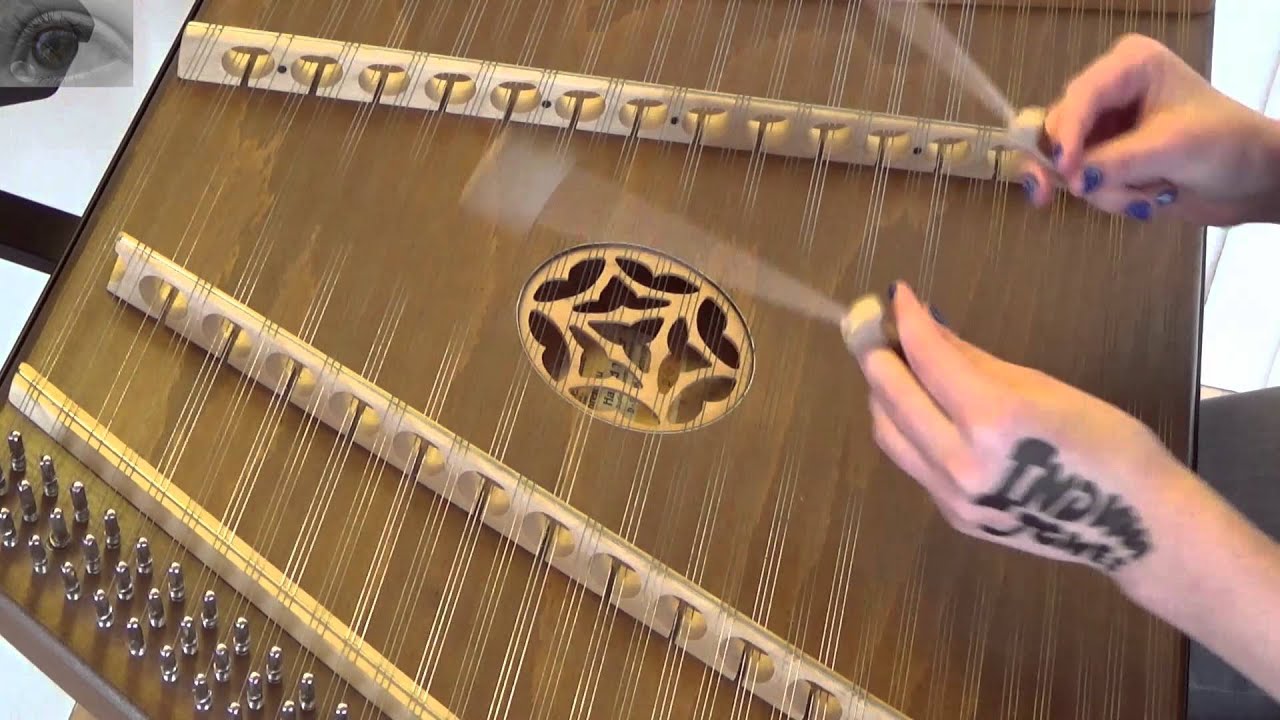
The santur, also known as santoor or santour, is a hammered dulcimer with its origins in Iran. It has a rich history dating back to ancient Babylon and Assyria, as depicted in historical documents. Over time, musicians modified its design and created various musical scales and tunings. The original santur was constructed from wood and stone and had strings made from goat intestines. This instrument influenced the development of several other musical instruments, including the harp, yangqin, harpsichord, qanun, cimbalom, and hammered dulcimers.
The name "santur" possibly comes from the Persian "sanṭīr," a term derived from the Greek "ψαλτήριον" (psalterion). An Aramaic form of the word, "psantērīn," is mentioned in the Book of Daniel.
The santur is played with feather-weight mallets called mezrabs, held between the thumb, index, and middle fingers. A traditional Persian santur typically features two sets of nine bridges, offering approximately three diatonic octaves. The right-hand strings are made of brass or copper, while the left-hand strings are made of steel. The instrument's 18 bridges divide it into three sections, each containing four strings tuned in unison. This setup provides 27 different pitches. The Persian santur is tuned to various diatonic scales using 1/4 tones, which are organized into 12 modes known as "dastgahs" in Persian classical music.
Similar instruments exist in different cultures, such as the Indian santoor, which is wider and has more strings, and the Eastern European cimbalom, used in various folk and traditional music styles. Another regional variant is the Iraqi santur, characterized by its trapezoid shape, walnut body, and 92 steel or bronze strings. It plays a significant role in the classical Maqam al-iraqi tradition and is considered fully chromatic, allowing for maqam modulations. The Iraqi santur is associated with regions like Iraq, Syria, India, Pakistan, Turkey, Iran, Greece, and Azerbaijan. It has had a historical influence on musical traditions in Europe and China.
Повторяем попытку...

Доступные форматы для скачивания:
Скачать видео
-
Информация по загрузке: