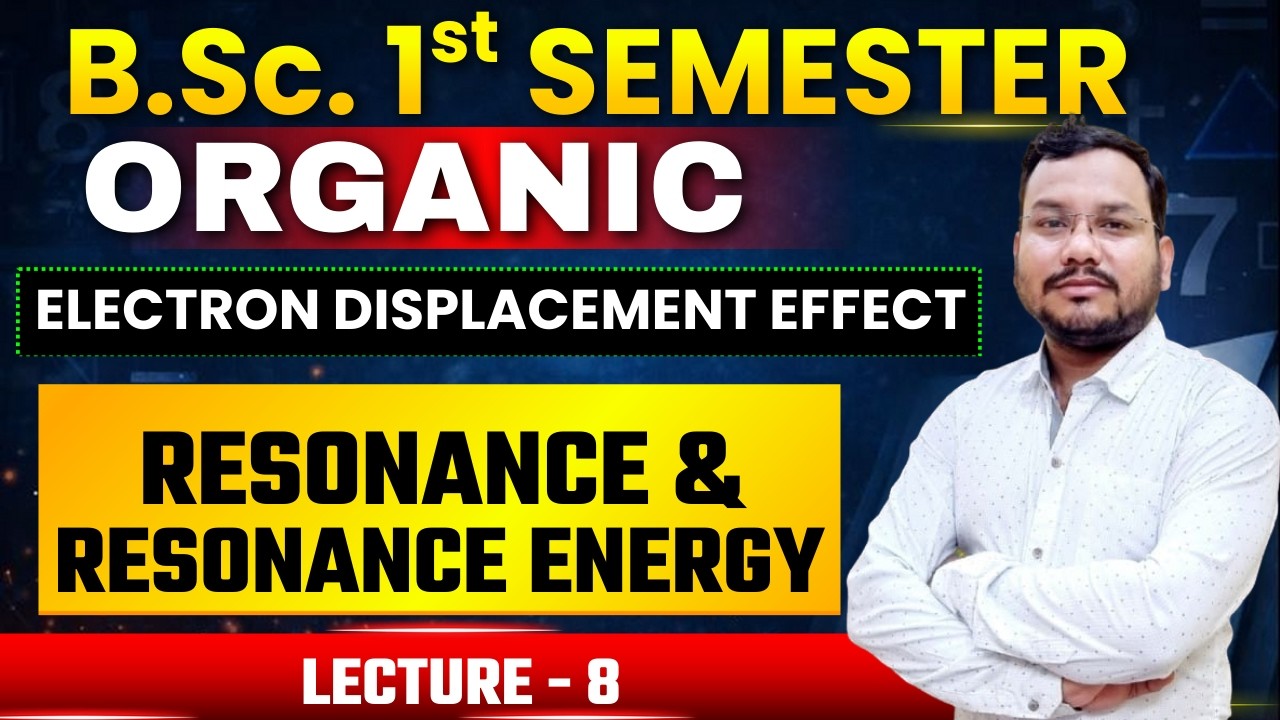
Anti markovnikoff rule | Addition reactions of alkenes | bsc 1st semester organic chemistry
Автор: Chemical Science by Pankaj Sir
Загружено: 2026-02-26
Просмотров: 66
Описание:
Anti-Markovnikov Rule Or Peroxide Effect
The Anti-Markovnikov rule explains the orientation of addition of hydrogen halides mainly HBr, to unsymmetrical alkenes in the presence of peroxides.
According to this rule:
In the presence of peroxide the halogen attaches to the carbon atom having more hydrogen atoms and hydrogen attaches to the carbon having fewer hydrogen atoms more substituted carbon
This is opposite to the Markovnikov rule, therefore it is called Anti-Markovnikov addition.
Why Does This Happen?
The reaction follows a free radical mechanism instead of a carbocation mechanism.
Peroxide breaks to form free radicals.
These radicals initiate a chain reaction.
A more stable free radical intermediate is formed during the reaction.
As a result, bromine adds to the less substituted carbon.
This effect is also known as the Peroxide Effect or Kharasch Effect.
Important Points
The anti-Markovnikov addition occurs only with HBr, not with HCl or HI.
Peroxide must be present.
The reaction follows a free radical.
The Anti-Markovnikov rule is important in organic chemistry because it helps predict the major product formed during addition reactions of alkenes in the presence of peroxides. It is commonly asked in BSc 1st and 2nd year Organic Chemistry examinations.
Повторяем попытку...

Доступные форматы для скачивания:
Скачать видео
-
Информация по загрузке:





![[LIVE] Bez litości. Tomasz Szwejgiert, Jan Piński na żywo](https://imager.clipsaver.ru/fzQScfySLig/max.jpg)