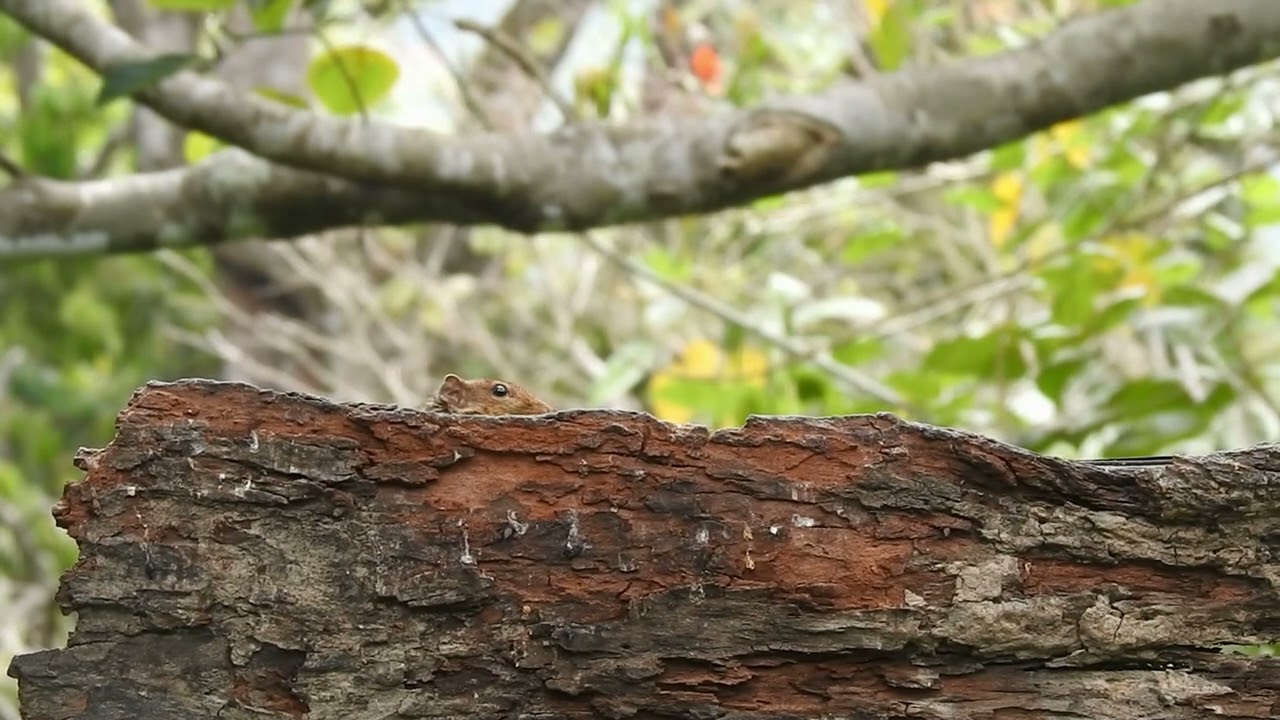
Jungle Palm Squirrel in Munnar | Small Mammals of the Western Ghats Rainforest
Автор: Think Wildlife Foundation
Загружено: 2025-11-26
Просмотров: 20
Описание:
Tucked within the lush greenery of Munnar's montane rainforest, the agile and often-overlooked Jungle Palm Squirrel thrives high in the canopy and forest edges of the Western Ghats—a globally recognized biodiversity hotspot. In this video, we take you deep into the forests of Munnar to observe this tiny but ecologically vital squirrel, while exploring its ecology, geographical range, conservation status, and the threats it faces in the wild.
Unlike the vibrant and large Malabar Giant Squirrel or Indian Giant Squirrel, the Jungle Palm Squirrel (Funambulus tristriatus) is a small, striped mammal that plays a critical role in seed dispersal and insect control within India’s complex forest ecosystems. Although less celebrated, this squirrel is a vital component of Indian wildlife, particularly in the wildlife hotspots of the Western Ghats.
🟢 Ecology and Behavior
The Jungle Palm Squirrel is diurnal, meaning it's most active during the day. It is frequently spotted darting between trees or chirping loudly from branches, its call blending into the symphony of forest sounds. Although smaller than its cousin, the Malabar Giant Squirrel, it shares many traits: an arboreal lifestyle, frugivorous diet, and territorial behavior.
This species plays a key role in biodiversity conservation, helping regenerate forests by dispersing seeds and maintaining ecological balance. Its adaptability to semi-evergreen and evergreen forests, along with its insectivorous tendencies, make it an indicator of forest health in the Western Ghats.
🌍 Where It's Found
The Jungle Palm Squirrel is endemic to southern India, mainly in the Western Ghats—especially in Kerala, Tamil Nadu, and Karnataka. In Munnar, these squirrels are commonly found in forest patches, tea estate fringes, and near human settlements that still retain dense canopy cover.
⚠️ Conservation and Threats
Despite being relatively common, this mammal is increasingly affected by habitat fragmentation, monoculture plantation expansion, and road development in the Western Ghats. These changes disturb ecological corridors, reduce food availability, and expose squirrels to predators.
As with the more iconic Malabar Giant Squirrel, whose striking colors and calls (listen for the Malabar Giant Squirrel sound or distinctive Malabar Giant Squirrel call) often draw attention, the Jungle Palm Squirrel is also threatened by a loss of habitat. Protecting these species requires a broader view of biodiversity conservation, embracing not just charismatic megafauna but the smaller, quieter contributors to our ecosystems.
🎒 Wildlife Watching in Munnar
Visit from October to March for clear views and active wildlife
Early mornings are best for spotting squirrels in motion
Look out for both giant squirrels and palm squirrels along the same forest trails
Bring binoculars and a quiet approach to observe behavior closely
📌 This video is part of our series on mammals of India, showcasing the lesser-known but ecologically essential species that define the wildlife of India. If you love Indian wildlife, rainforest ecology, and biodiversity, this is a must-watch!
👉 Don’t forget to like, share, and subscribe for more stories from wildlife hotspots across India.
#squirrel #malabargiantsquirrel #indiangiantsquirrel #giantsquirrel #malabargiantsquirrelsound #malabargiantsquirrelcall #munnar #westernghats #biodiversity #biodiversityhotspot #conservation #wildlife #mammamls #mammalsofindia #wildlifeofindia #Indianwildlife #rainforest #ecology #biodiversityconservation #wildlifehotspot
Повторяем попытку...
Доступные форматы для скачивания:
Скачать видео
-
Информация по загрузке:


