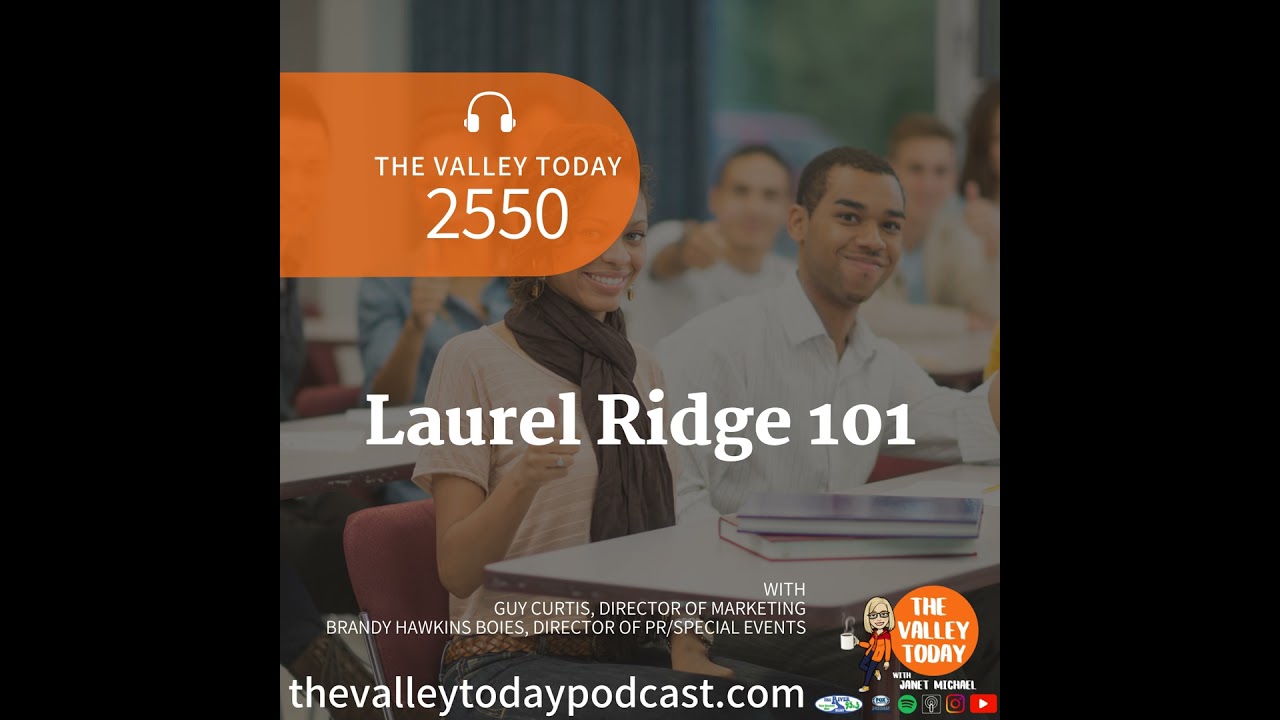
Laurel Ridge 101
Автор: Java Media
Загружено: 2026-01-08
Просмотров: 1
Описание:
Laurel Ridge Community College (https://laurelridge.edu/) isn't just accepting applications—it's actively dismantling the barriers that keep people from pursuing their educational dreams. In this episode of The Valley Today (https://thevalleytodaypodcast.com/) , host Janet Michael talks with Guy Curtis, the college's Director of Marketing, and Brandy Hawkins Boies, Director of PR and Special Events, to explore how accessible higher education has become in the Shenandoah Valley.
The conversation reveals a striking truth: whether you're a high school junior, a parent returning to the workforce, a professional seeking advancement, or even a retiree looking for a new challenge, Laurel Ridge has carved out a space for you. Moreover, the college has systematically addressed the most common objections that prevent people from walking through their doors.
No Prerequisites, No Judgment
"You literally have to know nothing about college to get started," Brandy emphasizes, addressing one of the most pervasive fears potential students harbor. She encourages prospective students to ignore the academic jargon and forget about needing to sound scholarly. Instead, the college meets people exactly where they are.
Throughout her tenure at Laurel Ridge, Brandy has witnessed an extraordinary range of students succeed. "I've seen valedictorians graduate from high school and come here to Laurel Ridge," she explains. "We've also seen individuals that have been through unimaginable struggles in their life—maybe they took a wrong turn or maybe life just was very unkind to them." The common thread? Once these individuals found the courage to walk through the door, the college took their hand and guided them toward success.
Furthermore, age presents no barrier whatsoever. The college serves everyone from dual-enrolled high schoolers to graduates in their eighties. As Brandy notes, "There is no age limit here at Laurel Ridge at all."
Pathways That Make Sense
Guy Curtis highlights one of the college's most valuable features: its pathway system. Rather than forcing students to commit to a specific career before they're ready, Laurel Ridge offers structured pathways that help students explore their options while making progress toward a credential.
These pathways align with in-demand careers in the region, ensuring that graduates find relevant employment opportunities. Additionally, the programs remain "future-proof" in an era of rapid technological change. Guy points to healthcare, IT, skilled trades, advanced manufacturing, engineering, and education as fields where Laurel Ridge prepares students for long-term, rewarding careers with meaningful wages.
For traditional students planning to transfer to a four-year institution, Laurel Ridge provides an ideal starting point. However, the college equally serves those seeking quick certifications to re-enter the workforce or gain a promotion. This flexibility allows the institution to meet diverse needs within a single community.
The Financial Reality: Surprisingly Affordable
When Janet raises the inevitable question about cost, Guy delivers encouraging news. Laurel Ridge charges approximately one-third the price of most four-year institutions. Beyond this baseline affordability, however, numerous funding sources make education even more accessible.
Multiple Funding Streams
The college helps students navigate a complex landscape of financial support, including:
Federal financial aid provides the foundation for many students. Meanwhile, G3 tuition assistance (https://laurelridge.edu/g3-programs-a...) targets high-demand fields like healthcare, IT, education, engineering, and public service, helping Virginians pursue careers that employers desperately need to fill.
Although Fast Forward funding has faced reduced state support due to its popularity, local entities have stepped up to fill the gap. The Winchester Economic Development Authority now offers scholarships for city residents, while the Frederick County Economic Development Authority contributes additional funding. Other sources include the Hazel Family Fund, the Building the Future Fund, and various locality scholarships throughout the region.
Remarkably, families of four earning up to $128,000 annually—400% of the poverty rate—typically qualify for classes at no cost through G3 and other funding sources. Guy emphasizes that many eligible students never come forward because they assume they won't qualify. "Asking for someone to help you navigate those options is the first big step," he advises.
The Dual Enrollment Advantage
High school students gain an even more compelling opportunity. Juniors and seniors can earn their first 30 credits at no charge through dual enrollment. This head start not only saves money but also accelerates degree completion.
Guy explains the strategic advantage: "If you get those 15 credits to start with at no cost within your high school, ...
Повторяем попытку...
Доступные форматы для скачивания:
Скачать видео
-
Информация по загрузке: