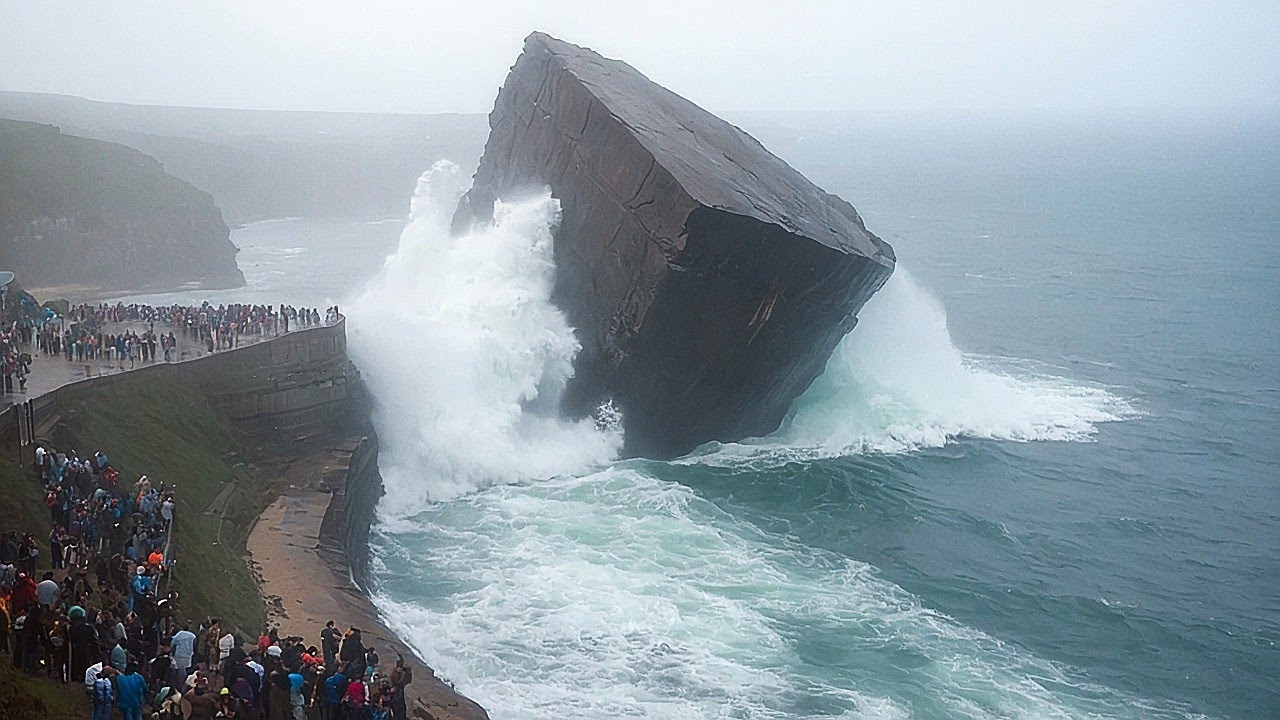
Magnesium Plant Fire During 1955 Quinebaug River Flood in Putnam Connecticut
Автор: markdcatlin
Загружено: 2011-01-15
Просмотров: 9168
Описание: This is mostly clipped from the video "And The Next Morning, There Was Sand Everywhere" described in detail below. On August 19, 1955, Putnam, Connecticut was devastated by floods from torrential downpours caused by two hurricanes, which hit within the span of a week and dropping a total of more than 20 inches of rain. Flooding occurred in many of the state's rivers, including the Quinebaug River. The resulting torrent of water destroyed homes, businesses and factories, including the the Belding Hemingway Magnesium Plant. Powder magnesium reacting with water created fires and explosions which destroyed the plant. Gaping holes in the side of the Belding Hemingway Magnesium Plant unleashed the barrels of volatile magnesium inside. The barrels floated downriver, crashing into bridges and buildings, creating sparks that ignited the barrels and set fires. Floating magnesium barrels burst, lighting up the night. For three days the town was rocked by these explosions, day and night. After they subsided, our area was covered with white flakes. Magnesium is a light silvery metal. In dust or powder form it is a pyrophoric (a substance that will ignite spontaneously in air) and burns with an intense white flame. Magnesium metal and its alloys are explosive hazards; they are highly flammable in their pure form when molten or in powder or ribbon form. Burning or molten magnesium metal reacts violently with water releasing hydrogen gas. Water cannot be used to extinguish magnesium fires; the hydrogen gas produced will only intensify the fire. This property was used in incendiary weapons used in the firebombing of cities in World War II, the only practical civil defense being to smother a burning flare under dry sand to exclude the atmosphere. On burning in air, magnesium produces a brilliant white light which includes strong ultraviolet. Thus magnesium powder (flash powder) was used as a source of illumination in the early days of photography. Magnesium powder is used in the manufacture of fireworks and marine flares where a brilliant white light is required. Flame temperatures of magnesium and magnesium alloys can reach 3,100 °C (5,610 °F). The bright white light produced by burning magnesium contains ultraviolet light that can permanently damage the retinas of the eyes. For additional information on magnesium (Mg) go to the Chemicol Website at http://www.chemicool.com/ . Putnam Redevelopment Agency for its 50th anniversary produced a video on the Great Flood of 1955, titled "And The Next Morning, There Was Sand Everywhere" The video combines old newsreel footage with modern day reminiscences of the August 19, 2005 flood which flashed through towns along the Quinebaug River and through the river valleys of Connecticut, Massachusetts and Rhode Island. WINY-AM's Gary Osbrey, Putnam Town Historian Bob Miller, and others provide the video's commentary. The video is available for viewing and for purchase at http://www.putnamct.us/1955-flood-of-... .
Повторяем попытку...

Доступные форматы для скачивания:
Скачать видео
-
Информация по загрузке:


![Эффект Джанибекова [Veritasium]](https://imager.clipsaver.ru/N9HlQ-XVnFk/max.jpg)