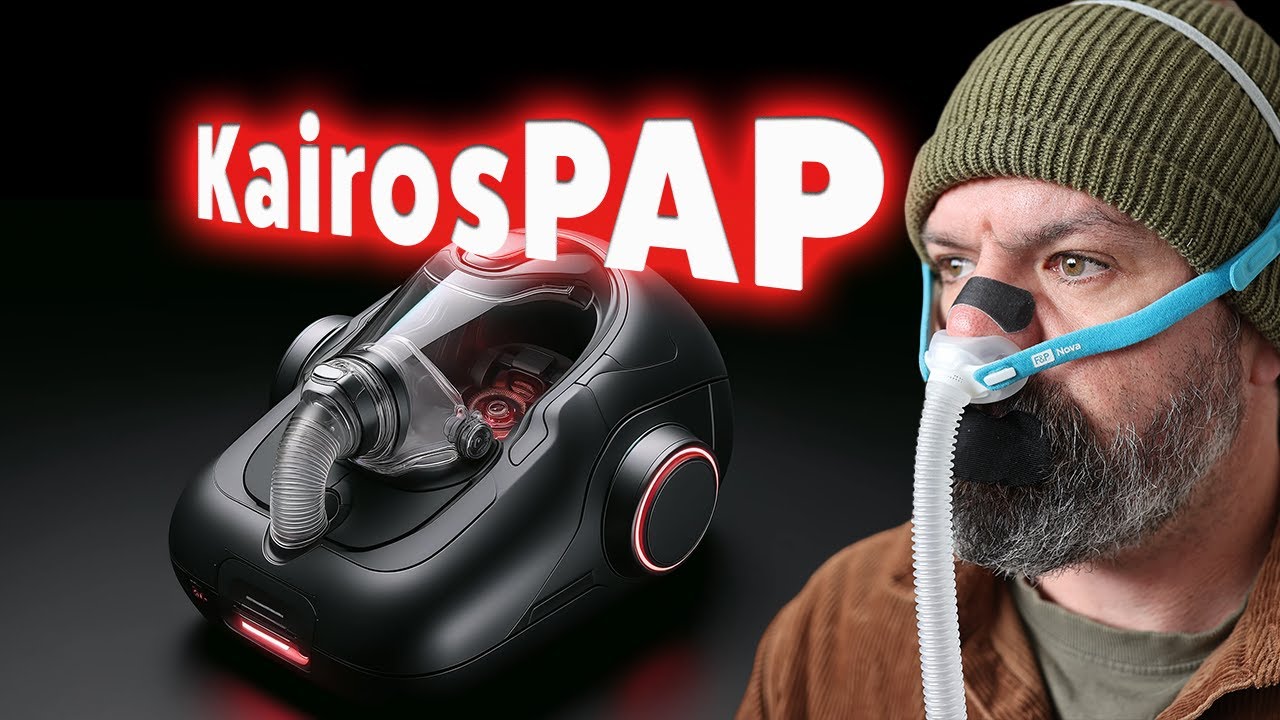
NEW KairosPAP (KPAP): The Future of Sleep Apnea Treatment
Автор: CPAP Reviews
Загружено: 2024-05-29
Просмотров: 11393
Описание:
The talk discusses the evolution of CPAP therapy for sleep apnea and introduces the new KairosPAP algorithm (KPAP) aimed at improving CPAP comfort and effectiveness. Despite advancements in CPAP devices, efforts to enhance pressure delivery comfort have focused on lowering expiratory pressure, which hasn't significantly improved adherence. Lowering expiratory pressure compromises airway patency and can contribute to treatment-emergent central sleep apnea (Texa). Higher inspiratory pressure than expiratory pressure can exacerbate these issues, leading to hyperventilation and central apneas. Lowering inspiratory pressure is proposed as a potential solution, as obstructive sleep apnea patients may not require elevated inspiratory pressure, and it may be more comfortable for patients to control their own inspiratory flow. The introduction of devices like VCOM, which lower inspiratory pressure, has shown promise in reducing unintentional leak without significant impact on pressure delivery.
Highlights
CPAP therapy for sleep apnea has seen advancements, but improving comfort remains a challenge.
Efforts to enhance comfort by lowering expiratory pressure have not significantly improved adherence.
Lowering expiratory pressure may compromise airway patency and contribute to treatment-emergent central sleep apnea (TECSA).
Higher inspiratory pressure than expiratory pressure can exacerbate issues like hyperventilation and central apneas.
Lowering inspiratory pressure is proposed as a potential solution, as obstructive sleep apnea patients may not require elevated inspiratory pressure.
Devices like VCOM, which lower inspiratory pressure, have shown promise in reducing unintentional leak without significant impact on pressure delivery.
Keywords
Sleep apnea treatment, CPAP therapy, KairosPAP algorithm, pressure delivery, central sleep apnea, VCOM, unintentional leak.
This live one-hour webinar will describe KairosPAPTM (KPAPTM), a novel way to deliver the minimum pressure needed across the respiratory cycle to keep the pharyngeal airway patent during sleep.
Kairos is a Greek word meaning “at the right time,” and, in this context, it means positive airway pressure at the right time across the respiratory cycle.
First, previous attempts to improve CPAP comfort (BiPAP, C-Flex, and EPR) will be discussed and why they negatively affected airway patency and did not improve adherence.
Next, the concept of reducing IPAP to less than EPAP will be addressed first with a full discussion of the effect of a simple resistor (V-Com, approximately 2 cm H20/L/s) placed in the PAP tubing, which lowers IPAP by about 2 cm H20. This resistor did not affect PAP efficacy, reduced leak, improved adherence, and eliminated TECSA when present.
Finally, the full KPAPTM algorithm will be explained, followed by a discussion of ongoing studies assessing its effect on PAP efficacy and perceived comfort.
The presentation will be followed by a Q&A session.
About the Speaker
David P. White, MD, was the first Gerald E. McGinnis Professor of Medicine at Harvard Medical School, where he trained many of today’s leaders in sleep medicine. He is a former editor-in-chief of the journal SLEEP, president of the American Academy of Sleep Medicine, and chairman of the NIH's sleep research task force. He also served as Chief Medical Officer for Respironics and Philips Respironics until 2013. With 300 publications, he continues his primary research at Harvard focusing on the pathophysiology of sleep breathing disorders. t
Повторяем попытку...
Доступные форматы для скачивания:
Скачать видео
-
Информация по загрузке:


