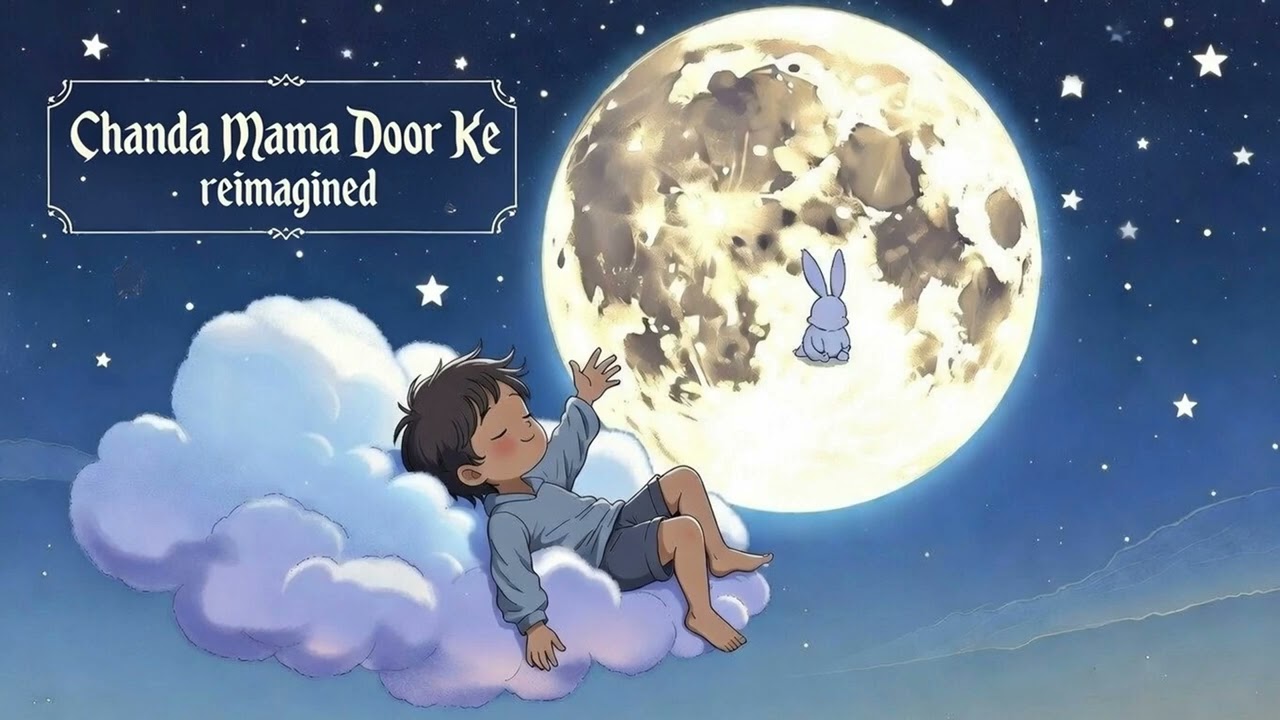
Chanda Mama | Reimagined | चंदा मामा दूर के, पूए पकाएँ
Загружено: 2026-03-03
Просмотров: 14
Описание:
The 1955 Hindi film Vachan (meaning "promise" or "word"), directed by Raj Rishi and produced by Devendra Goel, is a poignant family drama marking the debut of composer Ravi and Rajendra Kumar's first major role. Starring Geeta Bali as Kamla, Rajendra Kumar as Kumar, and Balraj Sahni as Prem, it explores themes of familial duty, sacrifice, and unwavering commitments amid poverty.
The plot centers on Kamla, a young woman living in a modest Uttar Pradesh town with her widowed father, Dinanath (an accountant), and two brothers: college student Kumar and schoolboy Kishore (12). Dinanath's life revolves around securing Kamla's marriage to her wealthy lover, Prem, and ensuring his sons' education. As Dinanath's eyesight fails, he errs at work and loses his job, but convinces his employer, Laxmidas, to hire Kumar post-graduation. Tragedy strikes when Dinanath dies, leaving the family destitute. Kamla sacrifices her love for Prem to marry Laxmidas, securing Kumar's job and the family's future. Kumar, now employed, faces moral dilemmas but upholds his father's "vachan" by prioritizing family honor. The narrative unfolds with emotional twists, including Kumar's romance with Neelima (Laxmidas's daughter) and resolutions emphasizing integrity and sibling bonds, culminating in a heartfelt reunion.
The lullaby "Chanda Mama Door Ke," sung by Asha Bhosle with lyrics by Prem Dhawan, appears early in the film during a tender family moment. Kamla sings it to young Kishore as a bedtime song, evoking warmth amid their hardships. This placement establishes the film's innocent, nurturing tone, contrasting the looming struggles and highlighting maternal/sisterly care in a patriarchal setup.
The song's meaning is rooted in Indian folklore, personifying the moon ("Chanda Mama," or Moon Uncle) as a distant, benevolent figure baking sweets (pue with boor/jaggery) for the child ("Munna"). It consoles over a broken bowl, promises new joys, and imagines fantastical moon adventures like flying saucers, star games, and returning home content. Symbolically, it represents comfort, resilience, and the magic of imagination to overcome everyday woes.
Philosophically, the song embodies Vedantic ideas of impermanence and illusion (maya), where the distant moon mirrors unattainable dreams yet offers solace through fantasy. It reflects existential themes: the child's sulk over breakage symbolizes life's fleeting pains, resolved by familial love and hope. In the film's context, it underscores dharma (duty) and the power of promises—Dinanath's "vachan" echoes the moon's reliable glow, teaching that true fulfillment lies in selflessness and inner joy, not material proximity. Extended versions amplify whimsy, reinforcing innocence as a philosophical balm against adversity, aligning with Indian thought on ananda (bliss) through simple wonders.
Overall, Vachan weaves the song into its fabric as a beacon of hope, philosophically urging viewers to honor bonds and find magic in the mundane, transcending poverty through enduring love and imagination.
Повторяем попытку...
Доступные форматы для скачивания:
Скачать видео
-
Информация по загрузке: