Retrospective Change of Use Planning Appeal Approved | Wealden Council Case Study
Автор: HEAL Planning and Developments
Загружено: 2026-01-20
Просмотров: 15
Описание:
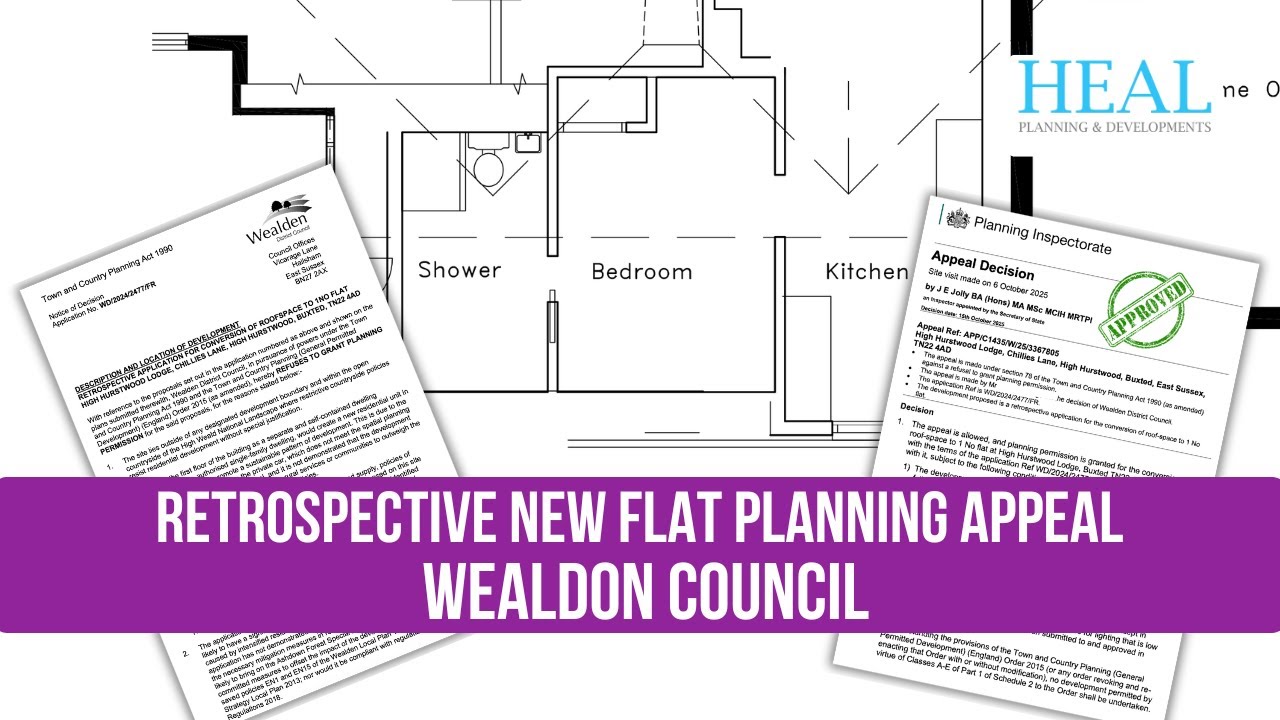
This planning appeal case study explains how HEAL Planning successfully overturned a planning refusal issued by Wealden District Council for the retrospective change of use of roof space into a one-bedroom dwelling within the rural area of High Hurstwood, East Sussex. The case provides a detailed and practical insight into how planning appeals can succeed in sensitive countryside locations, including those close to nationally protected landscapes.
The homeowner contacted HEAL Planning after receiving a refusal notice from the council in December. As with all cases, the process began with a free, no-obligation consultation carried out by one of HEAL Planning’s specialist Planning Appeal Assessment Officers. During this initial review, the planning history, refusal reasons, and relevant local and national planning policies were carefully assessed. This allowed us to confirm that there were strong material grounds to challenge the refusal through the Planning Inspectorate.
Following the consultation, the client was provided with a detailed written appeal proposal, setting out the planning strategy, risks, and prospects of success. This ensured the client could proceed with full clarity and confidence before submitting the appeal.
Wealden District Council refused the application for two primary reasons. The first related to the site’s location outside defined development boundaries, within open countryside and the High Weald National Landscape. The council considered the new dwelling to be unsustainable, citing reliance on private car use, limited access to services, and an alleged lack of meaningful contribution to housing supply. Several local plan policies and national planning policies were referenced to support this position.
The second refusal reason concerned the proximity of the site to the Ashdown Forest Special Protection Area and Special Area of Conservation. The council argued that the additional dwelling could increase recreational pressure on the protected landscape, potentially affecting sensitive habitats and species. At application stage, no mitigation measures had been secured, leading the council to conclude that the proposal conflicted with the Habitats Regulations.
The appeal was submitted to the Planning Inspectorate, and a site visit took place in early October. The Inspector identified the main issues as whether the location was suitable and sustainable for a new dwelling and whether the proposal would harm the integrity of the Ashdown Forest designations.
While acknowledging the rural nature of the site and the limited opportunities for walking and cycling, the Inspector took a balanced and realistic view. The Inspector noted that the dwelling was modest in size, created entirely from existing roof space, and would result in only a limited increase in vehicle movements compared to the existing situation. This weighed in favour of the proposal.
Crucially, the Inspector recognised that the new flat would still support local rural services and would contribute to housing provision within a district experiencing housing supply pressures. These social and economic benefits were considered significant in the planning balance.
An Appropriate Assessment was carried out to address the impact on the Ashdown Forest SPA and SAC. During the appeal process, a Unilateral Undertaking was submitted to secure financial contributions towards Suitable Alternative Natural Greenspace and Strategic Access Management and Monitoring measures. Natural England raised no objections, and the council confirmed that its concerns were resolved once mitigation was secured. The Inspector concluded that the integrity of the protected sites would not be harmed.
Taking all matters into account, the appeal was allowed and planning permission granted, subject to conditions including lighting controls and restrictions on future permitted development rights. This case highlights the importance of detailed planning arguments, understanding rural policy, and proactive mitigation when dealing with environmentally sensitive sites. It also demonstrates how retrospective change of use planning appeals can succeed with the right professional support.
#PlanningAppealSuccess #ChangeOfUsePlanning #RuralPlanningAppeal
Повторяем попытку...
Доступные форматы для скачивания:
Скачать видео
-
Информация по загрузке:


![GOSPODARKA WOJENNA ROSJI - CZY PUTIN JUŻ PRODUKUJE CZOŁGI ZAMIAST LODÓWEK [BOJKE]](https://image.4k-video.ru/id-video/g2t5npoRfBA)


![Massive Attack • Portishead • Thievery Corporation- Special Coffeeshop Selection [Seven Beats Music]](https://image.4k-video.ru/id-video/YPJD1hF2kIY)


