Shame, Survival & Kabuki: Untold Stories of Japanese POWs in U.S. Camps
Автор: ARIA'S HISTORY TELLING
Загружено: 2025-07-05
Просмотров: 1646
Описание:
Note: every content used in this video is for educational & historical purpose ⚠(none-political, doesn't support Violence, or any ideology)⚠, All videos are based on publicly available information unless otherwise noted. Remember to check the comments for full script, sources, and more images and videos that were used to create this video.
Shame, Survival & Kabuki: Untold Stories of Japanese POWs in U.S. Camps
4:17 End screen
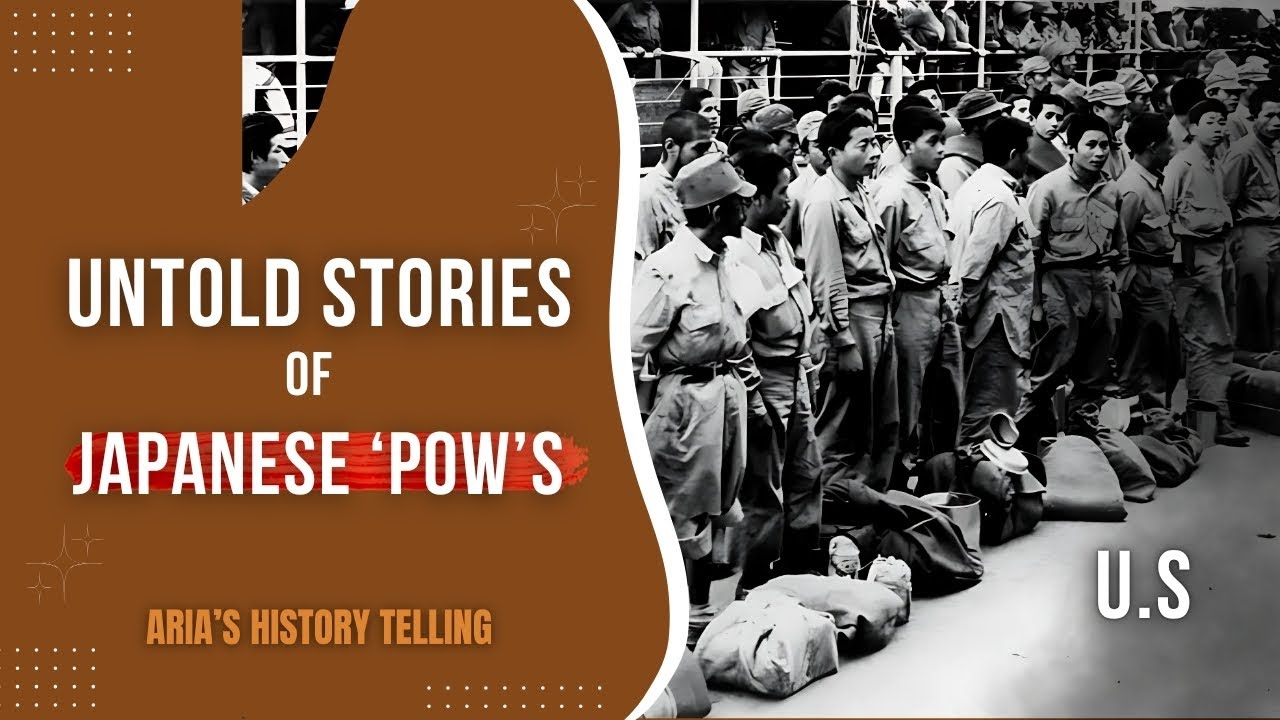
Imagine emerging from a mud-caked cave into bright sunlight, expecting rifle fire. Instead, American soldiers showered you with candy and cheers. That was the moment Japanese soldier Yoshikuni Masuyama surrendered on Iwo Jima – later writing that it brought “a thrill of relief but also an overwhelming sense of humiliation”. In Japan’s warrior code, surrender was unthinkable – soldiers were taught to die rather than be captured. Masuyama believed he had “brought shame and dishonor” on himself by surviving. Only 35–50 thousand Japanese soldiers surrendered in WWII, reflecting how deeply indoctrinated they were.
Yet those who were captured often received humane treatment. Masuyama, who arrived at just 85 pounds, was taken immediately to a medical tent for water and care. He soon recovered to 130 pounds under U.S. supervision. Like him, many POWs were astonished at the quality of food and medical attention they received. In all, the U.S. interned roughly 5,400 Japanese POWs in camps across America.
Camp life could still be harsh. Overcrowding was common: a 1944 report from San Francisco’s Angel Island found 528 Japanese POWs in one barracks, with only a dozen spare beds. Disease spread easily – Masuyama fell ill with amoebic dysentery on Iwo Jima. When Japan surrendered, an Army ship carried nearly 700 Japanese POWs out of San Francisco (including 100 hospital cases and even urns of ashes). Still, American camps avoided the worst horrors – they generally observed international rules.
The mental toll ran deep. Masuyama’s first night was agony: alone on a cot, he lay “unable to sleep, feeling an overwhelming sense of defeat and shame”. Some transferred Japanese officers kept old hierarchies alive and even beat enlisted men, forcing U.S. guards to fire warning shots to stop fights. Masuyama wrote that being fingerprinted and interrogated made him feel “like a real criminal”. The prisoners truly “suffered mental anguish and feared what awaited them” at home.
Yet amid the hardship, prisoners built resilience and community. Prisoners who could draw sketched Mt. Fuji and geishas on scraps of paper – trading art to guards for cigarettes. Red Cross sports gear let them play baseball and soccer. Japanese POWs even staged kabuki-style theater: at Camp McCoy (Wisconsin) they performed traditional plays several times a month, complete with handmade costumes. They folded origami, painted paper flowers and held mahjong games – small comforts that buoyed morale behind the wire.
Remarkably, some POWs found new purpose. Educated men like Masuyama were sent to a special hut to write Japanese-language newsletters for soldiers back home – he noted the meals there (with rice) were as good as the Americans’. He also used his English to help others: once he asked guards for extra food for weaker comrades, and the request was granted. Straus even reports that a few POWs, seeing defeat as inevitable, “assisted the Allied war effort” to end the conflict.
When it was over, the POWs returned quietly. In postwar Japan, survivors were often scorned for “not having died for their Emperor”. Many felt they had lost honor by living – Straus notes many POWs even “begged their captors to kill them” early on. Few ever spoke of these years – after all, “few Japanese POWs wrote memoirs” – leaving this chapter largely untold.
These untold stories remind us of war’s full human cost. The Japanese soldiers held in American camps endured sickness, hunger and crushing cultural shame, yet still found ways to survive with dignity. Remembering them honors their struggles and teaches a timeless lesson: honor and humanity can persist even behind the darkest barbed wire.
My War by Yoshikuni Masuyama (memoir retold by his daughter, Miyuki Hegg) – Gardner Library
Vault #22: Prisoners of War – Angel Island Immigration Station Foundation
“1941 Capture of the First Japanese POW of World War II” – Hawaii Dept. of Defense
“Japanese Flag” exhibit – National Museum of the Pacific War
Anguish of Surrender: Japanese POWs of World War II – Ulrich Straus (University of Washington Press)
-“Japanese prisoners of war in World War II” – Wikipedia
images & video:
(All the images or videos have been edited by me)
Thank you for watching with us....:)
#japanesepow #militaryhistory #ww2
Повторяем попытку...
Доступные форматы для скачивания:
Скачать видео
-
Информация по загрузке:






![ARMIA PUTINA DRUGĄ ARMIĄ ŚWIATA? PRAWDZIWA SIŁA ROSJI [WOLSKI I BOJKE]](https://imager.clipsaver.ru/-0hLR4R3gvk/max.jpg)