CPDP 2015: The right to be forgotten. European and international perspectives.
Автор: CPDPConferences
Загружено: 2015-02-06
Просмотров: 1602
Описание:
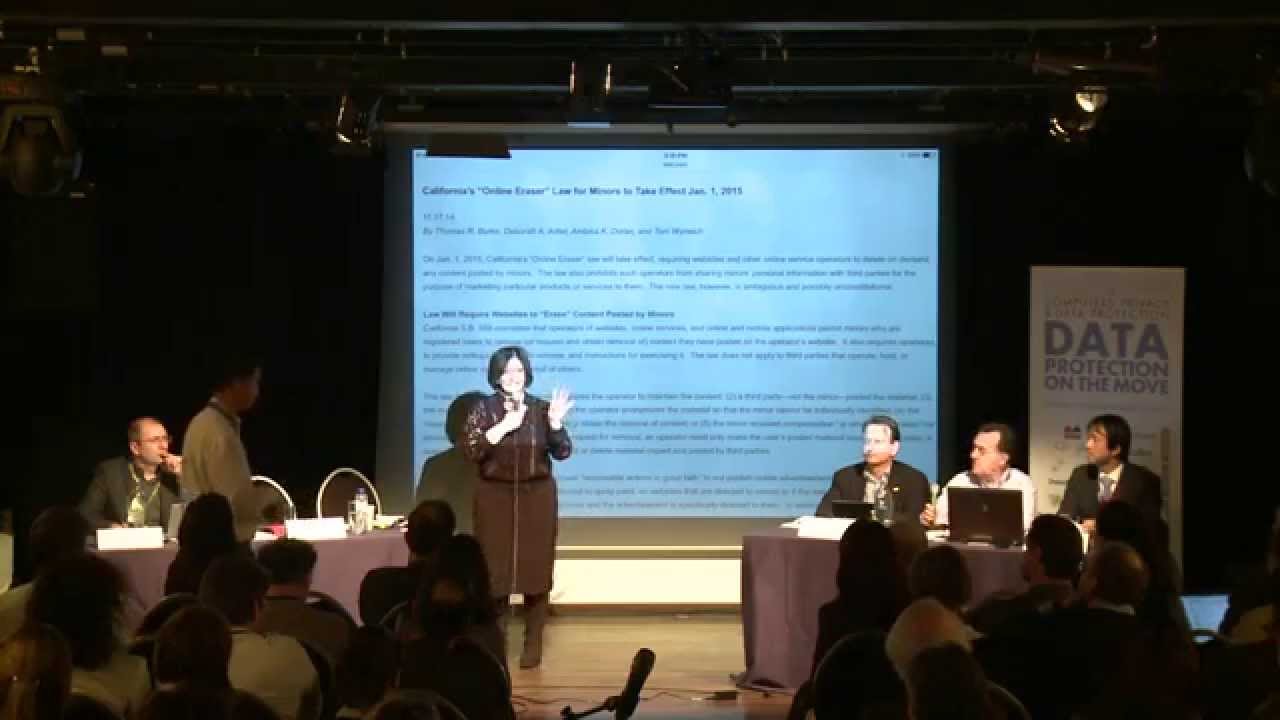
Organised by Chuo University and Tilburg University
Chair: Ronald Leenes, TILT/PI.Lab (NL)
Moderator: Anna Fielder, Privacy International (UK)
Panel: Hiroshi Miyashita, Chuo University (JP), Artemi Rallo Lombarte, Jaume I University (SP), Marc Rotenberg, EPIC (US)
The Right to be Forgotten is one of the most controversial (new) rights in the proposed upcoming General Data Protection Regulation. The Google Spain ruling by the CJEU (Google Spain SL, Google Inc. v Agencia Española de Protección de Datos, Mario Costeja González, C131/12, ECLI:EU:C:2014:317) of 13 May 2014 made clear that an RtbF in fact already exits under the Data Protection Directive 95/46/EC. The Court held that the processing of data which is “inadequate, irrelevant or excessive” (i.e. not merely inaccurate) might also be incompatible with the Directive. In such cases, where the data is incompatible with the provisions of article 6(1)(e) to (f) of the Directive, relating to data quality, the information and links in the list of results must be erased by search engines. Since the CJEU ruling the debates regarding the meaning and scope of an RtbF have taken a new turn, Google and others have taken steps to implement the judgment and policy makers and supervisory authorities have taken further steps to clarify the right and devise practical procedures for implementing it.
It is fair to say that there have been a variety of responses to the CJEU judgment. One of the factors influencing peoples‘ responses to the very idea of ‘a right to be removed from search engine results’ is their cultural background. Another important point of discussion is the enforceability of this ‘right’. In this panel we explore the different perceptions of the RtbF as framed by the CJEU with respect to search engines in the US, Europe and Asia. The panel will address topics such as:
What are the dominant opinions about the right as clarified by the CJEU in different regions around the globe?
How does the RtbF relate to other rights, such as freedom of expression and freedom of information in different regions?
Who decides what to take down and under what criteria?
How we can ensure a transparent and accountable deletion mechanism?
How we can streamline the RtbF in different jurisdictions offered by the same global service?
Повторяем попытку...
Доступные форматы для скачивания:
Скачать видео
-
Информация по загрузке: