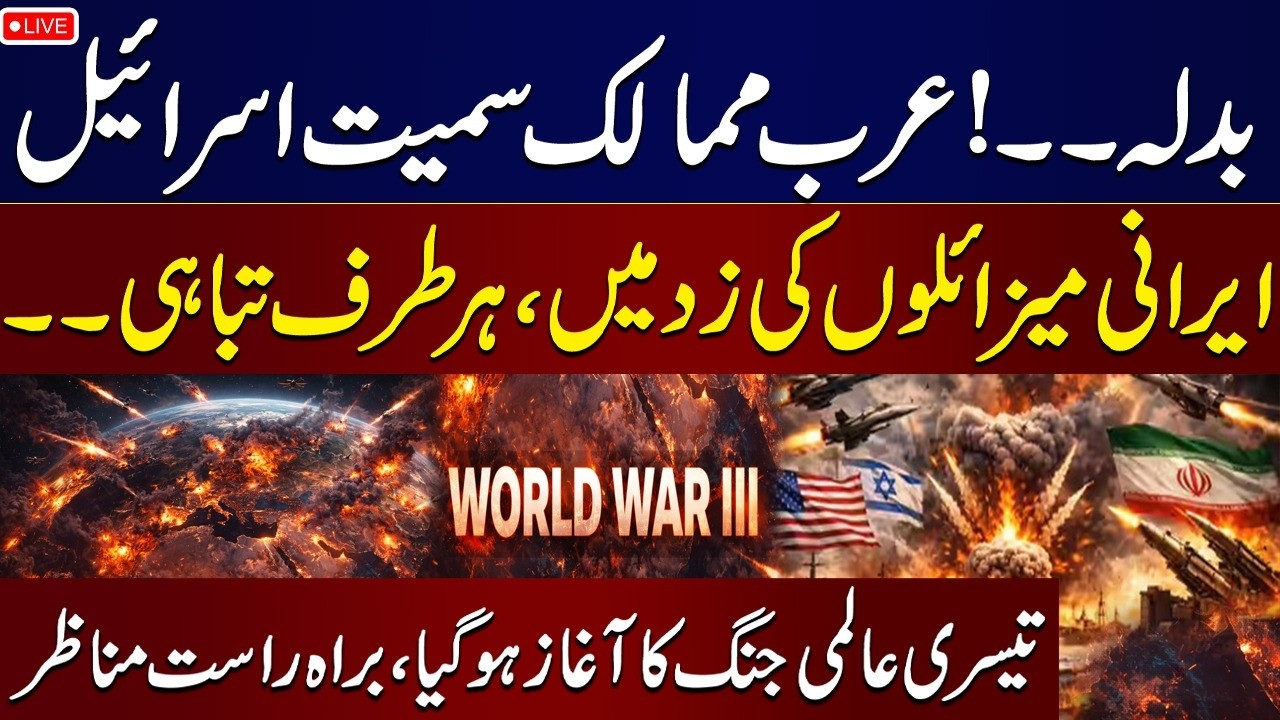
🔴LIVE | World War III? Iran Missile Attack on Israel & Arab Countries | High Alert | Latest Update
Автор: SAMAA TV
Загружено: 2026-03-22
Просмотров: 68031
Описание:
#samaatv #iranuswar #IranAttack #Eid2026 #MiddleEastConflict #IranMissileStrike #WorldNews #IranCrisis #InternationalRelations #TehranAttack #IranAttack #IsraelUnderAttack #IranNews #MissileAttack #GlobalConflict #WarUpdate #SchoolClosed #LatestNews #crisisalert
🔴LIVE | World War III? Iran Missile Attack on Israel & Arab Countries | High Alert | Latest Update
The situation in the Middle East has escalated into a dangerous and fast-moving regional conflict involving Iran, Israel, and the United States. The war, which began in late February with coordinated strikes by Israel and the United States on Iranian military and nuclear facilities, has now expanded beyond a limited confrontation into a broader multi-front conflict. Over the past few days, the intensity of attacks has increased significantly, with both sides targeting strategic locations, raising fears of a prolonged and devastating war.
Iran has intensified its retaliation by launching waves of ballistic missiles and long-range drones toward Israel. Several strikes hit southern Israeli areas, including regions near key strategic sites. Reports indicate that some missiles managed to penetrate Israel’s advanced air defense systems, causing destruction to buildings and injuring civilians. In addition to missile attacks, Iran has reportedly deployed advanced drones capable of traveling long distances, signaling a shift toward more sophisticated warfare tactics. These attacks are not only symbolic but also aimed at testing and overwhelming Israeli defenses.
In response, Israel has carried out aggressive airstrikes deep inside Iranian territory. These strikes have targeted military bases, missile launch sites, and nuclear-related infrastructure. Israeli forces have also expanded operations into neighboring regions, including Lebanon, where Hezbollah positions have been hit. Israeli leadership has made it clear that it is prepared to escalate further, including targeting high-ranking Iranian military officials if attacks continue. The scale and reach of Israeli strikes indicate a strategy focused on weakening Iran’s long-term military capabilities.
The United States has taken a more direct and forceful stance in recent developments. Donald Trump has issued a strong ultimatum to Iran, giving it 48 hours to reopen the critical Strait of Hormuz. This waterway is one of the most important النفط routes in the world, with a significant portion of global oil supply passing through it. Iran’s move to restrict or threaten shipping in this region has triggered global concern. The US has warned that failure to comply could result in devastating strikes on Iran’s energy infrastructure, including power plants and النفط facilities.
The Strait of Hormuz crisis has added a major economic dimension to the conflict. With tensions rising and shipping routes under threat, global oil prices have surged sharply, crossing critical thresholds and putting pressure on international markets. Countries that rely heavily on Middle Eastern oil are already feeling the impact, and fears of a wider economic crisis are growing. The possibility of further disruption in energy supplies has made this conflict not just a regional issue but a global concern.
Casualties and humanitarian impacts are also increasing rapidly. Thousands of people have been reported killed or injured across Iran, Israel, and the surrounding regions. Infrastructure damage is extensive, with residential areas, military bases, and صنعتی facilities all affected. In some المناطق, civilians are being forced to evacuate, leading to displacement and worsening humanitarian conditions. Medical systems in affected areas are under severe strain due to the rising number of casualties.
Internationally, the situation is becoming more complex. Several countries are closely monitoring the conflict, while others are indirectly involved through alliances or military presence in the region. There are growing concerns about the safety of nuclear facilities, particularly in Iran and Israel, as any major strike on such sites could lead to catastrophic consequences. Global organizations have warned that continued escalation could push the region toward an uncontrollable crisis.
Overall, the next 48 hours are considered extremely critical. With ongoing missile exchanges, aggressive military actions, and strong warnings from the United States, the conflict is at a tipping point. Any further escalation—especially involving the Strait of Hormuz or direct US strikes on Iran—could significantly expand the war, drawing in more countries and increasing the risk of a wider global confrontation.
Повторяем попытку...
Доступные форматы для скачивания:
Скачать видео
-
Информация по загрузке: