Fiscal consolidation and how EU governments must steadily reduce deficits and public debt! Lagarde d
Автор: EU Debates | eudebates.tv
Загружено: 2024-10-20
Просмотров: 252
Описание:
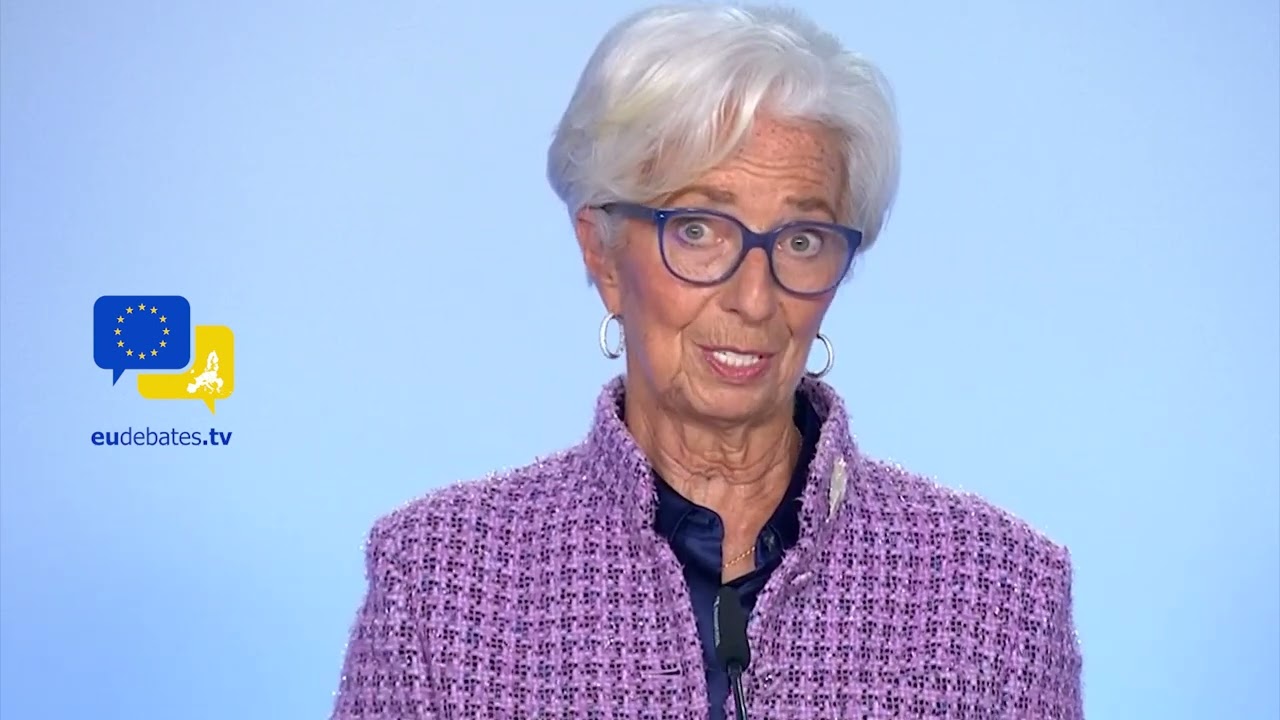
Subscribe here: https://bit.ly/eudebates On fiscal consolidation, we now have a fiscal governance framework that identifies the right equilibrium and balance between fiscal consolidation that is needed in many countries and the necessary investment in growth-enhancing reforms. And I think it is that balancing act which is the virtue and the value of this revised governance framework for fiscal purposes. It’s associated with a timeframe of four or seven years depending on the level and degree of reforms that the Member States will propose and will implement. So if those rail guards are followed and observed by Member States, we believe that it’s the right environment within which to develop activity. And for our part, while the fiscal authorities will do what they have to do in fiscal terms and while the authorities will do what they have to do in structural reforms, we will do our part by maintaining price stability. But of course we are interested in what they do, because everyone has to play their part.
On your bank consolidation question, I have said this last time around, our view is that for bank mergers, to the extent that they strengthen the banking system and on the basis of the cost-benefit analysis that the shareholders and the stakeholders conduct, which is not to say that we are directly involved other than through the supervision authorities that we apply to the requests and applications that are filed with us, it is for them to decide how to progress those projects. And I’m not referring to any particular project, as you know.
The European Central Bank has intervened to prevent a sharp slowdown in the eurozone economy with its first back-to-back interest rate cut since the euro crisis in 2011.
With Germany on the brink of a recession and inflation tumbling across the 20 member single currency bloc, the ECB followed a reduction in the cost of borrowing at its previous meeting in September with a further 0.25 percentage point cut in its key deposit rate to 3.25%.
Marking the third interest rate cut this year, the ECB’s president, Christine Lagarde, said the fall in inflation had surprised the central bank and meant a cut was needed to ensure a soft landing for the eurozone economy.
Figures out earlier on Thursday revealed annual prices growth in the eurozone had eased in September to 1.7%, down from 2.2% the previous month.
Lagarde said there were clear signs from most measures of business and consumer activity that the economy was weakening.
Growth in France is expected to wane after a bounce during the Olympics while Italy’s better than expected recovery from the inflation shock of the last two years has petered out. Only Spain has shown a degree of resilience while interest rates have remained high, increasing by 0.8% in the second quarter of the year.
Earlier this month, an measure of factory output in the eurozone – the HCOB Manufacturing PMI – fell to a nine-month low in September, adding to a downturn lasting more than two years.
Lagarde said: “The latest data is all heading in the same direction, downwards, and points to more sluggish growth.”
She refused to indicate whether there would be further rate cuts, saying the central bank would remain dependent on the data before making further cuts at its next meeting in December.
The ECB’s move puts it two ahead of the Bank of England, which is widely forecast to cut the cost of borrowing in the UK by 0.25 percentage points from the current level of 5% when its monetary policy committee meets next month.
In the US, the Federal Reserve has indicated it is also minded to trim rates in the coming months after instituting its first reduction last month – a half-point cut.
Gold reached a record high just before Thursday’s ECB announcement, hitting $2,688.82 (£2,065.26) an ounce for the first time, lifted by forecasts of interest rate cuts around the world and uncertainty ahead of next month’s US election.
Announcing its decision, the ECB said the reduction in interest rates was based on “an updated assessment of the inflation outlook, the dynamics of underlying inflation and the strength of monetary policy transmission”.
Stay connected with us!
Facebook: / eudebates.tv
Twitter: / eudebates
Instagram: / eudebates.tv
#eudebates the unique initiative aiming to promote debate, dialogue, knowledge, participation and communication among citizens. #ECB #Lagarde #inflation #EURO #Banks #Economy #Currency #BankingUnion #Eurozone #Eurogroup #GDP #NextGenerationEU #MFF #EUbudget
Повторяем попытку...
Доступные форматы для скачивания:
Скачать видео
-
Информация по загрузке: