Newtown Battlefield Elmira, New York
Автор: Bill's History World with Goober the Bear
Загружено: 2023-06-28
Просмотров: 1211
Описание:
Newtown Battlefield
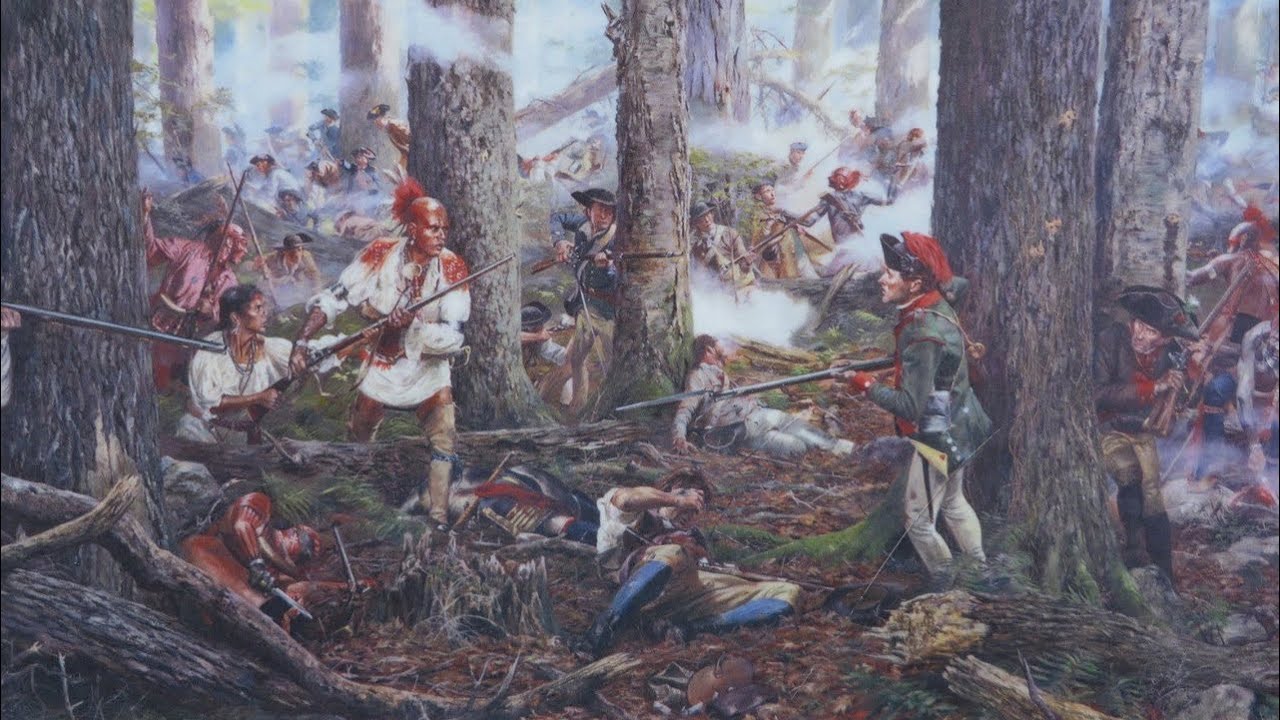
The Battle of Newtown (August 29, 1779) was the only major battle of the Sullivan Expedition, an armed offensive led by Major General John Sullivan that was ordered by George Washington to end the threat of the Iroquois who had sided with the British in the American Revolutionary War. Opposing Sullivan's four brigades were 250 Loyalist soldiers from Butler's Rangers, commanded by Major John Butler, and 350 Iroquois and Munsee Delaware. Butler and Mohawk war leader Joseph Brant did not want to make a stand at Newtown, and instead proposed to harass the enemy on the march, but were overruled by Sayenqueraghta and other indigenous war leaders.
This battle, which was the most significant military engagement of the campaign, took place at the foot of a hill along the Chemung River just outside what is now Elmira, New York.
On August 26, 1779, Sullivan left Fort Sullivan, where the two columns of his army had converged, with an estimated 3200 well-armed troops. They marched slowly up the Chemung River with the intention of destroying the towns and crops of the Six Nations in central New York. Mid-morning on Sunday, August 29, about ten miles upriver from Fort Sullivan, the advance guard, three companies of riflemen formerly with the Provisional Rifle Corps of Col. Daniel Morgan, drew close to Butler's position. Suspecting an ambush, they halted and scouted the area. Between eleven and eleven-thirty they discovered the hidden breastwork and immediately notified Brigadier General Edward Hand. Hand dispatched his light infantry to take up firing positions behind the bank of Baldwin Creek. The defenders made several unsuccessful attempts at luring the Continentals into an ambush. As the extended army continued to arrive and assemble, Sullivan called a council of war with his brigade commanders. Together they devised a plan of attack.
The 1st New Jersey Regiment, commanded by Colonel Matthias Ogden, was detached from Brigadier General William Maxwell's New Jersey Brigade and sent west along the Chemung River to execute a flanking maneuver on Major Butler's forces. Similarly, the New York Brigade of Brigadier General James Clinton and the New Hampshire Brigade of Brigadier General Enoch Poor were dispatched together eastward, along a circuitous route through Hoffman Hollow, with the mission of approaching the hill's eastern flank and then facing left in preparation for a full ahead assault upon the enemy. Meanwhile, the unified forces of Sullivan's Pennsylvania and New Jersey brigades remained behind at the ready, bolstered by a provisional regiment composed of all the light infantry companies in the expedition. At the end of the first hour, the artillery of six three pounders, two howitzers, and a cohorn posted on a rise near the road, would open fire on the breastwork.[3] These guns would signal General Hand to feint an attack upon the center of the horseshoe, at which time the brigades to the east would swing inward, assault the summit of the hill and turn their attack to the left and rear of the breastwork. When the guns of Poor's and Clinton's attack were heard by Hand, his brigade would storm the works, supported by Maxwell's brigade, putting the defenders in a crossfire.
The plan was complex and conceived on short notice but the ultimate result was a defeat for Butler's Rangers and their indigenous allies. Crossing the swampy marsh (which Sullivan termed a "morass") in Hoffman Hollow slowed the advance of Poor's and Clinton's brigades, disrupting the timing of the plan, and this provided just enough delay to allow Butler and the Iroquois to escape. The artillery barrage opened well before Poor and Clinton were in position which forced the Rangers and Iroquois back from the breastwork before they could be encircled. While some of the defenders turned and ran, the main body of Butler's forces skirmished with the Americans as they withdrew.
Nearly all of the Continentals' casualties occurred in the attack of Lieutenant Colonel George Reid's 2nd New Hampshire Regiment.[4] Assigned to the extreme left of Poor's assault formation, it climbed where the slope was steepest and lagged considerably behind the rest of the brigade. Joseph Brant led a counterattack of indigenous warriors and nearly encircled Reid. The next regiment in line, the 3rd New Hampshire Regiment of 28-year-old Lieutenant Colonel Henry Dearborn, about-faced, fired two volleys and attacked down the hill. Clinton, whose brigade was climbing the hill below and slightly to the right of Poor, sent his 3rd and 5th New York Regiments to help, and the counterattack was crushed.
After razing two Munsee Delaware villages and destroying all crops in the vicinity, Sullivan's army turned north against a demoralized opposition and over the next three weeks destroyed numerous abandoned Seneca and Cayuga villages.
Повторяем попытку...
Доступные форматы для скачивания:
Скачать видео
-
Информация по загрузке: