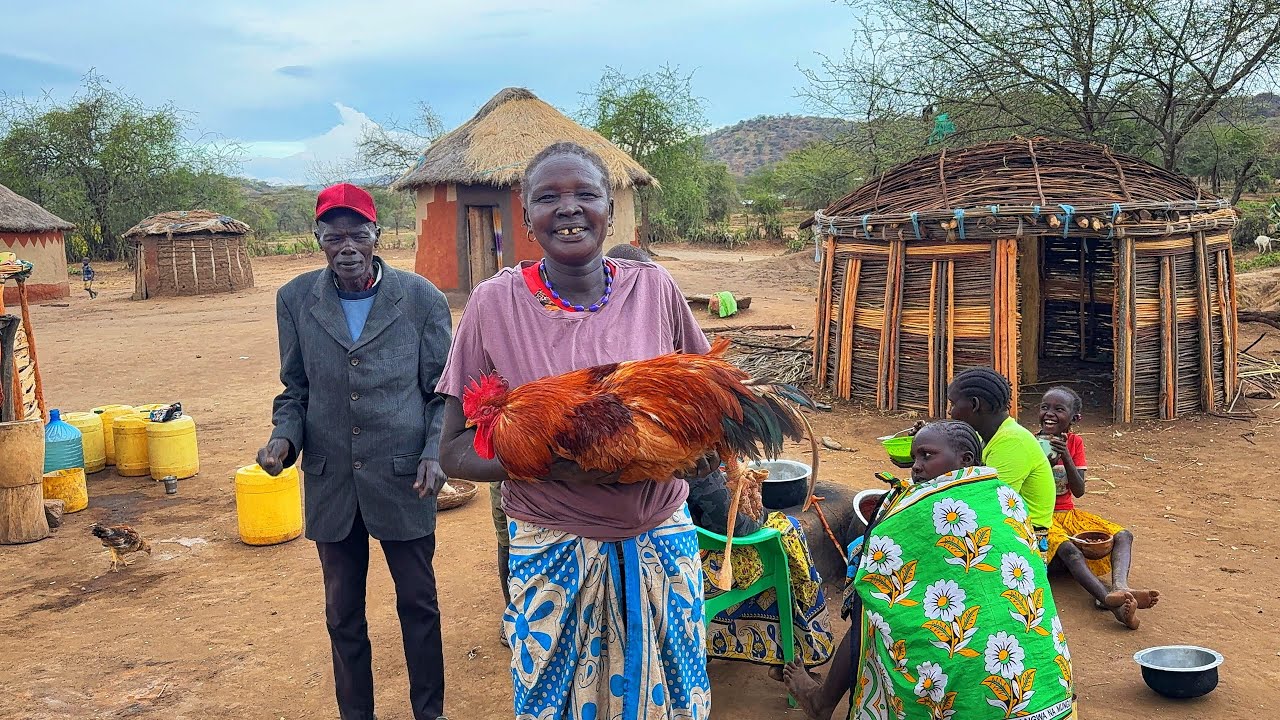
The Incredible Transformation Of Cassava Into Garri ; A Traditional Process
Автор: Local Satellite Tv
Загружено: 2025-03-06
Просмотров: 464
Описание:
Garri production has evolved over time, with some processes being modernized while still maintaining traditional methods. In this demonstration, we used a milling machine to grind the cassava instead of hand-grating. Here’s a step-by-step breakdown of the process:
Step 1: Peeling the Cassava
• Freshly harvested cassava tubers are peeled to remove the thick brown outer skin.
• A knife is used to carefully strip off the skin while keeping the white starchy flesh intact.
• The peeled cassava is placed in a clean container, ready for washing.
Step 2: Washing the Cassava
• The peeled cassava is thoroughly washed with clean water to remove any dirt or impurities.
• This ensures that only clean cassava goes into the milling process.
Step 3: Milling the Cassava
• Instead of using a traditional hand grater, we use a milling machine to grind the cassava into a fine, wet paste.
• The machine makes the process faster and more efficient compared to manual grating.
• The milled cassava is collected in a large container, ready for fermentation.
Step 4: Fermenting the Milled Cassava. Optional
• The ground cassava is placed in a porous sack and left to ferment for 2–3 days.
• Fermentation reduces the natural cyanide content in cassava and enhances the flavor.
• A longer fermentation period gives the garri a slightly sour taste, while a shorter time results in a milder flavor.
Step 5: Pressing Out Excess Water
• After fermentation, the cassava mash is placed in a strong sack and tightly pressed using a heavy object or a mechanical press.
• This removes excess water, making it easier to roast.
• The result is a crumbly, damp cassava cake that needs to be sieved before roasting.
Step 6: Sieving the Cassava Mash
into small, uniform granules.
• This helps remove any coarse fibers and ensures an even texture in the final product.
Step 7: Roasting the Cassava into Garri
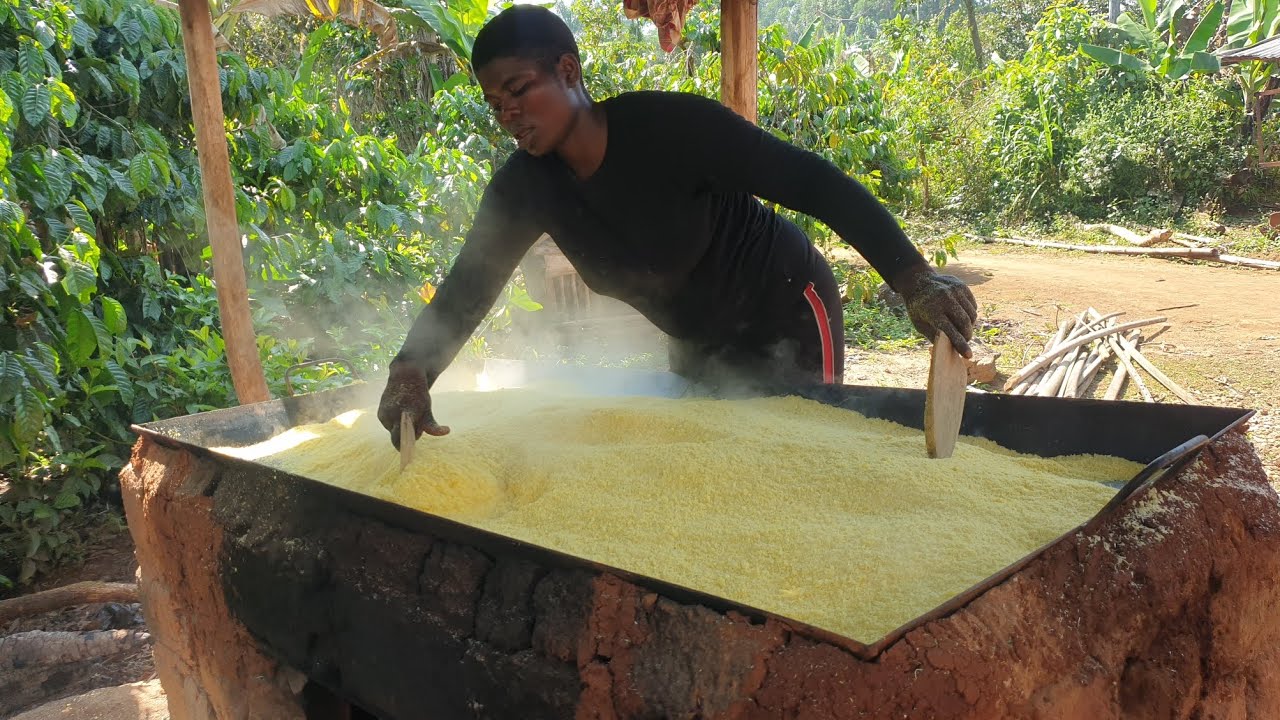
• The sieved cassava granules are transferred to a large shallow pan and roasted over a traditional stone stove with firewood.
• A wooden paddle is used to stir the granules continuously, preventing burning and ensuring even drying.
• As the cassava dries, it transforms into the familiar light and crispy garri granules.
• Roasting takes about 30–40 minutes, depending on the quantity and heat level.
Final Step: Cooling and Storage
• The roasted garri is spread out to cool completely before storage.
• Once cooled, it is stored in airtight containers to maintain freshness.
• The garri is now ready to be enjoyed in different ways—either soaked with water, sugar, and milk or cooked into garri fufu.
#GarriProcessing #CassavaToGarri #TraditionalFood #MillingMachine #GarriMaking #FarmToTable #SustainableLiving #OrganicFarming #OffGridCooking #LocalCuisine #WestAfricanFood #FoodHeritage #CassavaHarvest #VillageLife #NaturalLiving #StoneStoveCooking #HomemadeGarri #TraditionalCooking #EcoFriendlyLiving #TasteOfGhana
Повторяем попытку...

Доступные форматы для скачивания:
Скачать видео
-
Информация по загрузке: