Ma'at, the Goddess of Cosmic Balance | Egyptian Mythology Explained
Автор: Легенды Древнего Египта
Загружено: 2026-02-19
Просмотров: 30
Описание:
Who was Ma’at in Egyptian mythology, and why did ancient Egypt believe the entire universe depended on her? In this episode of Egyptian Mythology Explained, we explore Ma’at as both goddess and principle — the embodiment of truth, justice, balance, and cosmic order. From temple rituals and royal ideology to the weighing of the heart in the afterlife, Ma’at shaped Egyptian law, morality, kingship, and spiritual belief. Discover how this foundational concept influenced ancient Egyptian temples, symbolism, and history, and why her feather remains one of the most powerful symbols in Egyptian mythology today.
--------- TRANSCRIPT ---------
What if the universe itself depended on a single fragile principle?
In ancient Egypt, that principle had a name: Ma’at.
She was not merely a goddess, but the living embodiment of truth, balance, and cosmic order.
To the Egyptians, Ma’at was the invisible structure that kept chaos from swallowing the world.
Without her, the sun might fail to rise and the Nile might forget its flood.
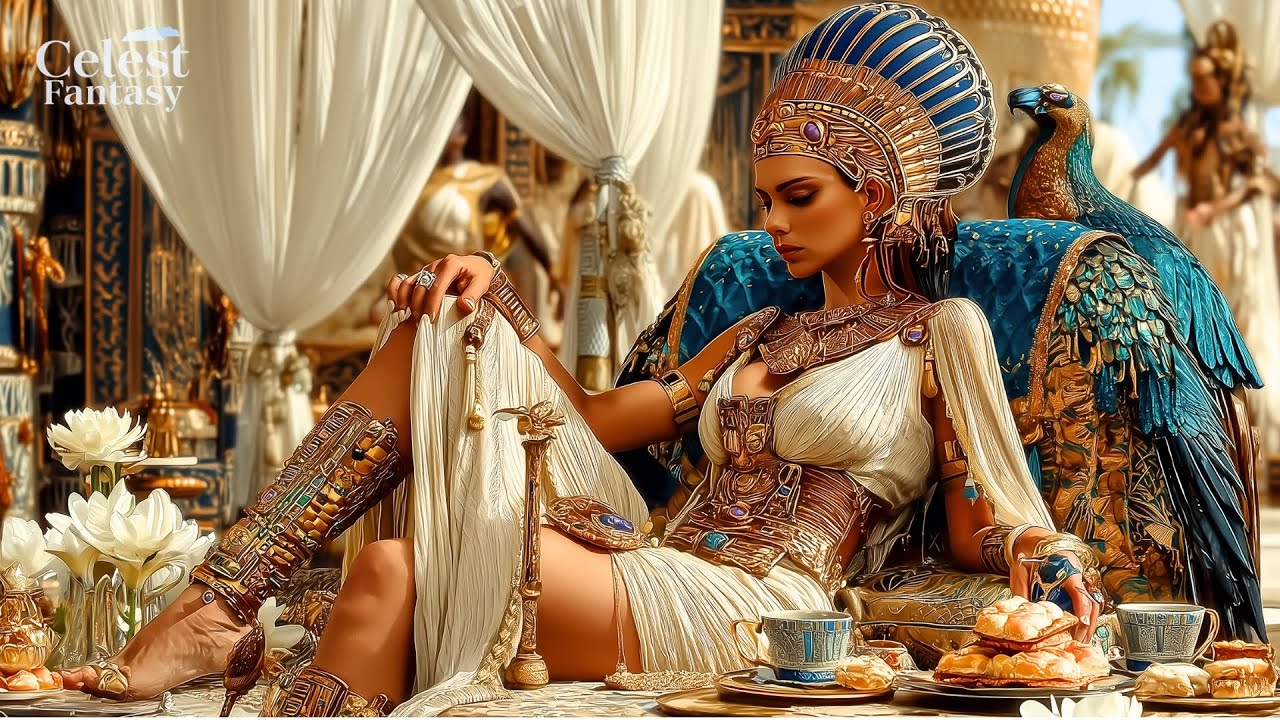
She was often depicted as a woman crowned with an ostrich feather, simple yet profound in meaning.
That feather became the ultimate symbol of justice and moral equilibrium.
Pharaohs claimed to rule “in Ma’at,” presenting her image to the gods as proof of rightful kingship.
Governing fairly was not political strategy but sacred duty.
Even the gods themselves were said to uphold Ma’at.
In the afterlife, her role became deeply personal.
The heart of the deceased was weighed against her feather in the Hall of Judgment.
A heart heavy with wrongdoing would tip the scales toward destruction.
A balanced heart would allow the soul to pass into eternal life.
Thus, Ma’at was both cosmic law and individual conscience.
She shaped courtrooms, temple rituals, royal ideology, and daily ethics alike.
Unlike many deities, she had few grand myths of dramatic conflict.
Her power was quieter, woven into the rhythm of existence itself.
To live well in Egypt was to live in harmony with Ma’at.
And today, we might still ask ourselves: what keeps our own world in balance?
------------------------------------------------------
Written and produced by Alex Wynn Ashwood.
Original score inspired by ancient Egyptian music and temple acoustics.
All images are painterly recreations evoking the landscape, architecture, and mythology of Ancient Egypt.
Every story is based on historical, cultural, and archaeological research, blended with narrative imagination.
Повторяем попытку...

Доступные форматы для скачивания:
Скачать видео
-
Информация по загрузке:












![ARMIA PUTINA DRUGĄ ARMIĄ ŚWIATA? PRAWDZIWA SIŁA ROSJI [WOLSKI I BOJKE]](https://imager.clipsaver.ru/-0hLR4R3gvk/max.jpg)