The Scientist Using Scent to Detect Concussions
Автор: MonellCenter
Загружено: 2026-03-20
Просмотров: 38
Описание:
#smell #health #concussion #headtrauma
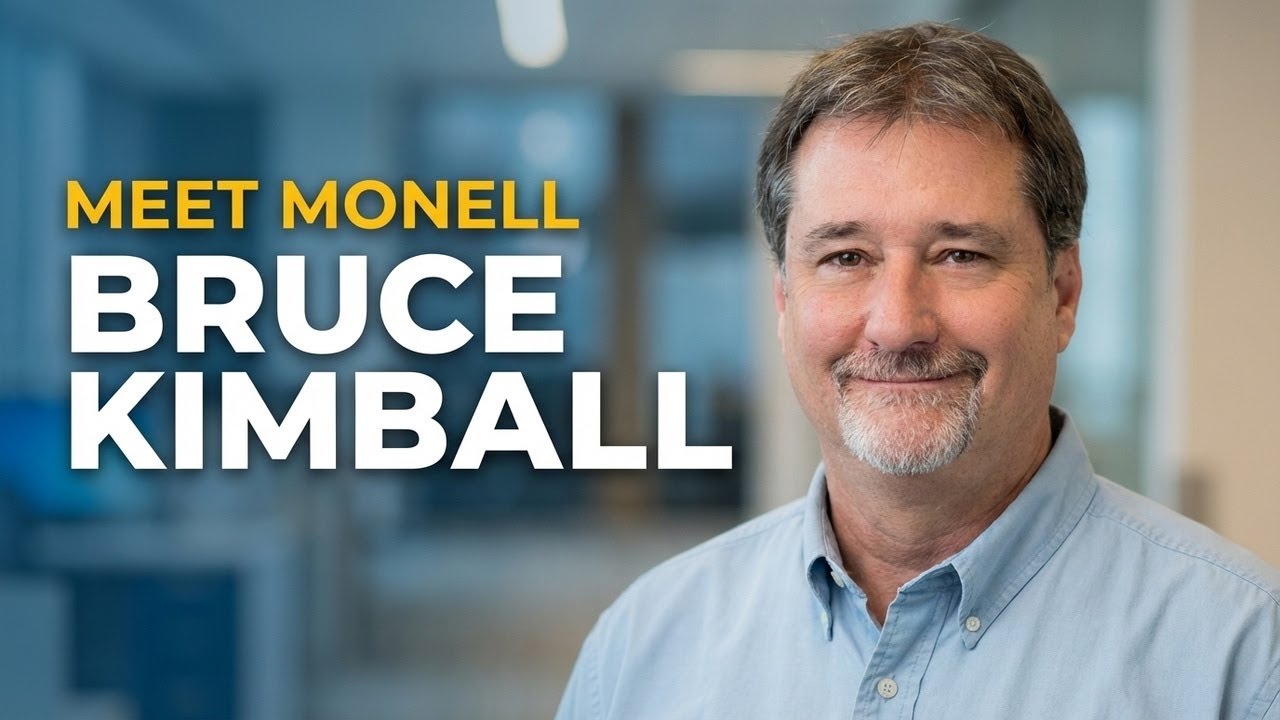
Before Bruce Kimball joined Monell as a chemical ecologist, he was a research chemist working within a U.S. Department of Agriculture research institute studying chemically-mediated animal behavior. It was there he discovered a new (to him) realm of chemical communication: applying chemical and behavioral assays to understand animal behavior.
This discovery reshaped the trajectory of Kimball’s career. “ It was a strange new world for me that I could apply chemical analysis to studying what animals do and proposing tools to modify this behavior, particularly their foraging behavior which can damage crops,” he says.
His realization that such a field existed in the early 1990s is ultimately what led Kimball to Monell.
“I was trying to do my best to get myself here because I thought it was the preeminent place for somebody who was interested in the sensory world and the chemicals that drive that system,” he explains.
At Monell, the focus of Kimball’s work is identifying how chemical signals coming from an individual are altered by disease, injury, or infection. Using a combination of chemical analysis, data analysis, and what he describes as “clever ways to generate the samples required,” his research tackles complex questions at the intersection of animal, human, and environmental health.
One of Kimball’s current studies is centered on identifying biomarkers of brain injury, particularly concussions. While this work often begins with animal models, his research has recently expanded into human studies. By analyzing urine samples from young athletes who had suffered concussions, Kimball and his team confirmed that the same classes of compounds observed in animal studies were also present in humans following head injury.
These findings represent a promising step toward non-invasive diagnostic tools. Ones that could help detect injuries more quickly and accurately monitor recovery.
“There’s great potential there to make that translational in a way that people can aid in their own diagnoses and end up with better outcomes,” he says.
Beyond the lab, Kimball emphasizes that Monell’s collaborative environment plays a critical role in enabling this kind of innovation. He cites Monell as a uniquely supportive place to work, where scientists are given the infrastructure and freedom to pursue bold ideas.
That spirit of exploration is closely tied to Monell’s embrace of One Health: the concept that human, animal, and environmental health are all deeply interconnected. At Monell, this idea is reflected in a long-standing commitment to studying animals not just as models for human biology, but as organisms worthy of understanding in their own right.
Kimball’s hope for the future is that the work being done today will lead to tangible benefits for people everywhere. While the impact of scientific discovery is not always immediate, he believes it will ultimately reach far beyond the lab.
“You may not see the benefits right away,” he suggests, “but eventually, this work will help create a healthier world.” Training and mentorship are central to Monell’s culture and one of the most important things we do as scientists, he continues. When trainees move on from Monell they carry that foundational training with them, a thought that inspires Kimball.
“One tiny bit of information that they recall from their time at Monell might develop into a giant idea that changes the world.”
The Monell Chemical Senses Center is the world’s only independent, nonprofit research institute dedicated to the science of taste and smell. Monell scientists are unlocking how the senses impact nutrition, health, and human behavior.
👍 Like, subscribe, and follow Monell to explore the science behind your everyday experiences.
www.monell.org
Повторяем попытку...
Доступные форматы для скачивания:
Скачать видео
-
Информация по загрузке: