Giovanni Battista Martini (1706-1784) - Sinfonia in Re Maggiore con trombe
Автор: Pau NG
Загружено: 2020-06-05
Просмотров: 5303
Описание:
★ Follow music ► / reciclassicat
Composer: Giovanni Battista Martini (1706-1784)
Work: Sinfonia in Re Maggiore con trombe
Performers: Symphonia Perusina; Padre Giuseppe Magrino (direttore)
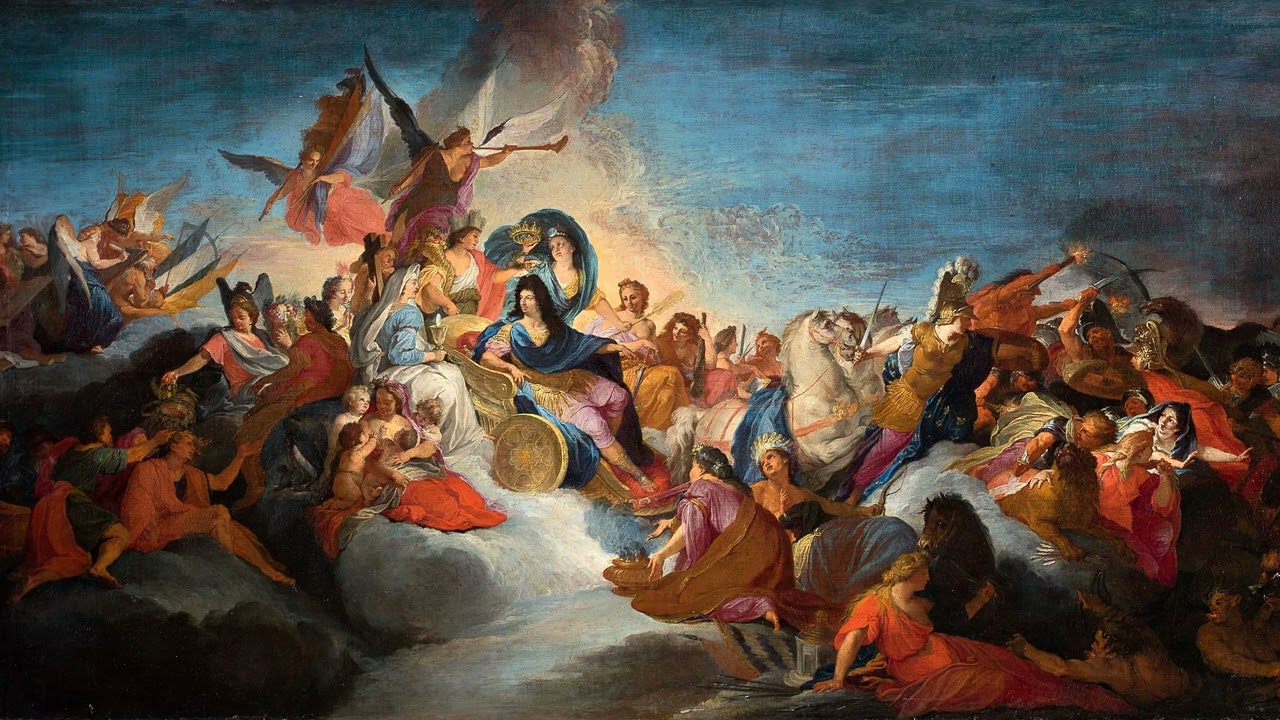
Engraving: Frederick Bernard Werner (1690-1778) - Bologna
Image in high resolution: https://flic.kr/p/2iLkMSX
Further info: https://www.amazon.com/-/es/Domenico-...
Listen free: No available
---
[Padre] Giovanni Battista Martini
(Bologna, 24 April 1706 - Bologna, 3 Aug 1784)
Italian writer on music, teacher and composer. Referred to at his death as ‘Dio della musica de’ nostri tempi’, he is one of the most famous figures in 18th-century music. He had his first music lessons from his father Antonio Maria, a violinist and cellist; subsequent teachers were Angelo Predieri, Giovanni Antonio Ricieri, Francesco Antonio Pistocchi and Giacomo Antonio Perti. In 1721, after indicating his wish to become a monk, he was sent to the Franciscan Conventual monastery in Lugo di Romagna. He returned to Bologna towards the end of 1722 and played the organ at S Francesco. In 1725 he succeeded Padre Ferdinando Gridi as maestro di cappella of S Francesco. He occupied that post until the last years of his life, and lived in the convent attached to the church. Martini received minor orders in 1725, and four years later was ordained a priest. His first extant works date from 1724 and the first publication of his music appeared in 1734, Litaniae atque antiphonae finales Beatae Virginis Mariae; only three other collections of his music, all secular, were published during his lifetime. In 1758, he was made a member of the Accademia dell’Istituto delle Scienze di Bologna. In the same year he was also admitted to the Accademia Filarmonica – belated recognition in this case, because the rules prohibiting the admission of monks had to be waived. Martini’s relationship with the Accademia is a matter of controversy. He was certainly not the author of the Catalogo degli aggregati della Accademia filarmonica di Bologna, an important manuscript long attributed to him but actually by O. Penna (c.1736), though he was involved in the reworking of part of the Catalogo which resulted in the anonymous publication ‘Serie cronologica de’ principi dell’Accademia de’ filarmonici’ (1776). In any case, Martini seems to have remained somewhat independent of the Accademia and its members. In 1776 he was elected a member of the Arcadian Academy in Rome, with the name Aristosseno Anfioneo. Martini devoted himself assiduously to composing, writing and teaching, and he seldom left Bologna. He visited Florence, Siena and Pisa in 1759, and Rome. He was offered positions in the Vatican, but he chose to remain in the city of his birth. Although he lived to the age of 78, he apparently suffered from poor health, which may account for the fact that he travelled so little. According to contemporary accounts, Martini’s pupil and successor at S Francesco, Padre Stanislao Mattei, was alone with him when he died; Martini’s last words to Mattei were reported to have been: ‘Muoio contento; so in che mani lascio il mio posto ed i miei scritti’
Although the extent of his teaching activities with individual students is not always clear, at least 69 composers learnt substantially from him and 35 others received some less clearly defined instruction. Among the former were J.C. Bach, Bertoni, Grétry, Jommelli, Mozart and Naumann; Martini taught them primarily counterpoint, often preparing advanced students for admission to the Accademia Filarmonica. He also devoted some time to singing instruction, as witness a number of surviving solfeggi. Martini’s network of students was important for his activity as a collector of music and music-related documents; he probably used income from teaching to increase his music library, which was estimated by Burney at about 17,000 volumes in 1770. Some items, including the important library of Ercole Bottrigari, came into Martini’s possession by bequest (1751); others were either purchased or exchanged for copies of his own greatly valued printed works. One of Martini’s most important legacies is his extensive correspondence (about 6000 letters), only a small part of which has been published. He was also famed for his collections of music and portraits of composers, over than 300 portraits, many of whom were commissioned at his behest. As a theoretician, his most famous work was the unfinished Storia della musica, which purported to begin with Adam and end with an overview of modern 18th-century composers and styles. Martini was considered the model by Charles Burney, who consulted the theorist on his own endeavors. As a composer, Martini was less well known with circa 1500 extant works; 32 Masses, five operas, two oratorios, a Requiem, a litany, over 100 smaller sacred works, 24 symphonies, 94 keyboard sonatas, a variety of smaller chamber works and hundreds of organ canons.
Повторяем попытку...

Доступные форматы для скачивания:
Скачать видео
-
Информация по загрузке:








![The Shadow of Calvary: Vivaldi Filiae maestae Jerusalem, RV 638 | [MuseLAB]](https://imager.clipsaver.ru/0sj824OYRoI/max.jpg)