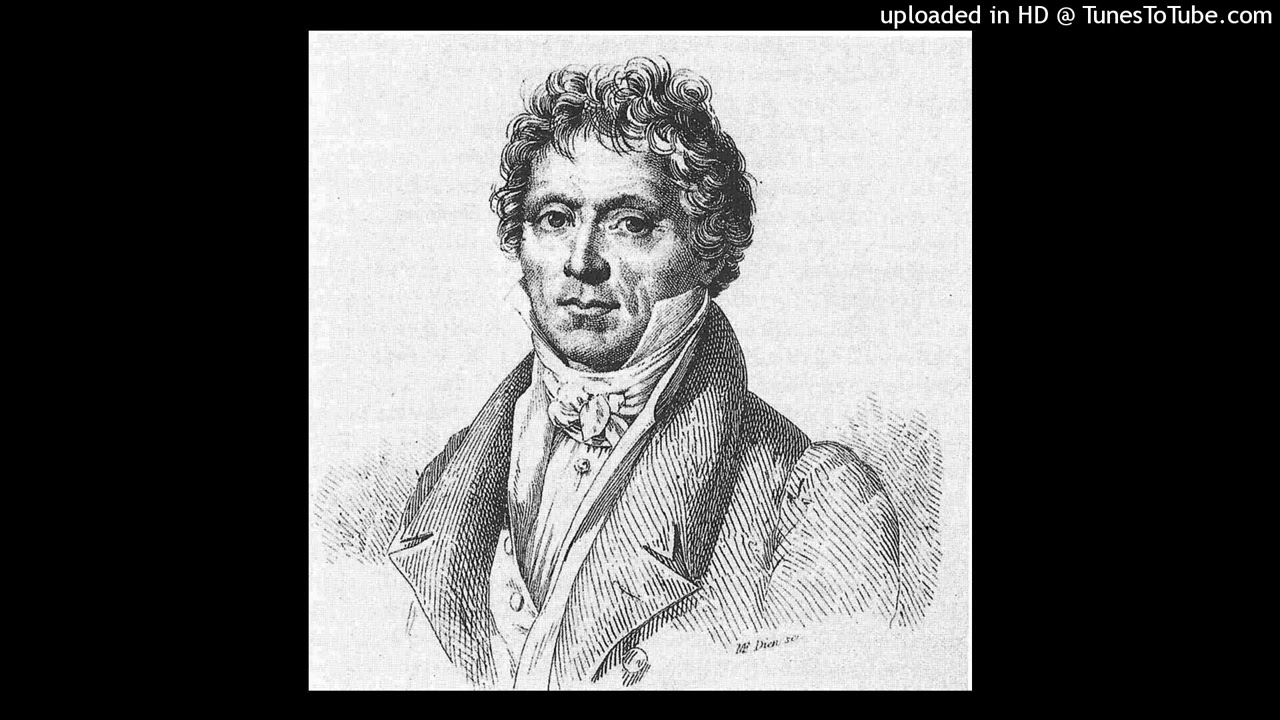
Antonín Reicha - Piano Trio No. 3 in C Major, Op. 101 - Part 2 - ( 1824 )
Автор: Justin Walsh
Загружено: 2025-08-10
Просмотров: 19
Описание:
Summary of Antonín Reicha's Piano Trio in C Major, Op. 101 No. 3
Antonín Reicha (1770–1836), a Czech-born composer and theorist who flourished in Paris, is renowned for his innovative contributions to chamber music and music theory. His Piano Trio in C Major, Op. 101 No. 3, composed in 1824 and published by Zetter in Paris, is the third of six concertante trios dedicated to Amedée Ardisson. This work, lasting approximately 24–27 minutes, exemplifies Reicha’s forward-thinking approach, blending Classical formal clarity with early Romantic expressiveness and virtuosic interplay among the piano, violin, and cello. Influenced by Haydn, Mozart, and Beethoven, and informed by his own theoretical explorations, Reicha emphasizes equality among the instruments, as noted in the foreword to the Op. 101 trios. This summary examines the work’s structure, stylistic features, and historical context, highlighting its significance in the piano trio repertoire.
The Piano Trio in C Major, Op. 101 No. 3 comprises four movements, each showcasing Reicha’s compositional ingenuity and his departure from the piano-dominated trio conventions of the era. The first movement, likely an Allegro con brio or Allegro moderato (approximately 7–8 minutes), is in sonata form and opens with a bright, lyrical theme in C major. The piano introduces the main motif, which the violin and cello develop through dynamic dialogue, reflecting Reicha’s commitment to balanced instrumentation. The development section likely incorporates contrapuntal techniques, drawing on Reicha’s expertise in polyphony from his 36 Fugues for Piano, Op. 36. Harmonic surprises, such as unexpected modulations, add depth, while the recapitulation reinforces the movement’s joyful energy with robust interplay among the instruments.
The second movement, likely a Scherzo or Allegro (around 4–5 minutes), replaces the traditional minuet with a lively, rhythmically vibrant section, possibly in a related key like G major. This movement is characterized by its playful character and intricate instrumental exchanges, showcasing Reicha’s wit, as noted in reviews of performances by ensembles like the Guarneri Trio Prague. The trio section likely introduces a contrasting lyrical theme, balancing humor with elegance, a hallmark of Reicha’s chamber music style.
The third movement, Adagio or Largo (approximately 6–7 minutes), is a lyrical slow movement, possibly in A minor or F major, offering an introspective contrast to the surrounding movements. Here, Reicha highlights the violin’s melodic capabilities and the cello’s warm timbre, with the piano providing rich harmonic support. The movement’s expressive depth, infused with subtle contrapuntal elements, reflects Reicha’s theoretical interest in polyphony and bitonality, creating a poignant emotional core akin to the slow movements of his other trios.
The finale, likely a Presto or Allegro vivace (around 6 minutes), concludes in C major, likely in rondo or sonata-rondo form. This movement is marked by its energetic rhythms and virtuosic demands, requiring technical precision from all players. The interplay of thematic material and Reicha’s inventive orchestration create a thrilling close, as highlighted in the Supraphon recording’s liner notes, which praise the trio’s challenging yet rewarding nature. The movement’s exuberance underscores Reicha’s ability to blend Classical structure with Romantic flair.
Reicha’s Piano Trio in C Major is a significant work that bridges Classical and Romantic aesthetics, showcasing his innovative approach to chamber music. Published during his influential Paris period, when he taught composers like Berlioz and Liszt, the trio reflects his role as a pedagogue and innovator. Its balanced instrumentation, melodic charm, and technical demands make it a compelling piece in the piano trio repertoire, deserving greater recognition alongside Reicha’s celebrated wind quintets. The work’s enduring appeal lies in its blend of intellectual rigor and expressive warmth, as evidenced in modern performances.
Повторяем попытку...
Доступные форматы для скачивания:
Скачать видео
-
Информация по загрузке: