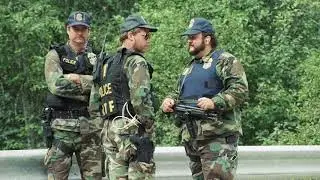
USA: WASHINGTON: 1992 RUBY RIDGE INCIDENT HEARINGS
Автор: AP Archive
Загружено: 2015-07-21
Просмотров: 38043
Описание:
(19 Sep 1995) English/Nat
A senior F-B-I agent has said that his bosses took part in "damage control assessments" in the wake of the Ruby Ridge standoff to conceal their approval of a shoot on sight policy.
Eugene Glenn, the F-B-I field commander during the fatal siege in Idaho August 1992, told Senate hearings that suspended F-B-I Deputy Director Larry Potts, personally approved the new rules.
Potts faces possible criminal charges for his role in the standoff, which ended in the shooting deaths of a deputy Marshall, white separatist Randy Weaver's wife and fourteen year old son.
Making a surprise appearance at the Ruby Ridge hearings, the man whose allegations brought them about all but accused the highest ranking U-S law enforcers of engaging in a cover up of their role in allowing the fatal shootings which ended the siege.
He asserted he'd been made the scapegoat:
SOUNDBITE:
"There were damage control assessments that took place and maybe we could say that the ship saw some hungry sharks swimming close by and they decided that they would put a few a tuna out there and see if they could satisfy them."
SUPERCAPTION: Eugene Glenn, F-B-I agent
The shoot to kill policy he said was authorised by F-B-I bosses including former Deputy Director Larry Potts.
SOUNDBITE:
"The highest authority that I know of was Mr. Potts. I discussed the rules of engagement with him after I had been told of the circumstances under which they were drafted and discussed them with him, and I don't know of anyone at a higher level who would have been aware of it, but I would have to assume they were."
SUPERCAPTION: Eugene Glenn, FBI agent
In testimony earlier this month, white separatist Randy Weaver, accompanied by his daughter, recounted how his refusal to give himself up to federal agents to face illegal firearms charges, resulted in the deaths of his wife and son.
The FBI agents who arrived on the scene after a deputy Marshall had been shot dead by one of Weaver's friends, sought temporarily to change the rules of engagement governing the use of deadly force.
The rewritten policy stated that snipers "could and should" fire at any armed male spotted outside Weaver's cabin if the shot could be taken without endangering children.
F-B-I director Louis Freeh has recently denounced this departure from protocol as unconstitutional.
Glenn defended the policy change, saying at the time he thought they were facing organised armed opposition from at least fifty men.
SOUNDBITE:
"At that time the perception was this is the most dangerous situation we have faced."
SUPERCAPTION Eugene Glenn, FBI agent
Five senior F-B-I agents, including Larry Potts are under federal investigation to find out whether they should stand trial for obstructing justice.
Find out more about AP Archive: http://www.aparchive.com/HowWeWork
Twitter: / ap_archive
Facebook: / aparchives
Instagram: / apnews
You can license this story through AP Archive: http://www.aparchive.com/metadata/you...
Повторяем попытку...

Доступные форматы для скачивания:
Скачать видео
-
Информация по загрузке: