You Can't Go Further Than This... Fall Asleep on a Slow Journey to the Edge of the Universe
Автор: The Drowsy Astronaut
Загружено: 2026-03-04
Просмотров: 298
Описание:
When you look at the night sky on a clear evening, you are seeing light that has traveled across enormous distances to reach your eyes. Some of that light left its source thousands of years ago, while other light departed millions or even billions of years in the past. Every point of light represents a journey through space, and each journey has a different length and a different story to tell. There exists a limit to how far these journeys can extend, a boundary that marks the edge of everything we can ever observe.
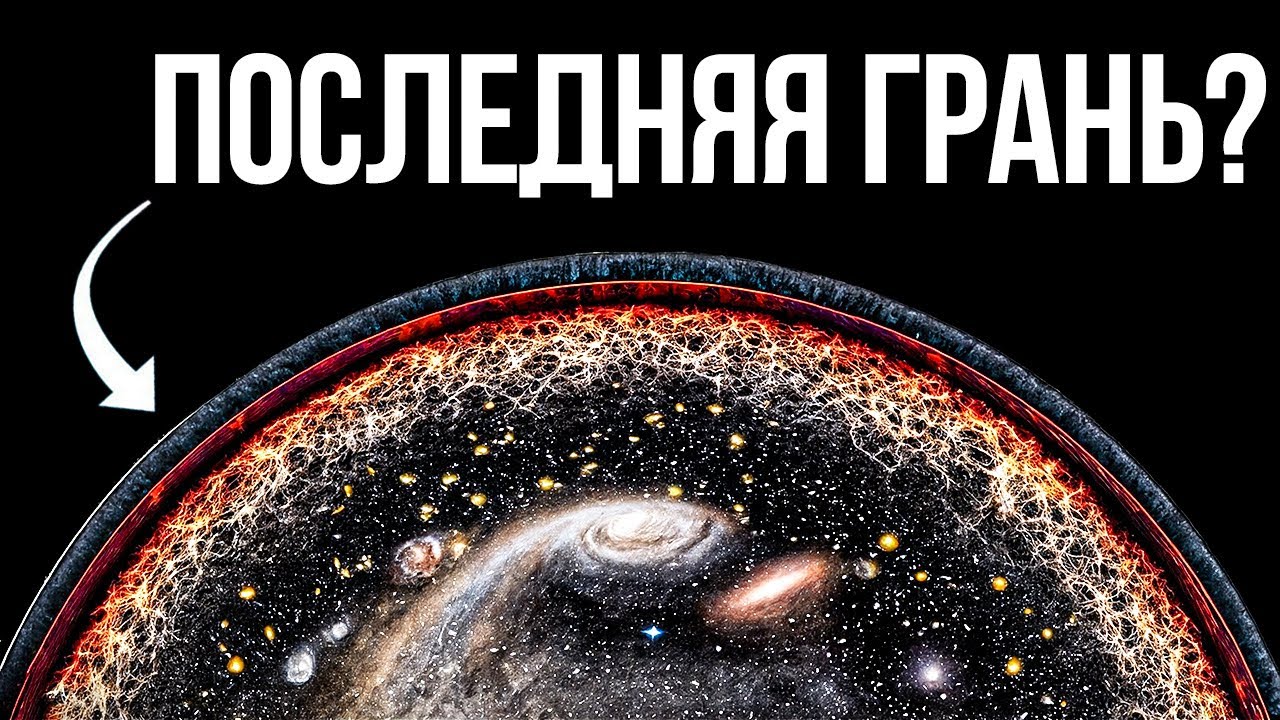
This boundary is called the cosmic horizon, and it extends approximately forty-six billion light-years in every direction from where you stand. The horizon does not mark the edge of the universe itself, but rather the edge of what light has had time to reveal to us. Beyond this distance, the universe continues, but its light has not yet reached Earth since the cosmos began nearly fourteen billion years ago. Tonight we travel toward this remarkable boundary, exploring what we would see along the way and what awaits at the very limit of visibility.
Tonight we take a slow and relaxing journey to the very edge of the observable universe — the farthest distance light has had time to reach us since the beginning of cosmic history.
This distant boundary lies about 46 billion light-years away, a horizon beyond which we cannot see. Not because the universe ends there… but because light from anything farther away has not yet had enough time to arrive.
In this calm astronomy documentary for sleep, we gradually travel outward from Earth through the vast layers of cosmic structure, watching the universe grow younger the farther we go.
Along the way we explore:
• The cosmic horizon and why it marks the limit of observation
• Why looking far into space means looking back in time
• Leaving the Solar System and the Milky Way behind
• The vast cosmic web of galaxies and dark matter
• How galaxies appear younger and smaller the farther away we look
• Redshift — the stretching of light as the universe expands
• The era of cosmic dawn, when the first stars ignited
• The Cosmic Microwave Background, the oldest light in existence
• Why the universe has no physical edge, only a horizon of visibility
This video is designed as a slow, immersive exploration of the universe, helping you relax, unwind, and fall asleep while traveling farther than any human ever could.
Drift gently through billions of light-years as we approach the limit of what the universe allows us to see.
And discover why the edge of the observable universe is not a wall… but a window into the earliest moments of cosmic time.
🔎 SEO Keywords Naturally Included
observable universe
JWST
James Webb Space Telescope
edge of the universe
cosmic horizon
how far can we see in the universe
cosmic microwave background
cosmic dawn
redshift explained
cosmic web structure
astronomy documentary
space documentary for sleep
relaxing space video
universe explained slowly
🏷 Tags (Copy-Paste Ready)
edge of the universe
observable universe
cosmic horizon
how big is the universe
cosmic microwave background
cosmic dawn
redshift astronomy
cosmic web
astronomy documentary
space documentary
science for sleep
relaxing space documentary
deep space exploration
universe explained
how far can we see in space
space for sleep
fall asleep to space
calming space video
cosmos documentary
milky way universe
Повторяем попытку...

Доступные форматы для скачивания:
Скачать видео
-
Информация по загрузке: