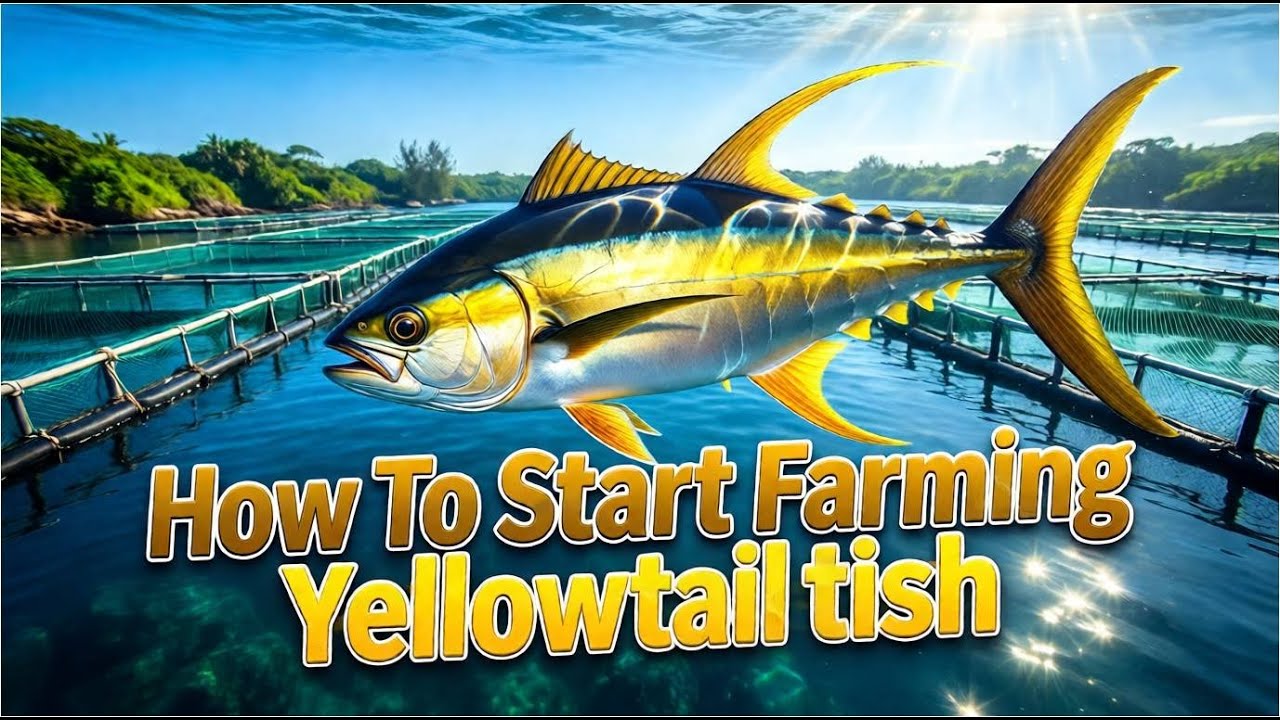
How To Start Farming Yellowtail Fish
Автор: Gerard Dawn “The Livestock Farmer”
Загружено: 2026-01-07
Просмотров: 6
Описание:
🐠 How To Start Farming Yellowtail Fish – The Complete Beginner’s Guide to High-Value, Sustainable Marine Aquaculture!
To get your copy of how to raise yellowtail, click on the following link below
https://www.guidetoprofitablelivestoc...
Ready to enter the premium finfish market with one of the most sought-after species in global seafood? Yellowtail farming—particularly of Japanese Amberjack (Seriola quinqueradiata), California Yellowtail (Seriola lalandi), and related Seriola species—is a fast-growing sector of marine aquaculture, prized for its rich, buttery flesh used in sashimi, sushi, and high-end restaurants worldwide.
In this comprehensive beginner’s guide, you’ll learn exactly what it takes to start a responsible yellowtail farming operation, from site selection and system design to feeding strategies, health management, and accessing lucrative domestic and export markets.
✅ What You’ll Learn in This Video:
Why yellowtail is a top choice for marine aquaculture:
– High market value: $8–$20+/lb for fresh sashimi-grade fillets
– Fast growth: reaches 3–5 kg (6–11 lbs) in 12–18 months
– Strong demand in sushi, hospitality, and export markets (Japan, U.S., EU)
Common farmed yellowtail species:
– Japanese Amberjack – dominant in Asia, ideal for sashimi
– California / Yellowtail Amberjack – farmed in Mexico, Australia, Mediterranean
– Greater Amberjack – hardy, but more aggressive
Farming systems:
– Offshore sea cages (most common—deep water, strong currents)
– Inshore net pens (lower cost, but higher disease risk)
– Land-based RAS (Recirculating Aquaculture Systems) – emerging for biosecurity & sustainability
Water requirements:
– Temperature: 18–24°C (64–75°F) – growth stalls below 15°C
– High dissolved oxygen (6 ppm), clean, well-flushed water
Sourcing fingerlings:
– Hatchery-reared juveniles (preferred for health & consistency)
– Wild-caught seed (regulated or banned in many regions)
Feeding strategy:
– High-energy, high-fat formulated pellets (45–50% protein)
– Automatic feeders with monitoring to reduce waste
Critical challenges:
– Parasites (sea lice, Cryptocaryon)
– Bacterial outbreaks (photobacteriosis, vibriosis)
– Cannibalism & aggression – requires proper grading and density control
Harvesting & processing:
– Live transport or ice-slurry stunning for premium quality
– Grading by size and fat content (marbling = higher value)
Legal & environmental permits:
– Marine aquaculture licenses
– Coastal zone management approvals
– Feed sustainability certifications (e.g., ASC, BAP)
Market pathways:
– Direct to sushi restaurants & seafood distributors
– Export to Japan and premium global markets
– Private-label or branded fresh/frozen products
💡 Pro Tip: Many successful yellowtail farms partner with hatcheries and feed companies to ensure consistent quality and meet certification standards—key for high-end buyers.
🔔 Don’t forget to LIKE, SUBSCRIBE, and hit the bell for more expert guides on marine finfish aquaculture, sustainable seafood, and profitable blue economy ventures!
💬 Got questions about yellowtail farming or market access? Ask in the comments—we’re here to help you build a clean, compliant, and premium marine aquaculture operation!
#YellowtailFarming #Aquaculture #SustainableSeafood #MarineFinfish #SashimiFish #BlueEconomy #FishFarming #FarmToTableSeafood
Повторяем попытку...
Доступные форматы для скачивания:
Скачать видео
-
Информация по загрузке: