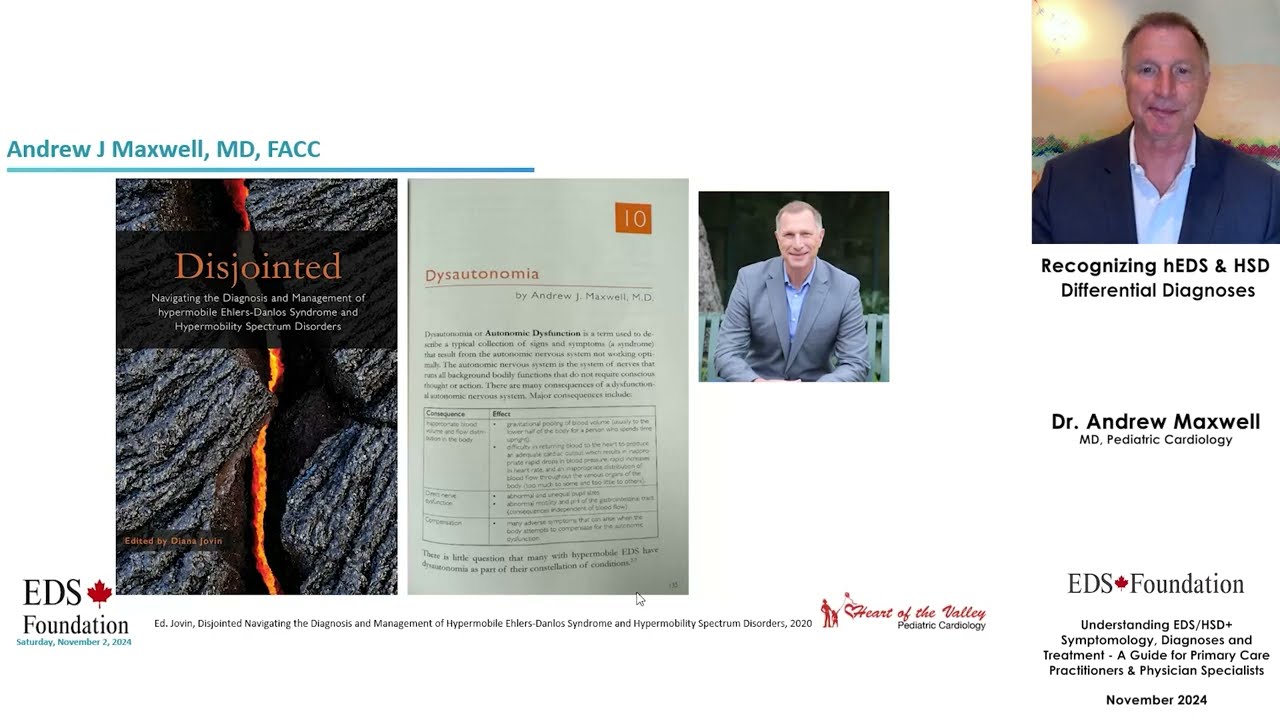
Recognizing hESD & HSD, Differential Diagnoses | Dr. Andrew Maxwell, MD, Pediatric Cardiology
Автор: The ILC Ehlers Danlos & Chronic Pain Foundation
Загружено: 2025-01-30
Просмотров: 1117
Описание:
Dr. Andrew Maxwell, MD, Pediatric Cardiology from the Heart of the Valley Pediatric Cardiology, presents his talk on Recognizing hESD & HSD, Differential Diagnoses.
Presented at the November 2024 EDS Conference: Understanding EDS/HSD+ Symptomology, Diagnoses & Treatment - A Guide for Primary Care Practitioners & Physician Specialists.
Our mission at The ILC Foundation is to help individuals overcome the challenges of living with Ehlers-Danlos Syndromes and other chronic pain diseases through knowledge, sharing resources, awareness, education, peer support, and research to find cures. Learn more at theilcfoundation.org
Here is a brief summary of Dr. Maxwell's presentation:
This presentation, given by Dr. Andrew Maxwell, a pediatric cardiologist, focuses on understanding and diagnosing hypermobile Ehlers-Danlos syndrome (hEDS) and hypermobility spectrum disorders (HSD). These conditions are caused by genetic differences that affect connective tissue, the substance that holds our bodies together. While genes play a role, environmental factors also contribute to these disorders.
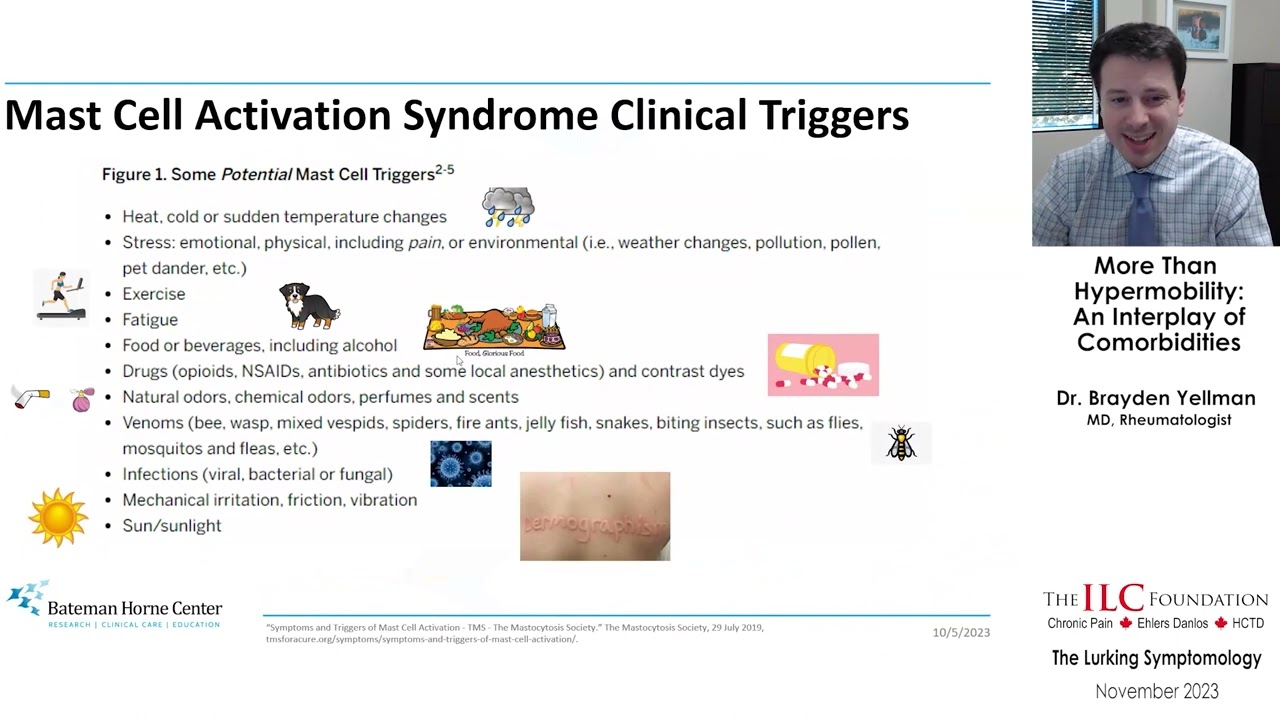
Dr. Maxwell explains that hEDS/HSD can cause a range of symptoms, including loose joints, chronic pain, digestive problems, postural issues, difficulty with fine motor skills, and easy bruising/bleeding. He also introduces the "PENTAD" concept, a group of commonly associated conditions including dysautonomia (like POTS), digestive issues, allergies, mast cell activation syndrome, and autoimmune disorders.
The presentation discusses the different types of Ehlers-Danlos syndromes, emphasizing hEDS and HSD. While the exact genes responsible for hEDS are still being researched, recent studies have identified potential mutations in the calocrine gene.
Dr. Maxwell describes the 2017 criteria for diagnosing hEDS, which include:
Criterion 1: Generalized joint hypermobility, assessed using the Beighton score.
Criterion 2: Physical features, requiring at least five out of twelve specific signs, like stretchy skin, certain skin bumps, unusual scarring, crowded teeth, and specific hand features.
Criterion 3: Ruling out other diagnoses, like other connective tissue disorders, autoimmune conditions, or other explanations for the symptoms.
HSD diagnosis is simpler, requiring only two out of five positive responses on a hypermobility assessment.
The presentation then highlights limitations of the 2017 criteria, especially for diagnosing hEDS in children and the potential for over-diagnosing HSD. In response, the International Consortium on Ehlers-Danlos Syndrome published updated criteria for diagnosing hEDS in children in 2023. These new criteria simplify the tissue feature requirements and incorporate comorbidities, emphasizing the importance of recognizing a wider range of symptoms beyond joint hypermobility.
The presentation also emphasizes the need for ongoing research to refine diagnostic criteria, understand the underlying genetics, and develop better treatments for hEDS/HSD.
A study involving 100 patients with Postural Orthostatic Tachycardia Syndrome (POTS) revealed a strong connection between POTS and hypermobility spectrum disorders (HSD).
This study highlights the "PENTAD" concept, suggesting a strong link between HSD, dysautonomia (including POTS), mast cell activation syndrome (MCAS), digestive issues, and autoimmune diseases.
The study also introduces the concept of "Syndrome of SAG" (sagging organs), proposing that hypermobile patients experience organ sagging, leading to various symptoms. This sagging can affect various organs, including the brain, skull, neck, airways, spine, veins, abdomen, diaphragm, and pelvic area.
Finally, the presentation emphasizes the need for further research and collaboration between healthcare professionals and patient organizations to improve understanding and diagnosis of these complex conditions.
Повторяем попытку...
Доступные форматы для скачивания:
Скачать видео
-
Информация по загрузке: