Raphael Paintings (1483-1520) - A collection of paintings & drawings Silent Slideshow
Автор: Master Painters
Загружено: 2018-10-03
Просмотров: 8160
Описание:
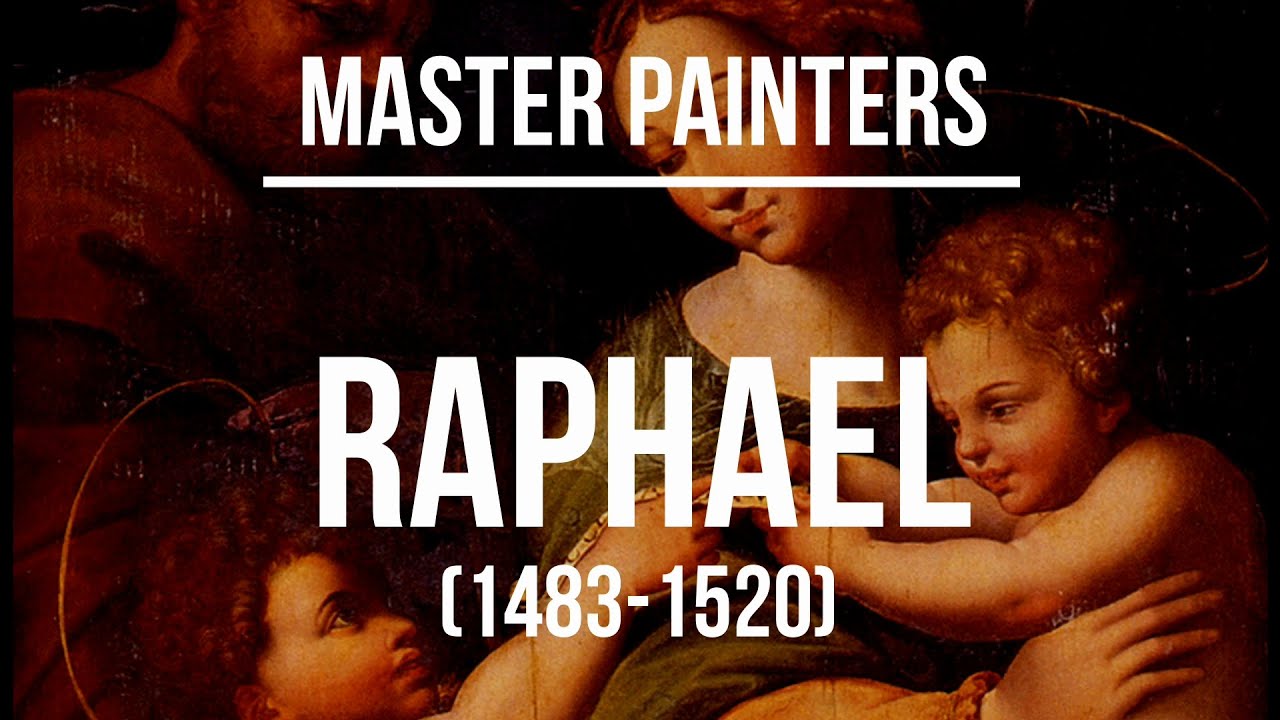
Raffaello Sanzio da Urbino (1483-1520), known as Raphael, was an Italian painter and architect of the High Renaissance. His work is admired for its clarity of form, ease of composition, and visual achievement of the Neoplatonic ideal of human grandeur. Together with Michelangelo and Leonardo da Vinci, he forms the traditional trinity of great masters of that period.
Raphael was enormously productive, running an unusually large workshop and, despite his death at 37, leaving a large body of work. Many of his works are found in the Vatican Palace, where the frescoed Raphael Rooms were the central, and the largest, work of his career. The best known work is The School of Athens in the Vatican Stanza della Segnatura. After his early years in Rome much of his work was executed by his workshop from his drawings, with considerable loss of quality.
After his death, the influence of his great rival Michelangelo was more widespread until the 18th and 19th centuries, when Raphael's more serene and harmonious qualities were again regarded as the highest models. His career falls naturally into three phases and three styles, first described by Giorgio Vasari: his early years in Umbria, then a period of about four years (1504–1508) absorbing the artistic traditions of Florence, followed by his last hectic and triumphant twelve years in Rome, working for two Popes and their close associates.
From 1517 until his death, Raphael lived in the Palazzo Caprini in the Borgo, in rather grand style in a palace designed by Bramante. He never married, but in 1514 became engaged to Maria Bibbiena, Cardinal Medici Bibbiena's niece; he seems to have been talked into this by his friend the Cardinal, and his lack of enthusiasm seems to be shown by the marriage not having taken place before she died in 1520. He is said to have had many affairs, but a permanent fixture in his life in Rome was "La Fornarina", Margherita Luti, the daughter of a baker (fornaro) named Francesco Luti from Siena who lived at Via del Governo Vecchio. He was made a "Groom of the Chamber" of the Pope, which gave him status at court and an additional income, and also a knight of the Papal Order of the Golden Spur. Vasari claims he had toyed with the ambition of becoming a Cardinal, perhaps after some encouragement from Leo, which also may account for his delaying his marriage.
Raphael's premature death on Good Friday which was possibly his 37th birthday, was due to unclear causes, with several possibilities raised by historians.
Whatever the cause, in his acute illness, which lasted fifteen days, Raphael was composed enough to confess his sins, receive the last rites, and to put his affairs in order. He dictated his will, in which he left sufficient funds for his mistress's care, entrusted to his loyal servant Baviera, and left most of his studio contents to Giulio Romano and Penni. At his request, Raphael was buried in the Pantheon.
His funeral was extremely grand, attended by large crowds. The inscription in his marble sarcophagus, an elegiac distich written by Pietro Bembo, reads: "Ille hic est Raffael, timuit quo sospite vinci, rerum magna parens et moriente mori", meaning: "Here lies that famous Raphael by whom Nature feared to be conquered while he lived, and when he was dying, feared herself to die."
Vasari says that Raphael eventually had a workshop of fifty pupils and assistants, many of whom later became significant artists in their own right. This was arguably the largest workshop team assembled under any single old master painter, and much higher than the norm. They included established masters from other parts of Italy, probably working with their own teams as sub-contractors, as well as pupils and journeymen. We have very little evidence of the internal working arrangements of the workshop, apart from the works of art themselves, which are often very difficult to assign to a particular hand.
Vasari emphasises that Raphael ran a very harmonious and efficient workshop, and had extraordinary skill in smoothing over troubles and arguments with both patrons and his assistants. However though both Penni and Giulio were sufficiently skilled that distinguishing between their hands and that of Raphael himself is still sometimes difficult, there is no doubt that many of Raphael's later wall-paintings, and probably some of his easel paintings, are more notable for their design than their execution. Many of his portraits, if in good condition, show his brilliance in the detailed handling of paint right up to the end of his life.
Other pupils or assistants include Raffaellino del Colle, Andrea Sabbatini, Bartolommeo Ramenghi, Pellegrino Aretusi, Vincenzo Tamagni, Battista Dossi, Tommaso Vincidor, Timoteo Viti (the Urbino painter), and the sculptor and architect Lorenzetto.
Thank you, please subscribe for future videos
/ @masterpainters1706
Повторяем попытку...
Доступные форматы для скачивания:
Скачать видео
-
Информация по загрузке: