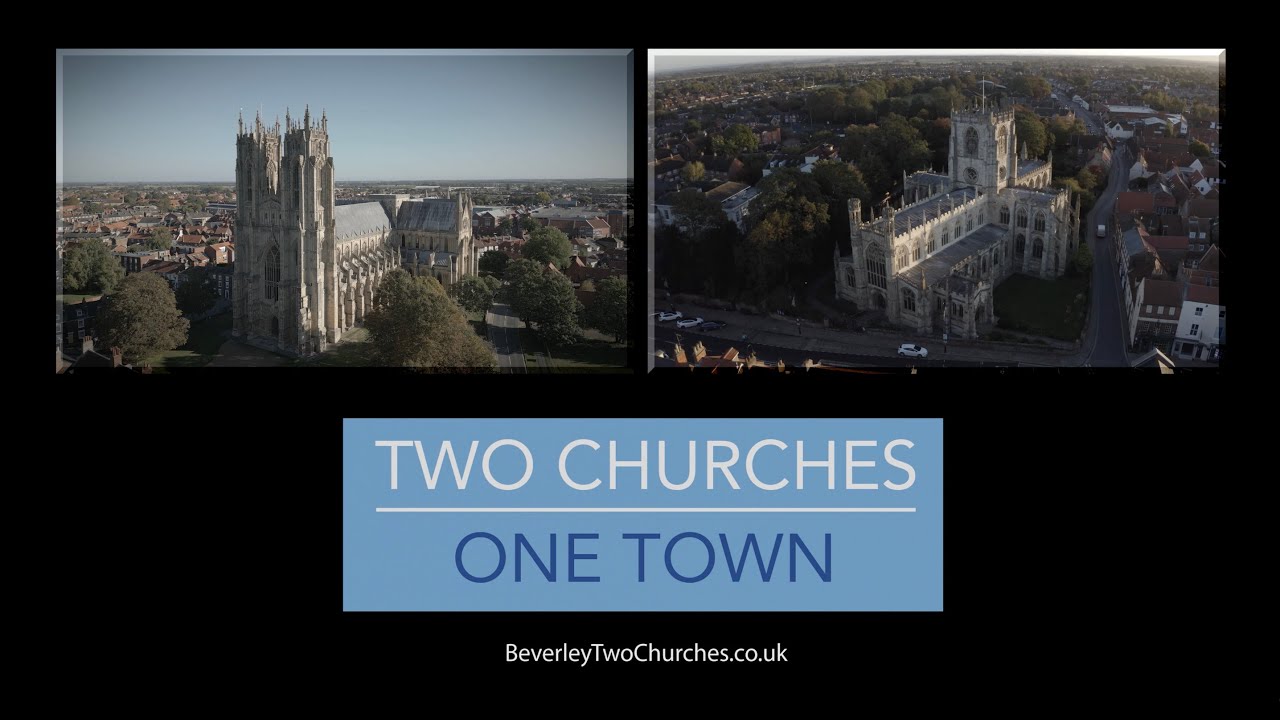
Gothic Medieval Beverley Minster Largest Parish Church in England
Автор: Tom McClean Positive Belfast
Загружено: 2025-03-28
Просмотров: 144
Описание:
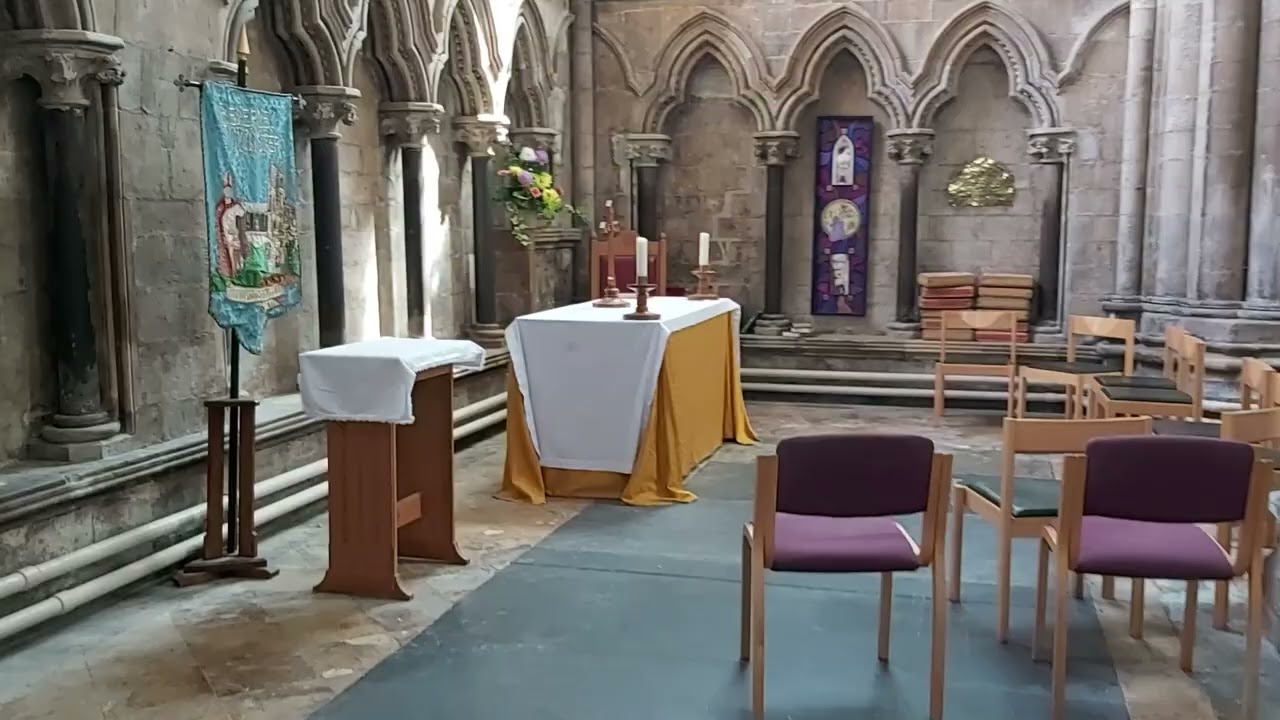
This video was taken by my good Youtube friend Chris who lives in Bempton Bridlington East Yorkshire. Here he takes a look around the amazing Gothic architecture, parish church of Beverley Minster Yorkshire.
Beverley Minster, otherwise known as the Parish Church of Saint John and Saint Martin, in Beverley, East Riding of Yorkshire, is a parish church in the Church of England. It is one of the largest parish churches in the UK, larger than one-third of all English cathedrals. It is regarded as a Gothic masterpiece.
It is a Grade I listed building.
The minster owes its origin and much of its subsequent importance to Saint John of Beverley, Bishop of York (706–714?), who founded a monastery locally c. 700 and whose remains still lie in a vault beneath the nave.
A 12th-century charter indicates substantial rebuilding work following the canonisation of St John of Beverley in 1037. Archbishop Kynesige (1051–60) added a high stone tower; his successor Ealdred (1060–69) expanded the church with a new presbytery. He also installed a painted and gilded ceiling from the presbytery to the tower. Nothing remains of this Anglo-Saxon church, and no records of building work under the Normans survive.
Saint Thomas Becket of Canterbury (December 1119 or 20 – December 1170) was named Provost of Beverley in 1154.
A fire in 1188 seriously damaged the minster and the town. Much of the church was damaged and complete rebuilding was required
Building and rebuilding work continued over the centuries. The nave was completed and the west front with its two great towers was built, c. 1400. These towers are a superlative example of the Perpendicular style, and formed the inspiration for the present west towers of Westminster Abbey [citation needed], designed by Nicholas Hawksmoor.
By1548, the minster was reduced to the status of a parish church.
By the early 18th century the church was in a state of decay. Restoration continued from 1717 to 1731. This as said, has been ongoing.
The Bells
Both west towers contain bells. The south-west tower contains a swinging bourdon bell called Great John. It chimes the hour and it dates from 1901. It weighs over 7 tons and it is over 7 feet in diameter. Despite its name, it is not dedicated to Saint John of Beverley. It reads, "I am called the great bell of Saint John the Evangelist 1901". Records show that the Minster possessed two bells in 1050. Four bells were installed in 1366, three of which having been recast and are still used in the Minster. The chimes for each quarter are rung on the 10 bells in the north-west tower and the melody was composed by organist John Camidge. There have been two major overhauls of the bells, one in 1896 and the other in 1901 by Taylor of Loughborough.
Significant Burials
John of Beverley (died 7 May 721)
Eleanor, Lady Percy, 1328
Idonea de Clifford, 1365
George Percy, a priest, 1474
Henry Percy, 4th Earl of Northumberland
Maud Herbert, wife of 4th Earl of Northumberland, 1485/1495.
Henry Percy, 5th Earl of Northumberland, 1527
Catherine Spencer, wife of 5th Earl, 1542
Oliver De Lancey, 1785
Significant Church Features
Features
Rose window
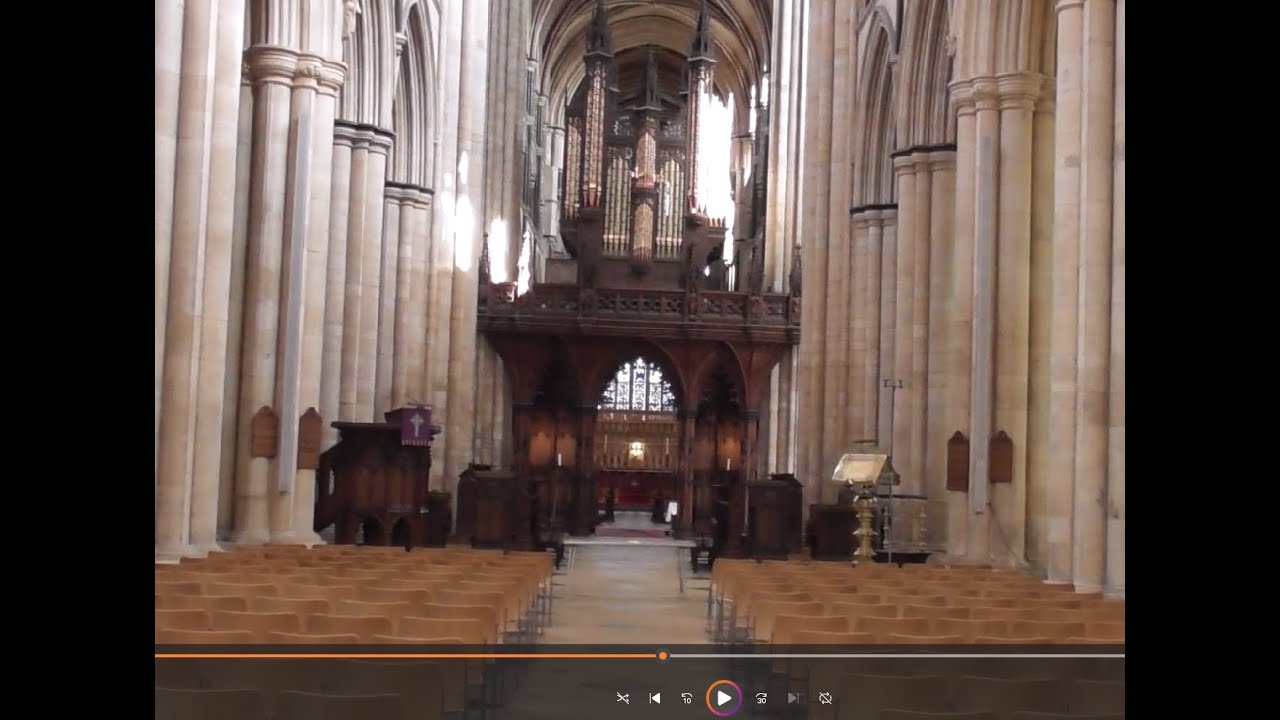
Nave
Ceiling in the nave
Engraving of a Feast of Fools, a carving on a wooden misericord in Beverley Minster
Features of the interior include shafts of Purbeck Marble, stiff-leaf carving and the tomb of Lady Eleanor Percy, dating from around 1340 and covered with a richly decorated canopy, regarded by F. H. Crossley as one of the best surviving examples of Gothic art.
A total of 68 16th-century misericords are located in the quire of the minster, and nearby is a sanctuary or frith stool dating back to Anglo-Saxon times.
The church contains one of the few remaining frith stools (also known as frid stools, meaning "peace chairs") in England. Anyone wanting to claim sanctuary from the law would sit in the chair. The chair dates from Saxon times before 1066.
In the central tower is a massive treadwheel crane which was used to lift building materials to the roof space. It is of medieval origin but has been largely reconstructed.
The organ is mounted above a richly carved wooden screen dating from 1877 to 1880, designed by Sir George Gilbert Scott, and carved by James Elwell of Beverley. There is a staircase in the north aisle which was used in collegiate times to gain access to the chapter house, since demolished.
A notable feature is the series of carvings of musicians which adorn the nave, which date to the second quarter of the 14th century.
Location sequences for the film Lease of Life (1954), two TV series of Victoria in 2016-7 and the BBC dramas King Charles III and Gunpowder in 2017 were filmed in Beverley Minster.
Повторяем попытку...
Доступные форматы для скачивания:
Скачать видео
-
Информация по загрузке:





![Проект «Поговорим о Йоркшире» (Видео 1 из 4): История Йоркшира и его языка [Йоркширское общество]](https://imager.clipsaver.ru/LWHLZ0tQjRo/max.jpg)