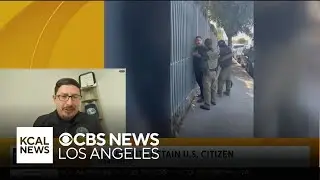
Banned DJI Mini Drone Vs Human Trafficking. Part 113 DROPS SOON !!!
Автор: FLY ZONE
Загружено: 2026-01-19
Просмотров: 108
Описание:
PART 113 DROPS SOON!!! It's out of control. Hit the notification button.
Why hasn't the Mayor of Pomona California, cleaned up the prostitution problem on Holt Ave in Pomona California? Because it's complicated.
The issue of persistent prostitution along the Holt Avenue corridor in Pomona is complex, and it’s not simply a matter of the mayor or city officials flipping a switch. Here are several key reasons why the problem remains challenging, even with efforts underway:
1. Legal / enforcement limits
In California, laws around prostitution and solicitation have changed. For example, the crime of loitering for the purpose of prostitution was substantially re-written under Senate Bill 357, which decriminalized that specific loitering offense.
Enforcement resources are limited, and police must balance many priorities. For example the Pomona Police Department has a dedicated Sexual Exploitation & Trafficking Team (SETT) patrolling the corridor, but even they acknowledge this area presents long-term, deep-rooted challenges.
2. Scale, history & complicating factors
The Holt corridor (sometimes called “The Blade” or “The Track”) has a long history of prostitution, human trafficking, gang involvement, motels with high calls for service, and other intertwined nuisance problems.
Many of the sex workers may be victims of trafficking or coercion, meaning that enforcement alone (arresting the individuals standing on corners) doesn’t always address root causes.
Motels along the corridor have been the subject of nuisance abatement, but property owner cooperation, legal proceedings, and proving nuisance violations all take time. For instance, in July 2025 the city initiated actions against several motels (e.g., Pala Motel, Deluxe Motel, Super Inn) for millions of calls for service since 2022.
3. Multiple jurisdictions & inter-agency coordination
The corridor sits in an area that may straddle jurisdictional boundaries, and criminal activity often has mobility (people come in from other cities, drop off & pick up). For example, some sex work activity begins on Holt and then moves to motels in nearby cities like Claremont.
Effective long-term change often requires coordination among city code enforcement, police, county prosecutors, business owners, motel operators, social-services/trafficking victim advocates, and the community.
4. Social, economic & structural root causes
Broader issues like poverty, labor market deficits, drug addiction, homelessness, trafficking, and motel industry vulnerabilities all feed into the corridor’s persistent problems. The city document pointed out schools near Holt, vulnerable youth, and trafficking recruitment.
Without adequate alternative opportunities, support services (housing, substance abuse treatment, job training), simply removing people from the street may have limited long-term effect.
5. Mayor’s role vs. limits
The mayor of a city like Pomona can set policy, advocate for resources, bring attention to the issue, and push for ordinances (for instance nuisance motel ordinances, property owner accountability, business improvement districts). But the mayor does not have sole operational control of police enforcement, court prosecutions, or social-service delivery.
Many of the changes take time (legal processes, property owner actions, structural investments). For example the city is moving toward establishing a Business Improvement District (BID) in the Holt area to add private security and improve conditions.
In short
So: Why can’t the mayor just “clean it up” fast? Because this is not a simple case of enforcing one law; it involves a deep-entrenched ecosystem of illegal activity, structural vulnerabilities, jurisdictional issues, legal constraints, and social factors. That doesn’t mean nothing is being done — the city is acting (nuisance abatement, dedicated police units, property owner actions). But “cleaning up” doesn’t happen overnight.
The National Human Trafficking Hotline: (888) 373-7888
Project Sister Rape Crisis Hotline: (909) 626-4357
Project Sister Child Abuse Hotline: (626) 966-4155
Project Sister Website: projectsister.org
Project Resilience Number: (909) 643-1635
Project Resilience Website: project-resilience.org
REMOTE PILOT CERTIFIED PART 107 CHECK LIST.
1. Maintains a valid Remote Pilot Certificate.
2. Flies in uncontrolled airspace.
3 Maintains VLOS.
4 Flies with Remote I.D.
5. Yields to all manned aircraft.
6. Does not fly over people or moving vehicles.
7. Uses anti collision lights at night.
8. Does not fly above 400 feet.
9. Maintains maintenance on all equipment.
10. Respectful to law enforcement.
Повторяем попытку...

Доступные форматы для скачивания:
Скачать видео
-
Информация по загрузке: