Oral Argument on gun trafficking to Mexico: Smith & Wesson v. Mexico
Автор: Supreme Court Oral Argument Transcripts
Загружено: 2025-03-12
Просмотров: 5276
Описание:
Oral argument audio (including transcript) of case
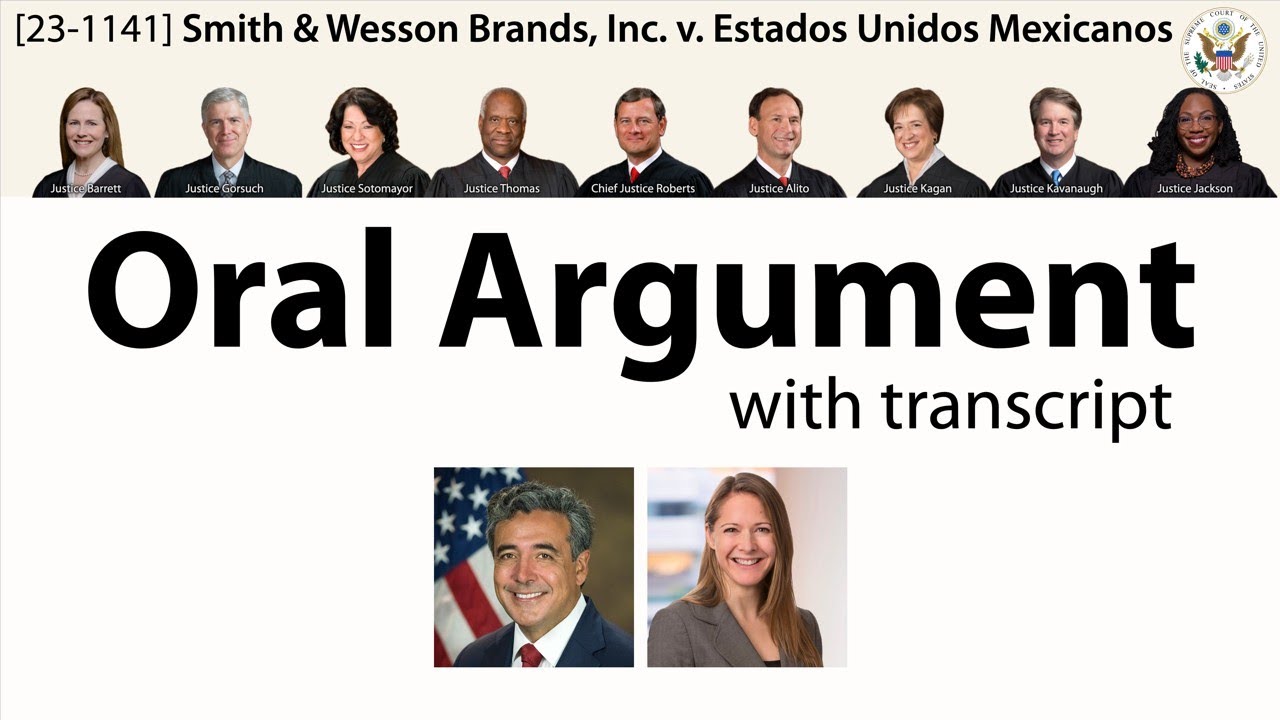
[23-1141] Smith & Wesson Brands, Inc. v. Estados Unidos Mexicanos
argued at the Supreme Court of the United States on Mar 4, 2025.
More information about the case:
Wikipedia: https://en.wikipedia.org/wiki/Smith_&...
Justia: https://supreme.justia.com/cases/fede...
Docket: https://www.supremecourt.gov/docket/d...
Oyez.org: https://www.oyez.org/cases/2024/23-1141
Video produced based on information and transcripts on oyez.org, licensed under a CC-BY-NC License (https://creativecommons.org/licenses/....
Not affiliated with oyez.org or the Supreme Court.
Argued on Mar 4, 2025.
Petitioner: Smith & Wesson Brands, Inc.
Respondent: Estados Unidos Mexicanos
Advocates:
Noel J. Francisco (for the Petitioners)
Catherine E. Stetson (for the Respondent)
Chapters
0:00:00 Noel J. Francisco
0:40:27 Catherine E. Stetson
1:25:58 Rebuttal: Noel J. Francisco
Facts of the case (from oyez.org)
The Mexican government sued several U.S. gun manufacturers in federal court, alleging their practices facilitated illegal gun trafficking to Mexican drug cartels, causing harm to Mexico. The defendants moved to dismiss, arguing the lawsuit was barred by the Protection of Lawful Commerce in Arms Act (PLCAA), which prohibits certain lawsuits against gun manufacturers. The district court dismissed the case, holding that the PLCAA applied and barred Mexico's claims. Mexico appealed.
The U.S. Court of Appeals for the First Circuit reversed, holding that while the PLCAA does apply to lawsuits by foreign governments for harm suffered abroad, Mexico’s lawsuit falls within the statute’s “predicate exception” for claims alleging knowing violations of laws applicable to gun sales. The court found Mexico adequately alleged that the defendants aided and abetted illegal gun trafficking in violation of U.S. laws, and that this proximately caused harm to Mexico. The court rejected the defendants’ arguments that the causal chain was too attenuated, finding Mexico plausibly alleged direct harm from having to combat well-armed cartels. The court remanded the case for further proceedings, allowing Mexico's lawsuit to move forward.
Question
Can U.S. gun manufacturers be held liable for violence in Mexico under theories of proximate causation and aiding and abetting, based on their domestic production and sale of firearms that are later trafficked to Mexican cartels?
Повторяем попытку...
Доступные форматы для скачивания:
Скачать видео
-
Информация по загрузке:




![[Landmark Cases] Travel Ban: Trump v. Hawaii](https://image.4k-video.ru/id-video/F9fzhH4bHrw)

