PLATO@50: An Early Community of Multiplayer Games
Автор: Computer History Museum
Загружено: 2010-06-23
Просмотров: 4067
Описание:
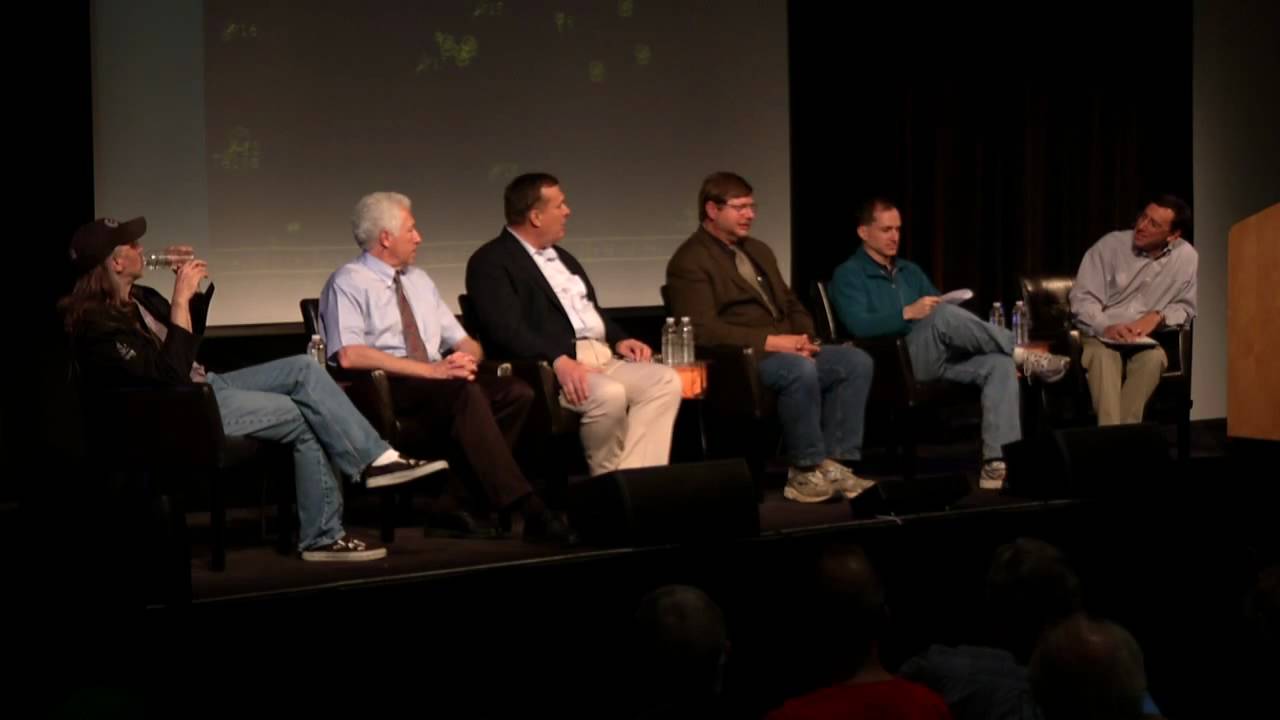
On June 3, 2010, the Computer History Museum hosted a 6-session conference on the PLATO learning system. Session 5 was entitled "PLATO Games: An Early, Robust Community of Multiplayer, Online Games."
Session 5 Description:
Social gaming is the fusion of computer games and digital communities. Some of the earliest instances of this occurred on the PLATO system, and were made possible by the PLATO system's technological innovations as well as a sufficiently open environment to allow the development of such games. The most popular PLATO games were engineered with text based communications and what are by today's standards simple graphics. The result was some of the earliest instances of digital environments that are both social and immersive. PLATO games are the ancestors of, among other games, today's massively multiplayer games. They possess key attributes of today's games: users find them compelling or addictive, they are difficult to balance and they facilitate interesting social behavior. Three creators of these games talk about their experiences and other panel members discuss the influence of the PLATO experience on the current world of simulation and gaming. Panel members are: Bruce Artwick, John Daleske, Dr. Brand Fortner, Rich Hilleman and Dr. Andrew Shapira. Moderated by John Markoff of the New York Times.
PLATO Overview:
PLATO was a centralized, mainframe-based system, with very sophisticated terminals connected to it. Its mission was to deliver education electronically at low cost. But it became much, much more than that. It quickly became home to a diverse online community that represented a microcosm of today's online world. Much of what we take for granted in today's hyper-active, always-on world of social media, blogs, and addictive computer games could be applied to what life was like on the PLATO system beginning in the mid-1970s.
PLATO, an acronym standing for "Programmed Logic for Automated Teaching Operations," started as a project of the Coordinated Sciences Laboratory (CSL) at the University of Illinois in 1960. The original goal was to build on the mechanical "teaching machine" work of B.F. Skinner and instead see if it was possible to build a computer that could teach. In time they discovered not only was the answer yes, but computers could be extremely effective, and economically viable, at teaching large segments of the population.
In the 1970s, Control Data Corporation entered into a series of agreements with the University of Illinois to commercialize the PLATO system and bring it to the marketplace. The result was a great expansion of PLATO throughout the U.S. and the world, with systems installed in Canada, France, Belgium, Israel, Sweden, Australia, South Africa, United Kingdom, and elsewhere. Fifty years on, PLATO has left its imprint across a wide range of computing activities, from e-learning to social media, from online multiplayer games to major hardware and software innovations.
Catalog Number: 102702356
Lot Number: X5778.2010
Повторяем попытку...
Доступные форматы для скачивания:
Скачать видео
-
Информация по загрузке:


![Nassim Taleb: How Things Gain from Disorder [Entire Talk]](https://imager.clipsaver.ru/B2-QCv-hChY/max.jpg)







![1. CS50 на русском: Лекция #1 [Гарвард, Основы программирования, осень 2015 год]](https://imager.clipsaver.ru/SW_UCzFO7X0/max.jpg)