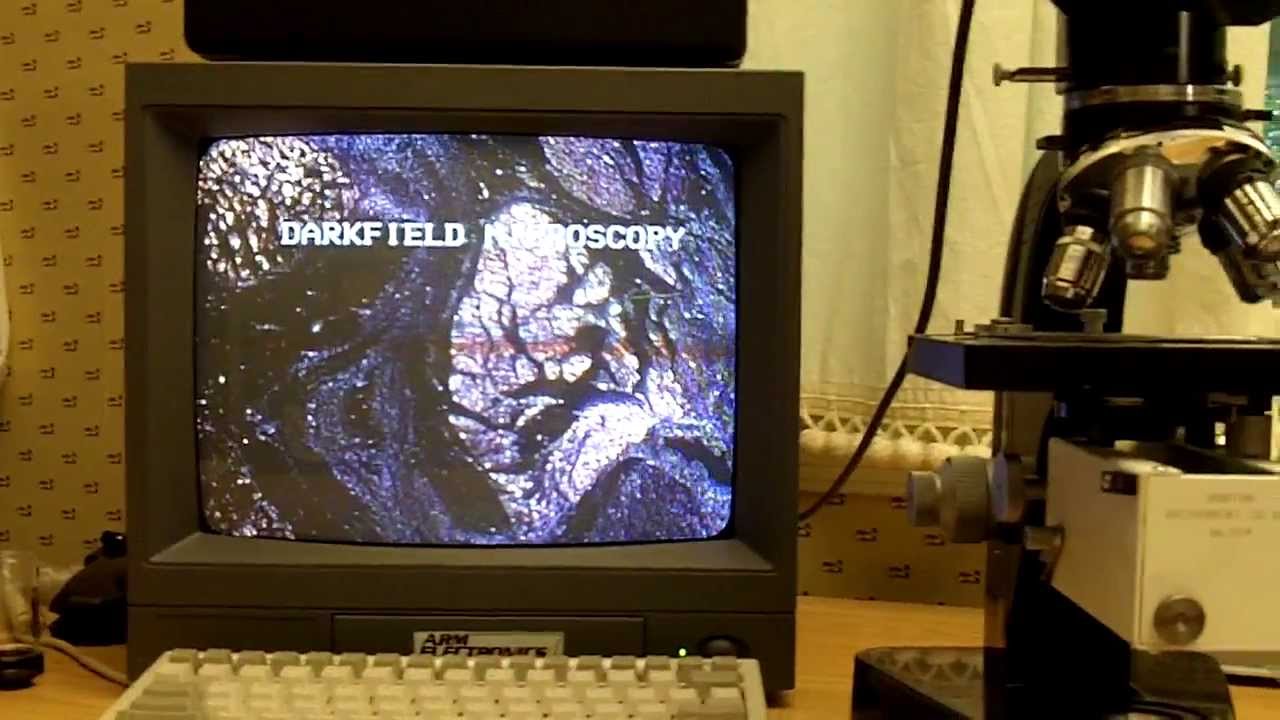
THE REAL DARKFIELD MICROSCOPY DETAILS ARE REVEALED.....CONDENSER AND OBJECTIVE REQUIREMENTS
Автор: James Averill
Загружено: 2013-08-10
Просмотров: 16277
Описание:
Darkfield optical methods started to appear around 1850. This is a discussion of the key components for an upright compound optical microscope. There is very little on the cloud for a cleqr explanation of the nuts-and-bolts of the darkfield method. Live blood, bacteria, diatoms, aquatics and even thin sections of low contrast specimen (unstained, such as brain sections of rats) can all benefit from darkfield illumination.
Clean glass slides that are 1mm thick (or thinner) are required for good darkfield. It is best to work in a darkened room when doing darkfield method. It is important that the microscope you use has a very good, intense light source.....30W variable intensity is minimum. An older student scope or a scope with cheap LED lighting will not get the job done properly. Halogen 100W or a good LED illuminator (see our YouTube clip on this subject) is best. The microscope make must have interchangeable substage condensers with rack and pinion adjustment in the z. Check your microscope owner's manual or general catalog be be sure they even offer a true dry or oil darkfield condenser.....many Chinese made microscopes do not. If you are considering a microscope from one of the major microscope makers (NOZL...Nikon, Olympus, Zeiss, Leica) you will find that these items are available but very few reps know what you will learn in this video....very few! We specialize in the legacy microscopes from E. Leitz (now Leica Microsystems) made from the 1960's to the early 1990's. EBay is a good source of darkfield condensers for older NOZL microscopes. visit us at buntgrp dot com Leitz microscopes to consider for serious darkfield methods will be the Dialux, Ortholux I/II and Orthoplan.
Повторяем попытку...
Доступные форматы для скачивания:
Скачать видео
-
Информация по загрузке: