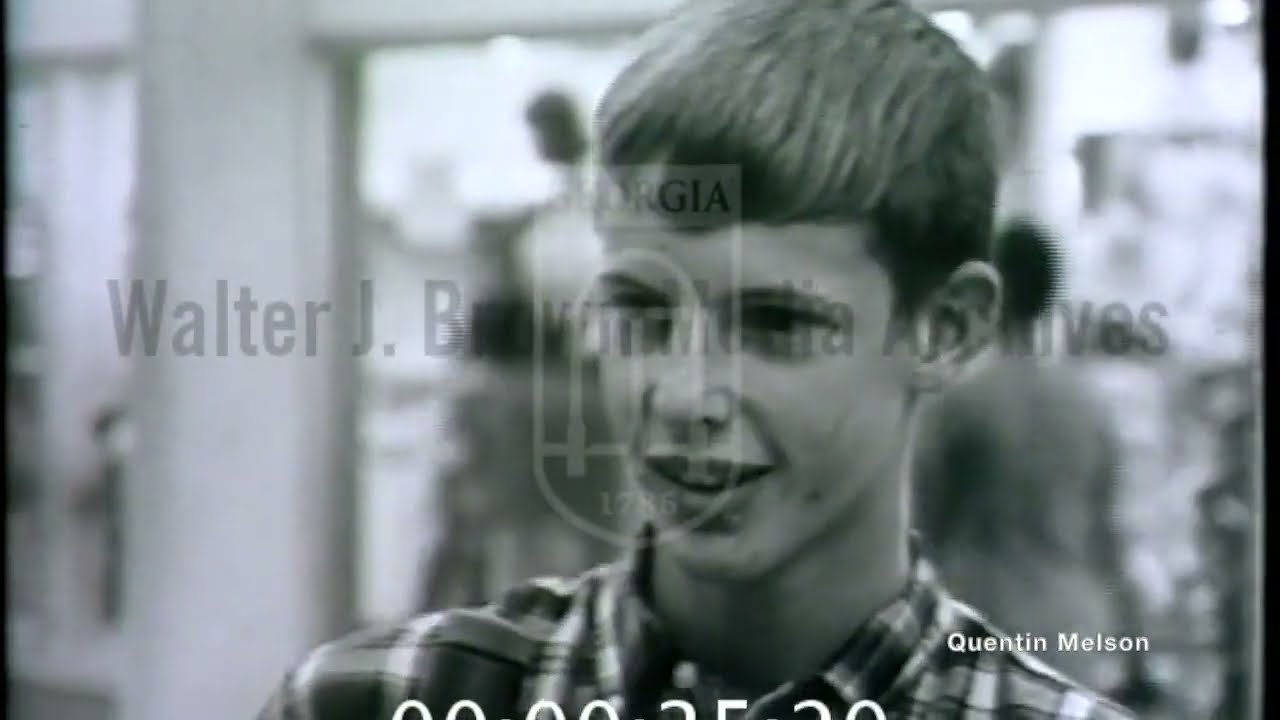
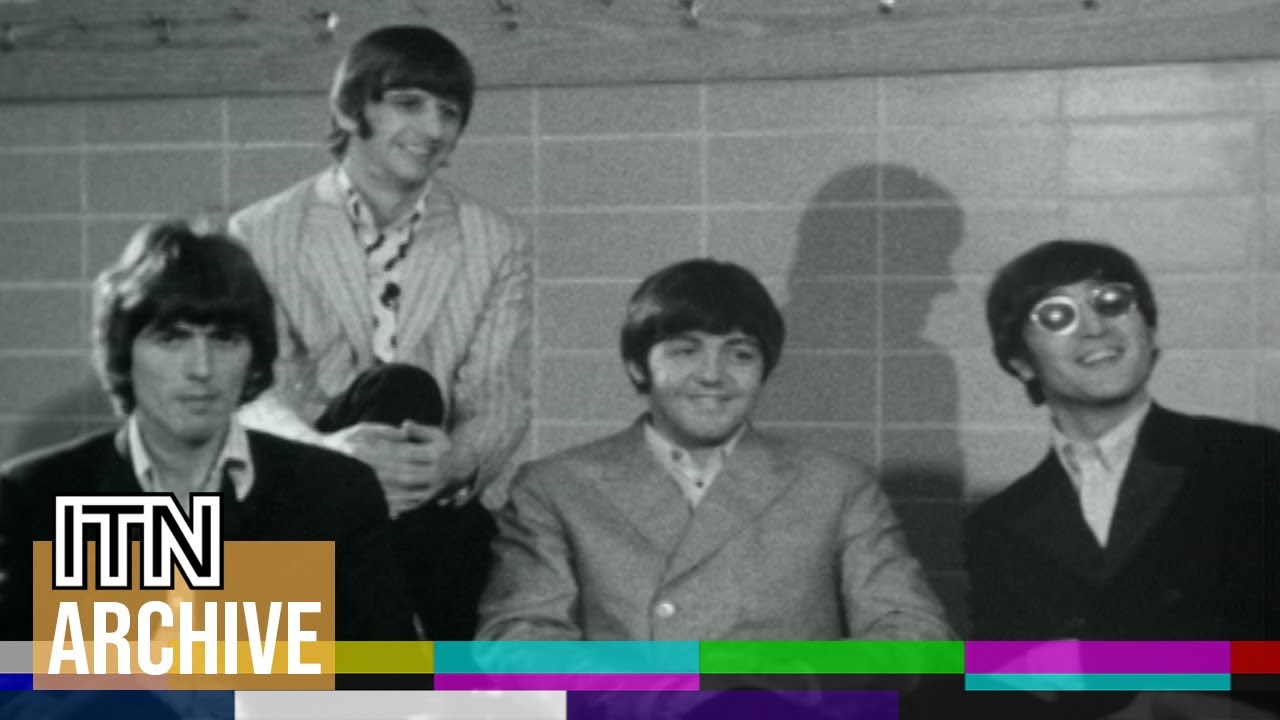
Teenagers React to John Lennon's Statement that Beatles Are More Popular Than Jesus Christ (1966)
Автор: Foggy Melson Music
Загружено: 2022-08-30
Просмотров: 1391
Описание:
More popular than Jesus" is a phrase taken from a 1966 interview in which John Lennon of the Beatles claimed that the public's infatuation with the band surpassed that of Jesus Christ, and that Christian faith was declining to the point where it might be outlasted by rock music. His opinions drew no controversy when published in the Evening Standard in London, but ignited angry reactions from Christian communities when republished in the United States.
Lennon's comments incited protests and threats, particularly throughout the Bible Belt in the Southern United States. Some radio stations stopped playing Beatles songs, records were publicly burned, press conferences were cancelled, and the Ku Klux Klan picketed concerts. The controversy coincided with the band's 1966 US tour and overshadowed press coverage of their newest album, Revolver. Lennon apologised at a series of press conferences, clarifying that he was not comparing himself to Christ.
The controversy deeply impacted the band, contributing significantly to their decision to cease touring entirely. In 1980, Lennon was murdered by a Christian fan of the Beatles, Mark David Chapman, who stated that Lennon's comment was a motivating factor in the killing, though he has since refuted this claim.[5]
Background
edit
John Lennon speaking to reporters in September 1964
In March 1966, London's Evening Standard ran a weekly series titled "How Does a Beatle Live?"[6] that featured individual interviews with Beatles John Lennon, Ringo Starr, George Harrison and Paul McCartney. The articles were written by Maureen Cleave,[6] who knew the group well and had interviewed them regularly since the start of Beatlemania in the United Kingdom. She had described them three years earlier as "the darlings of Merseyside",[6] and in February 1964 had accompanied them on their first visit to the United States.[6][7] She chose to interview the band members individually for the lifestyle series, rather than as a group.[6]
Cleave carried out the interview with Lennon in February[8] at Kenwood, his home in Weybridge, Surrey. Her article portrayed him as restless and searching for meaning in his life; he discussed his interest in Indian music and said he gleaned most of his knowledge from reading books.[9] Among Lennon's many possessions, Cleave found a full-sized crucifix, a gorilla costume, a medieval suit of armour[10] and a well-organised library with works by Alfred, Lord Tennyson, Jonathan Swift, Oscar Wilde, George Orwell, and Aldous Huxley.[4] Another book, Hugh J. Schonfield's The Passover Plot, had influenced Lennon's ideas about Christianity, although Cleave did not refer to it in the article.[11] She mentioned that Lennon was "reading extensively about religion",[4] and quoted him as saying:
Christianity will go. It will vanish and shrink. I needn't argue about that; I'm right and I'll be proved right. We're more popular than Jesus now; I don't know which will go first – rock 'n' roll or Christianity. Jesus was all right but his disciples were thick and ordinary. It's them twisting it that ruins it for me.[4][12]
Cleave's interview with Lennon was published in The Evening Standard on 4 March under the secondary heading "On a hill in Surrey ... A young man, famous, loaded, and waiting for something".[13] The article provoked no controversy in the UK,[14] where Church attendance was in decline and Christian churches were attempting to transform their image to make themselves more "relevant to modern times".[15] According to author Jonathan Gould: "The satire comedians had had a field day with the increasingly desperate attempts of the Church to make itself seem more relevant ('Don't call me vicar, call me Dick ...')."[15] In 1963, Bishop of Woolwich John Robinson had published the book Honest to God, urging the nation to reject traditional church teachings on morality and the concept of God as an "old man in the sky" and instead embrace a universal ethic of love.[15] Bryan R. Wilson's 1966 text Religion in Secular Society explained that increasing secularisation led to British churches being abandoned. However, traditional Christian faith was still strong and widespread in the United States at that time.[16] The theme of religion's irrelevance in American society had nevertheless been featured in a cover article titled "Is God Dead?" in Time magazine, in an issue dated 8 April 1966.[17]
Both McCartney and Harrison had been baptised in the Roman Catholic Church, but neither of them followed Christianity.[18] In his interview with Cleave, Harrison was also outspoken about organised religion, as well as the Vietnam War and authority figures in general, whether "religious or secular".[19] He said: "If Christianity's as good as they say it is, it should stand up to a bit of discussion."[20]
Повторяем попытку...
Доступные форматы для скачивания:
Скачать видео
-
Информация по загрузке:


![Jesus Christ Superstar [] Ted Neeley Interview [] Sofia, April 2018](https://imager.clipsaver.ru/SYlAvCMIDGc/max.jpg)


![The Beatles - The Beatles - Ticket To Ride (Official Music Video) [Remastered 2015]](https://imager.clipsaver.ru/SyNt5zm3U_M/max.jpg)