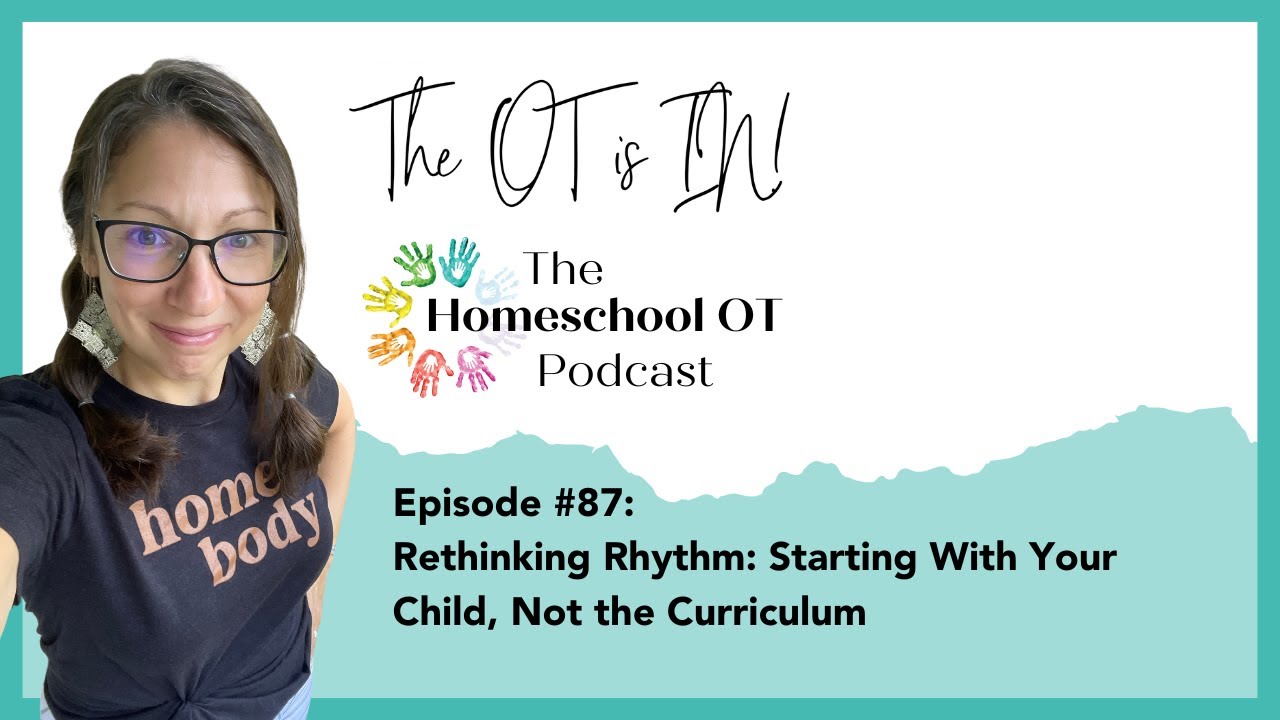
Rethinking Rhythm: Starting With Your Child, Not the Curriculum
Автор: Sarah Collins, the Homeschool OT
Загружено: 2026-01-21
Просмотров: 22
Описание:
If your homeschool days seem to run smoothly one season and unravel the next, this episode will help you understand why. Today we’re exploring how the rhythm of your day shifts as your children grow and why what worked before may suddenly feel impossible. In homeschooling, these changes aren’t problems to fix, but transitions to understand.
I’ll walk you through how I observe children’s patterns and needs using a practical framework: the PEO model—person, environment, and occupation. You’ll learn why starting with curriculum often misses the mark, and how putting your child’s individuality, regulation, and interests at the center creates learning that actually sticks.
This matters because in a homeschool setting, you have the flexibility to shape both space and schedule to fit where your child is developmentally. Recognizing these shifts gives you clearer options, replaces urgency with confidence, and helps you build days that support connection before curriculum, especially for kids who didn’t fit in traditional environments.
In this episode you'll hear about:
Understanding Changes in Homeschool Rhythm
Recognizing developmental shifts versus problems to fix
Concept of “Connection over Curriculum”
Managing Urgency and Educational Decisions
Stress around leaving traditional school or seeking a fresh homeschool start
The tendency to rush into curriculum choices
The Foundation: Start with the Child, Not the Curriculum
Education works best when child-centered, not curriculum-centered
Introduction to the PEO Model (Person, Environment, Occupation)
Two key truths: Parents know and love their child best
Scriptural reference: Ephesians 2:10—children as unique and purposeful
Reference to Charlotte Mason’s educational philosophy—children as “born persons”
Definition of acceptance (seeing the child without comparison or urgency)
Definition of expectancy (believing in meaningful and supported growth)
Importance of holding both acceptance and expectancy together
Observing and Understanding Your Child (The OT Lens)
Observational strategies for understanding “the person” in the PEO model
Noticing regulation and sensory needs
Noticing the role of joy and interests as “doorways” into learning
Shifting Away From “What’s Wrong” to “What’s Needed”
Changing focus from problems to supports needed for a child to thrive
Prioritizing connection and emotional safety before curriculum
The Neuroscience Behind Connection and Learning
Introduction to Stephen Porges and Polyvagal Theory
Environment: Designing Supportive Spaces and Rhythms
Adapting Rhythms as Children Grow
Practical Examples of Supporting Regulation and Rhythm
Story of a preschooler whose meltdowns improved with a more predictable daily flow
Story of a teenager whose engagement improved by shifting his schedule later in the day
Environmental Reflections for Listeners
Inviting listeners to evaluate and make simple changes to their physical spaces and daily anchors
Using Interests to Drive Learning
Identifying interests via observation in free time and conversation
Practical examples of adapting curriculum and learning activities to interests and needs (movement, chunking tasks, choice)
Links and Resources From Today's Show Can Be Found Here: https://homeschoolot.com/homeschoolin...
Thank you to our title sponsor for this episode, Lovevery.
Повторяем попытку...
Доступные форматы для скачивания:
Скачать видео
-
Информация по загрузке: