German Military MOST FEARED Missile system
Автор: Army Germany
Загружено: 2016-03-18
Просмотров: 3906
Описание:
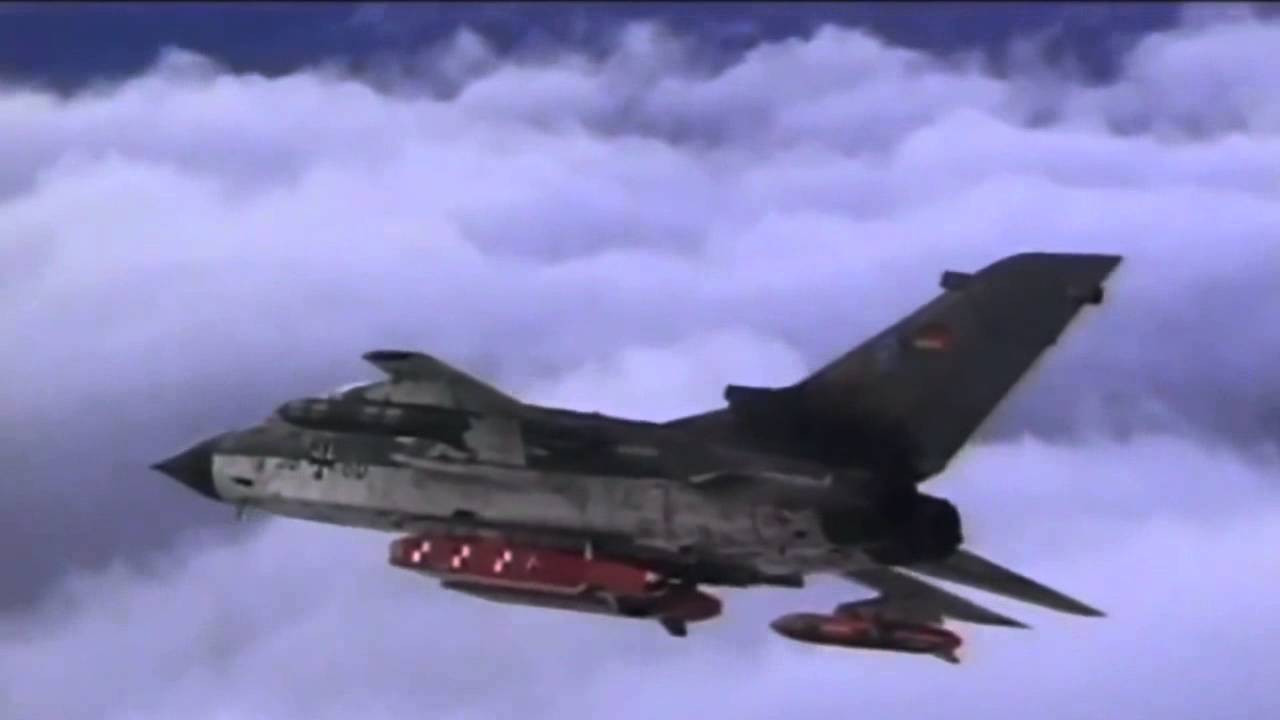
German military unveils Taurus KEPD 350 a big nasty missile missile for terrorist killers. Taurus KEPD 350[a] is a German/Swedish air-launched cruise missile, manufactured by Taurus Systems and used by Germany and Spain. Taurus Systems GmbH is a partnership between MBDA Deutschland GmbH (formerly LFK) and Saab Bofors Dynamics.[4]
Type Long-range air-to-surface missile
Service history
In service 2005
Production history
Manufacturer Taurus Systems GmbH
Unit cost € 950,000
Specifications
Weight 1,400 kg
Length 5.1 m
Diameter 1.08 m
Warhead 481 kg,[1] Mephisto (Multi-Effect Penetrator, HIgh Sophisticated and Target Optimised)
Engine Williams P8300-15 Turbofan
Wingspan 2.064 m
Operational
range
over 500 km[2]
Flight altitude 30–40 m
Speed Mach 0.80~0.95
Guidance
system
IBN (Image Based Navigation), INS (Inertial navigation system), TRN (Terrain Referenced Navigation) and MIL-GPS (Global Positioning System)
Launch
platform
Integrated: Tornado, F/A-18, F-15K
(Tested: Gripen, Typhoon) [3]
Overview[edit]
The missile incorporates stealth characteristics and has an official range in excess of 500 kilometres (300 mi).[5] Taurus is powered by a turbofan engine at Mach 0.8~0.9 and can be carried by the Tornado, Eurofighter Typhoon, Gripen and F/A-18 aircraft.
The double 500-kilogram (1,100 lb) warhead called Mephisto (Multi-Effect Penetrator, HIgh Sophisticated and Target Optimised) features a precharge and initial penetrating charge to clear soil or enter a bunker, then a variable delay fuze to control detonation of the main warhead. The missile weighs about 1,400 kg (3,100 lb) and has a maximum body diameter of 1 metre (3.3 ft). Intended targets are hardened bunkers, command, control and communications; airfield facilities; port facilities; AMS/ammunition storage; ships in ports/at sea and bridges.
The missile also includes counter measures as a self-defence mechanism.
Mission planners program the missile with the target, air defence locations and planned ground path, then the missile uses a low terrain-hugging flight path guided by INS, IBN, TRN and GPS to the proximity of the target, although it is capable of navigating over long distances without GPS support.[6] Once there the missile commences a bunt (climb) manoeuvre to an altitude intended to achieve the best probability of target acquisition and penetration. During the cruise flight a high resolution thermographic camera (infrared homing) can support the navigation by using IBN and is also used for GPS-free target attack. The missile attempts to match a camera image with the planned 3D target model (DSMAC). If it cannot, it defaults to the other navigation systems, or, if there is a high risk of collateral damage, it will steer to a pre-designated crash point instead of risking an inaccurate attack with undesired consequences.
Taurus Systems GmbH has also proposed an anti-ship variant.[7]
Export[edit]
Spain's military bought 43 missiles. The integration of the Taurus in the Spanish Air Force service line has been certified by the successful completion of a dedicated test campaign in South Africa, carried out in May 2009.[8]
South Korea planned to order 200 missiles to integrate with their F-15K Slam Eagles after being refused Lockheed Martin's AGM-158 JASSM by Washington.[9] The Korean National Assembly had advised the government to re-evaluate plans to buy the KEPD 350 citing high costs.[10] The Defense Acquisition Program Administration (DAPA) signed the deal in November 2013. Taurus Systems will open an office in Seoul to handle various acquisition tasks and support technology-transfer and joint development of the next cruise missile. The office is will be the company's first outside of Germany, and the KEPD 350 is the first European missile to be integrated onto a Korean fighter aircraft.[11]
Taurus Systems GmbH has offered Taurus KEPD 350 to the Indian Air Force for its Sukhoi Su-30MKI fighter jets.
The German Army (German: Heer) is the land component of the armed forces of Germany. The German Army was founded in 1955 as part of the newly formed West German Bundeswehr together with the Marine (German Navy) and the Luftwaffe (German Air Force). As of 31 May 2015, the German Army has a strength of 60,857 soldiers.[1]
History[edit]
Overview[edit]
A German Army, equipped, organized and trained following a single doctrine, and permanently unified under one command dates from 1871, and the unification of Germany under the leadership of Prussia. From 1871 to 1919 the title Deutsches Heer (German Army) was the official name of the German land forces. Following the German defeat in World War I and the end of the German Empire the name army dissolved. From 1921 to 1935 the name of the German land forces was Reichsheer (Army of the Realm) and from 1935 to 1945 the name Heer was used. The Heer was one of two ground forces of the Third Reich during World War II,
Повторяем попытку...
Доступные форматы для скачивания:
Скачать видео
-
Информация по загрузке: