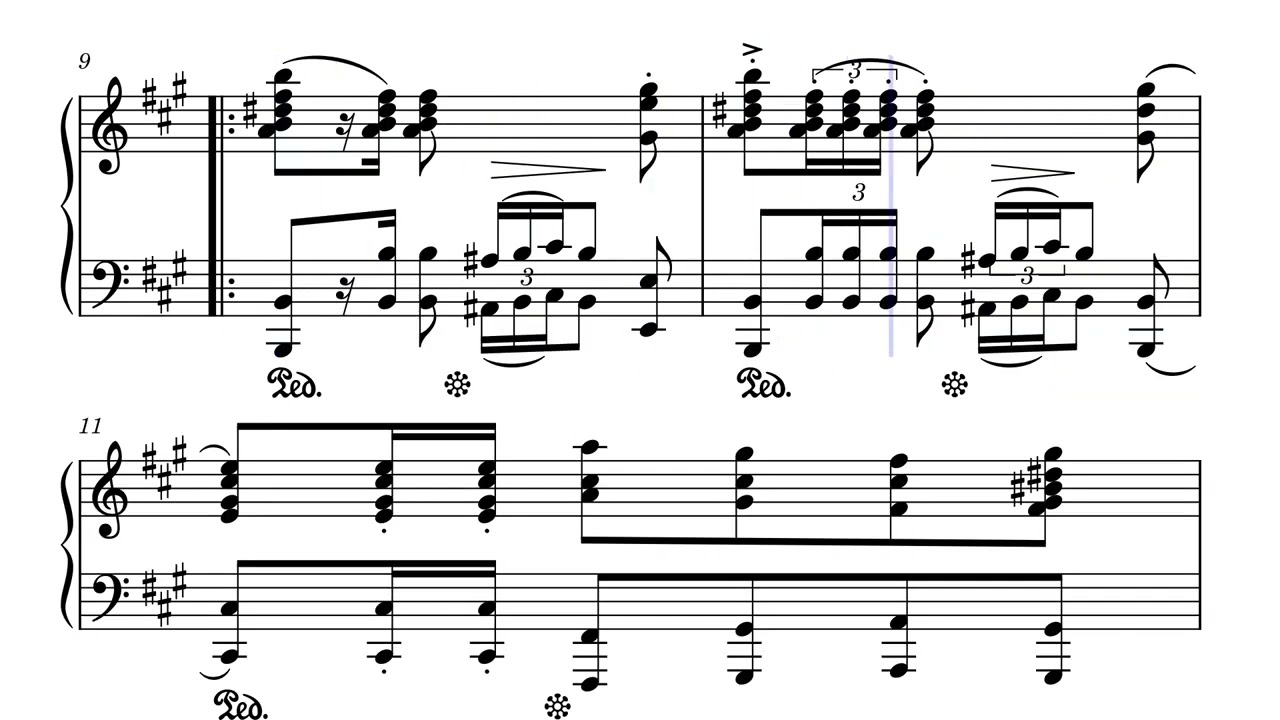
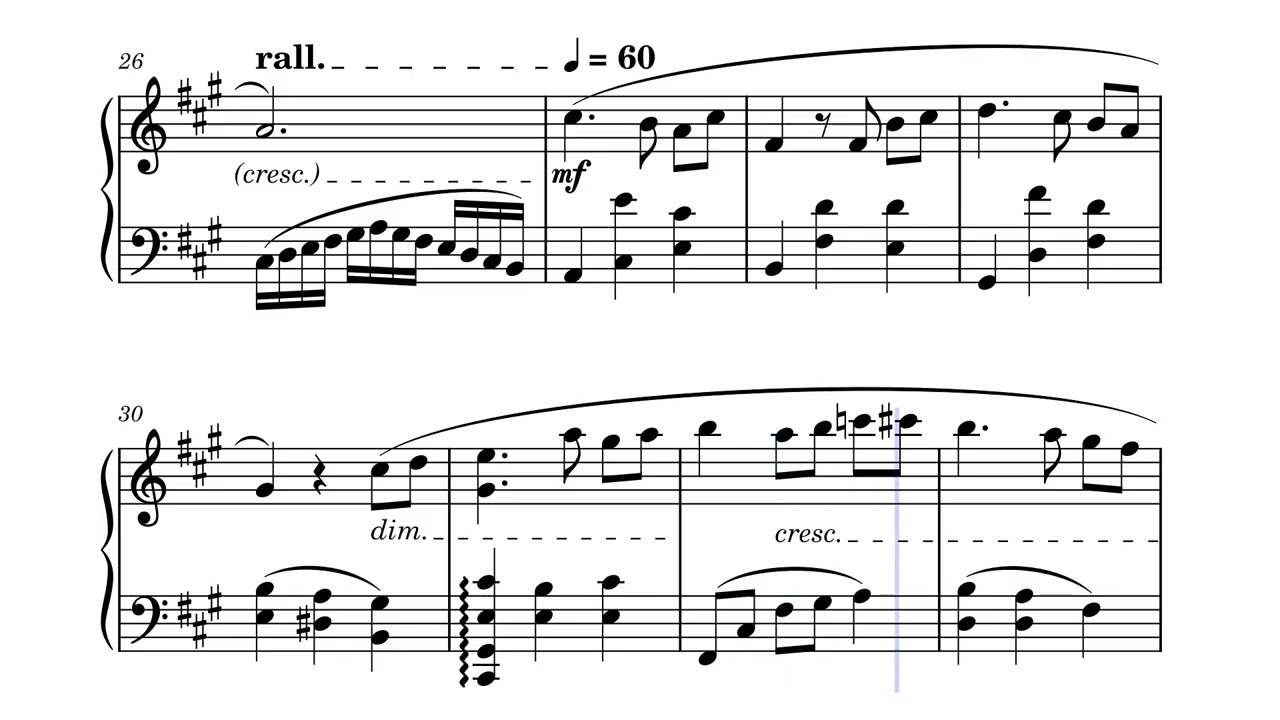
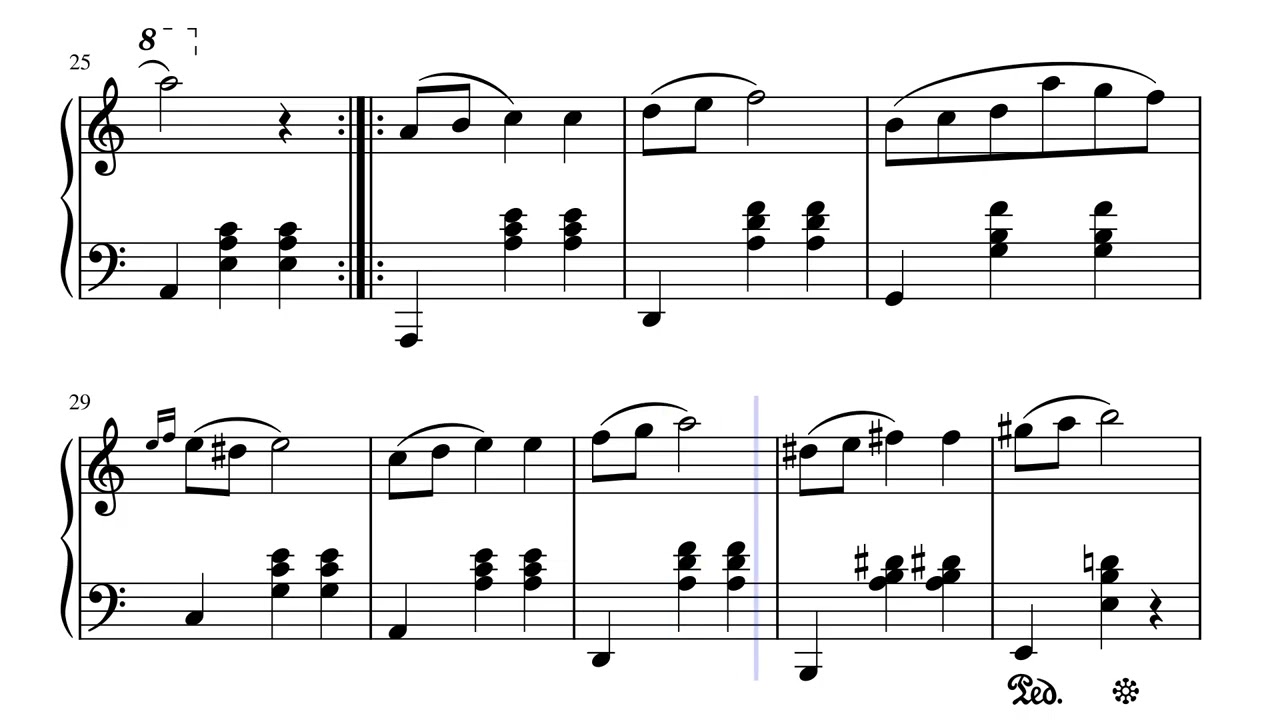
Waltz in A minor, B.150 – Frédéric Chopin by Frédéric Chopin
Автор: ElianaLP Music
Загружено: 2026-01-31
Просмотров: 96
Описание:
Try the interactive tutorial, or download the Sheet music here:
https://musescore.com/user/109865500/...
Frédéric François Chopin (b. Fryderyk Franciszek Chopin; 1 Mar 1810 – 17 Oct 1849) was a Polish composer and virtuoso pianist of the Romantic period, who wrote primarily for solo piano. He has maintained worldwide renown as a leading musician of his era, one whose "poetic genius was based on a professional technique that was without equal in his generation".
Chopin was born in Żelazowa Wola and grew up in Warsaw, which in 1815 became part of Congress Poland. A child prodigy, he completed his musical education and composed his earlier works in Warsaw before leaving Poland at the age of 20, less than a month before the outbreak of the November 1830 Uprising. At 21, he settled in Paris. Thereafter he gave only 30 public performances, preferring the more intimate atmosphere of the salon. He supported himself by selling his compositions and by giving piano lessons, for which he was in high demand. Chopin formed a friendship with Franz Liszt and was admired by many of his musical contemporaries, including Robert Schumann. After a failed engagement to Maria Wodzińska from 1836 to 1837, he maintained an often troubled relationship with the French writer Aurore Dupin (known by her pen name George Sand). A brief and unhappy visit to Mallorca with Sand in 1838–39 would prove one of his most productive periods of composition. In his final years, he was supported financially by his admirer Jane Stirling. Chopin was in poor health for most of his life. He died at the age of 39.
Most of Chopin's compositions are for solo piano, though he also wrote two piano concertos, some chamber music, and 19 songs set to Polish lyrics. His piano pieces are technically demanding and expanded the limits of the instrument; his own performances were noted for their nuance and sensitivity. Chopin's major piano works include mazurkas, waltzes, nocturnes, polonaises, the instrumental ballade (which Chopin created as an instrumental genre), études, impromptus, scherzi, preludes, and sonatas, some published only posthumously. Among the influences on his style of composition were Polish folk music, the classical tradition of Mozart and Schubert, and the atmosphere of the Paris salons, of which he was a frequent guest. His innovations in style, harmony, and musical form, and his association of music with nationalism, were influential throughout and after the late Romantic period.
Chopin's music, his status as one of music's earliest celebrities, his indirect association with political insurrection, his high-profile love life, and his early death have made him a leading symbol of the Romantic era. His works remain popular, and he has been the subject of numerous films and biographies of varying historical fidelity. Among his many memorials is the Fryderyk Chopin Institute, which was created by the Parliament of Poland to research and promote his life and works. It hosts the International Chopin Piano Competition, a prestigious competition devoted entirely to his works.
Chopin’s Waltz in A minor has several cataloguing references because it was published posthumously and without an opus number. It is commonly listed as B.150 in the Brown catalogue, KK IVb/11 in Kobylanska’s catalogue, and is sometimes referred to as “No. 19” among the posthumous waltzes. There is also another A minor waltz, B.56 (KK IVa/12), composed earlier, which is less frequently performed.
The piece is written in a simple ternary form, with a lyrical principal section, a slightly contrasting middle section, and a return to the opening theme. Its tempo is typically marked Tempo di Valse, and its time signature is 3/4, standard for a waltz. The key of A minor gives it a bittersweet, introspective quality, and it closes quietly, emphasising its reflective character rather than a showy conclusion.
Alongside other posthumous waltzes, this piece illustrates Chopin’s gift for melody and his ability to give the waltz an intimate, poetic voice rather than treating it purely as a ballroom dance.
Unlike many of his celebrated concert waltzes, this piece was likely written for private performance and possibly for a student or a close acquaintance, reflecting Chopin’s tendency to compose intimate works for the salon rather than the public stage.
The manuscript shows signs of editorial uncertainty, possibly explaining why Chopin never published it during his lifetime. Different early editions include slight variations in ornamentation, so the piece can sound subtly different depending on the edition chosen.
Additionally, this waltz has been popular in media because of its tender, nostalgic quality, often evoking a sense of faded elegance or quiet melancholy. Its manageable technical demands also make it a favourite among intermediate pianists while still offering room for expressive interpretation, which has helped it remain in the teaching repertoire.
Повторяем попытку...
Доступные форматы для скачивания:
Скачать видео
-
Информация по загрузке: