How to Plot TDOS and PDOS Using CASTEP in Material Studio | DFT Density of States Tutorial
Автор: CompChem Hub
Загружено: 2025-11-08
Просмотров: 746
Описание:
Welcome to the Computational Chemistry Course – a complete guide from beginner to advanced level! 🚀
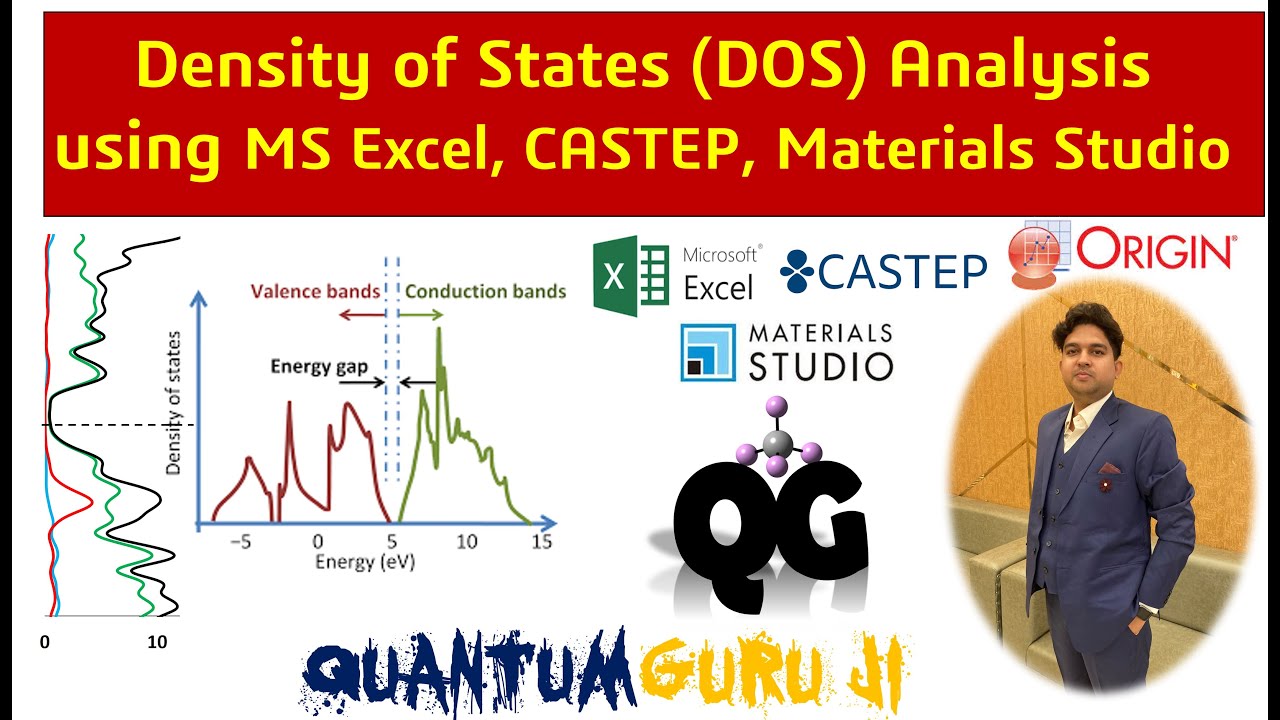
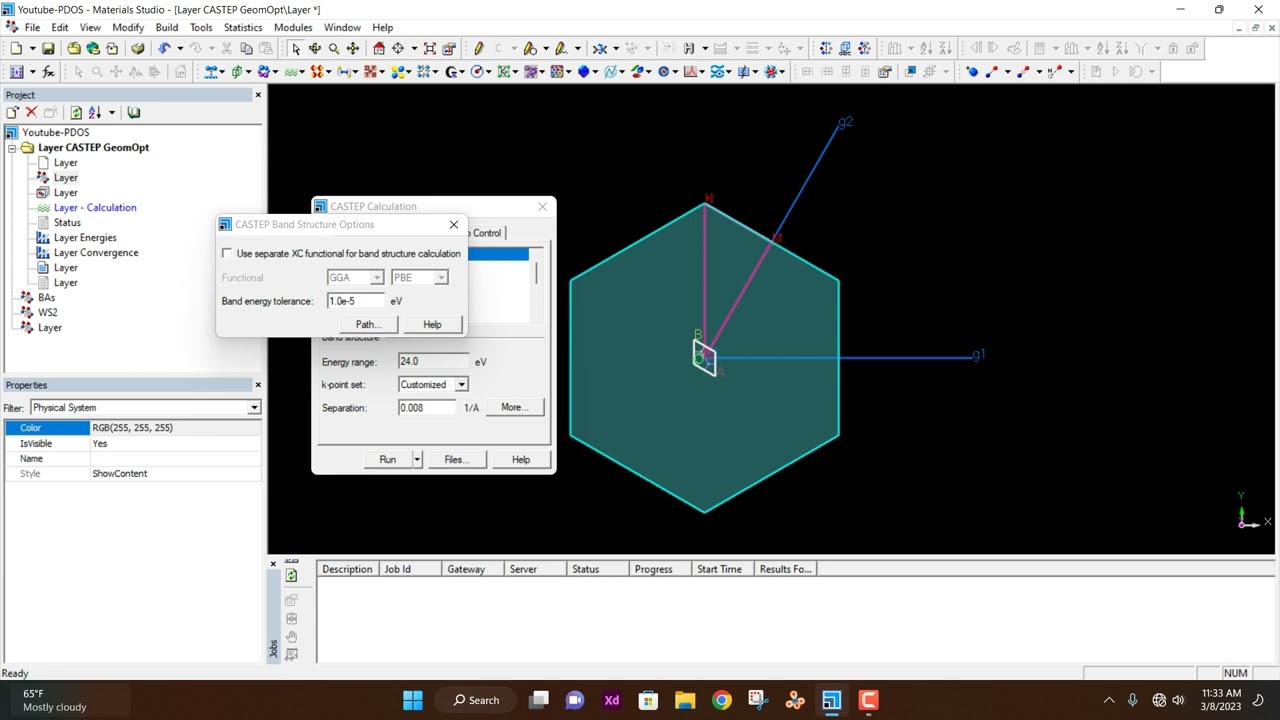
In this video, learn how to calculate, plot, and analyze TDOS (Total Density of States) and PDOS (Partial Density of States) using CASTEP in Material Studio.
This tutorial explains every step — from setting up DOS calculations to visualizing and interpreting electronic states, band gap, and Fermi level position.
Whether you are working on semiconductors, MXenes, or 2D materials, this guide will help you understand how atomic orbitals contribute to electronic properties.
You’ll also learn how to analyze s, p, and d orbital contributions, identify metallic vs. semiconducting behavior, and export DOS data for publication-quality plots.
📘 What You’ll Learn:
How to perform TDOS and PDOS calculations using CASTEP
Step-by-step DOS setup and parameter settings
Visualization of total and partial DOS in Material Studio
Understanding orbital contributions to the electronic structure
Identifying Fermi level, band gap, and hybridization
Exporting DOS data for external graphing (Origin, Excel, etc.)
🔔 Subscribe for more DFT, CASTEP, and Material Studio tutorials covering band structure, DOS, and MXene analysis!
Follow me on:
LinkedIn: / samreen-kousar-7625221b0
Facebook: / samreen.kousar.925
Instagram: / samreen.kousar.925
#CASTEP
#CASTEPDOS
#TDOS
#PDOS
#MaterialStudio
#DensityOfStates
#DFTResults
#DFTVisualization
#ElectronicStructure
#BandGapAnalysis
#FermiLevel
#OrbitalContribution
#SPDorbits
#MXeneResearch
#2Dmaterials
#CASTEPtutorial
#ComputationalChemistry
#QuantumChemistry
#NanomaterialSimulation
#ResearchTutorial
Повторяем попытку...

Доступные форматы для скачивания:
Скачать видео
-
Информация по загрузке:









![[CASTEP] ploting band structure in origin](https://imager.clipsaver.ru/jS707rt_OME/max.jpg)