Pacific Sea Nettles of Monterey Bay National Marine Sanctuary
Автор: NOAA Sanctuaries
Загружено: 2021-04-09
Просмотров: 1826
Описание:
Get to know the beautiful and mysterious Pacific sea nettle found near NOAA's Monterey Bay National Marine Sanctuary in this week's #EarthIsBlue video!
Be sure to subscribe to our channel so you can catch a video every Friday!
Media Transcript:
[Screen fades from black to a clip of a round, orange jellyfish moving slowly through the water. There are around a dozen jellyfish in the distant background, and soothing instrumental music plays softly. In a blue banner in the corner of the screen, white text appears]
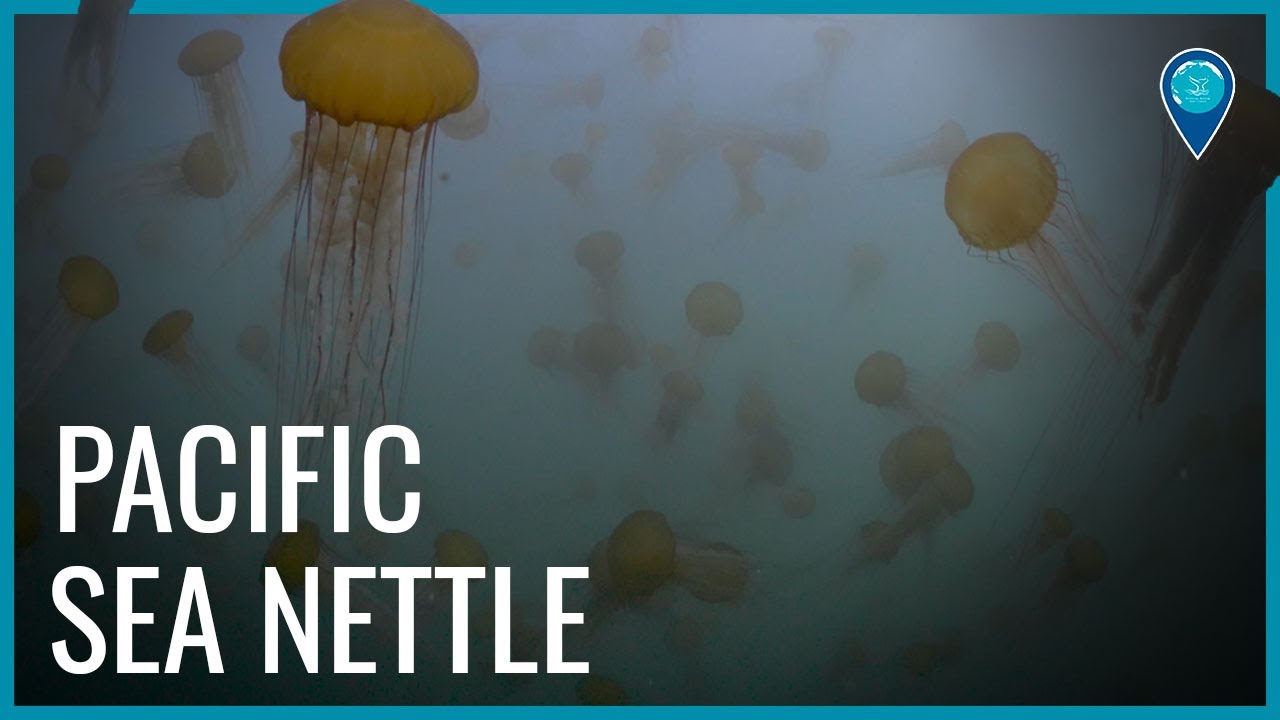
Pacific sea nettles are a type of jellyfish that frequent the waters of your West Coast national marine sanctuaries.
[Camera cuts to different shots of a group of pacific sea nettles, showing their bells and long tentacles from different angles]
Their reddish-brown bell can grow up to three feet wide, with tentacles reaching 15 feet or more!
[Groups of pacific sea nettles swim slowly through the water. A shot of the jellyfish is shown from below, swimming amongst a kelp forest with the sea surface above. Then a closer shot is displayed, allowing the camera to focus on a jellyfish’s tentacles]
This species is the most abundant of the large jellies found in the California current.
[Pacific sea nettles swim amongst a school of fish]
Sea nettles are important predators, drifting with the currents capturing small fish and plankton in their tentacles.
[Another close-up shot of a jellyfish’s tentacles are shown]
Like all jellies, sea nettle tentacles are packed with tiny barbed stingers that inject a paralyzing toxin into their prey.
[Dozens of pacific sea nettles swim into a kelp forest]
When currents carry sea nettles into kelp forests, they become prey for a variety of other species, including sea turtles, fish, crabs, and sea stars.
[Pacific sea nettles in various stages of decay float through the water. A group of starfish consume jellyfish tentacles on the ocean floor]
In recent decades, large “blooms” of sea nettles, and other jellies, have increased in frequency and size along the West Coast.
[Dozens of pacific sea nettles swim through the open ocean]
While blooms can benefit species like sea turtles that feed on jellies, they can negatively impact other species and be a nuisance for fishers, divers, and surfers.
[A diver struggles to swim through a group of dozens of jellyfish while taking photos]
Next time you're visiting a West Coast national marine sanctuary, see if you can spot a mesmerizing Pacific sea nettle gently drifting through the water.
[Camera cuts to different shots of pacific sea nettles swimming, then the screen fades to black. The Earth is Blue logo appears, followed by the website “sanctuaries.noaa.gov/EarthisBlue.” Then, the logos for NOAA and the National Marine Sanctuaries are pictures. Credits are displayed]
Cinematography: Paul Chetirkin (NOAA)
Editing: Paul Chetirkin (NOAA)
Music: Universal Production Music
[Screen fades to black once more]
Повторяем попытку...
Доступные форматы для скачивания:
Скачать видео
-
Информация по загрузке: