Foreign Aid or Self-Sufficiency? The Dilemma of HIV Funding in South Africa
Автор: CMJAH Department of Internal Medicine
Загружено: 2025-04-15
Просмотров: 69
Описание:
CMJAH Internal Medicine Academic Meeting
Date: 28 March 2025 @ 08:00
Unit: Ethics
Panel: Prof. Francois Venter, Mr Mark Heywood, Ms Sasha Stevenson
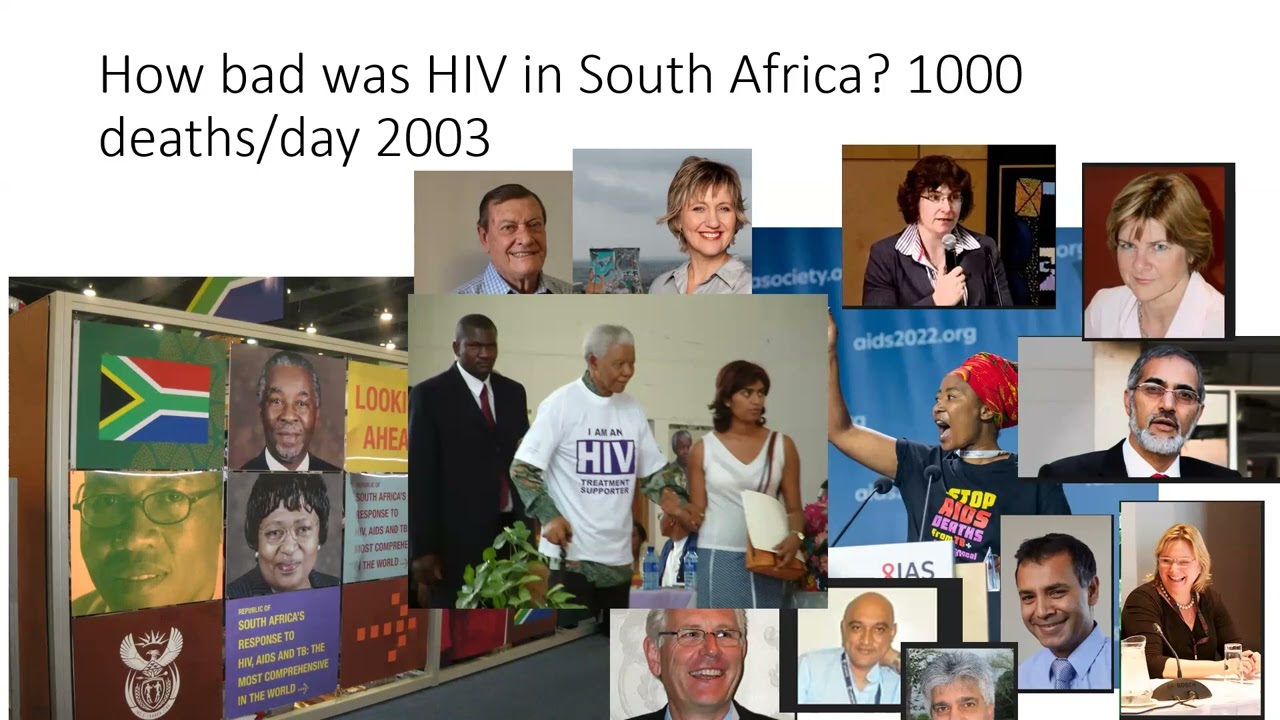
South Africa has the highest absolute number of people living with HIV globally, and ranks amongst the top countries for adult HIV prevalence (behind countries like Eswatini, Lesotho and Botswana), according to 2019 statistics. In the early 2000s, HIV and HIV-related illnesses claimed approximately 800 to 1300 lives per day in South Africa. Prior to November 2003, the public health sector offered no antiretroviral therapy (ART) - only treatments for opportunistic infections were available, amid a period of government denial and delay.
During this period of government inaction, PEPFAR, launched by the USA in 2003, played a crucial role in expanding access to HIV treatment and care. While the government dragged its feet, despite mounting public and legal pressure, PEPFAR-funded NGOs scaled up HIV treatment and care, filling critical gaps and providing life-saving therapies. Today, over 6 million South Africans are on ART, according to 2023 UNAIDS estimates, and new infections have dropped from approximately 540,000 per year in 2003 to about 140,000 in 2023.
However, the January 2025 freeze of PEPFAR funding through USAID has sparked a crisis. Clinic closures, staff retrenchments, and disruptions to HIV services for over 200,000 people on ART have followed with costs estimated to amount to billions of Rands. While the South African government funds the majority of the national HIV response, detailed public plans to fully replace PEPFAR’s R6.27 billion contribution are lacking, which may result in key populations, such as adolescent girls, young women, and pregnant women, losing access to prevention tools like PrEP and community-led adherence programs. Without swift action, rising infections and deaths could erode decades of progress. A modelling study has estimated that if the services these organisations have provided are not effectively transitioned, there could be 601,000 HIV-related deaths and 501,000 new infections in the next 10 years.
We are joined this week by three exceptional speakers, all with extansive experience in the HIV and public health space, for a panel discussion on the past, present and future of HIV funding and the HIV programme in South Africa. Our speakers were:
Prof. WD Francois Venter is the Division Head of Ezintsha at the University of the Witwatersrand in Johannesburg. He leads multiple antiretroviral treatment optimisation studies, and has an active interest in public sector access to HIV services. He has been represented on South African and regional HIV guidelines for almost 20 years having done almost all his training within South Africa. He is an advisor to the South African government, Southern African HIV Clinicians Society, UNAIDS and WHO. He has been involved in several human rights cases involving HIV within the Southern African region, and has an active interest in medical ethics.
Mark Heywood is a health, social justice and human rights activist and writer. He co-founded the Treatment Action Campaign (TAC) and SECTION27 and has been active on these issues for, in his own words, “far too long!” He's also a senior researcher at the Nelson Mandela School of Public Governance at UCT. He recently founded two new organisations, the Justice and Activism Hub (JAH) and the Union Against Hunger.
Sasha Stevenson is a human rights lawyer and the Executive Director of SECTION27, a public interest law organisation in Johannesburg. She holds bachelors, honours and law degrees from Rhodes University and an LLM from the University of Cambridge. She has been working for over a decade to secure systems change that realises health and food rights, including through representing the families of mental health care users who died after their disastrous deinstitutionalisation from Life Esidimeni, securing the re-start of the programme that feeds 9,6 million children at school every day after COVID-19, and work on migrant health, access to abortion and access to medicine, among others.
Повторяем попытку...
Доступные форматы для скачивания:
Скачать видео
-
Информация по загрузке: