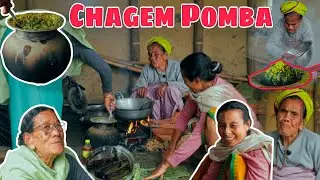
Nongpok Sekmai Chaphu | Educational Tour | Traditional Knowledge System| Dept of Edn Studies | MIU
Автор: Manipur Research Chronicles
Загружено: 2026-01-16
Просмотров: 6064
Описание:
The video captures an educational field visit conducted by the Department of Education Studies, Manipur International University (MIU) to Nongpok Sekmai, with the purpose of engaging closely with an indigenous knowledge tradition known as Chaphu—a centuries-old system of hand-crafted pottery that continues to define the village’s cultural identity.
Historically, Nongpok Sekmai is a Chakpa settlement situated about 35 km east of Imphal. While the Chakpa identify as Meitei, they have traditionally been associated with the Loi communities, groups that occupied a distinct and often marginalized position within Manipur’s social structure. Despite this marginalization, the village evolved into one of the most important pottery-producing centers in the region, earning recognition as one of Manipur’s seven traditional pot-making communities.
At the heart of Nongpok Sekmai’s history lies Chaphu, a pottery tradition sustained almost entirely by women. Customarily, only married women are permitted to practice this craft, while men are restricted by long-standing taboos. This gendered transmission of knowledge has ensured continuity across generations, preserving techniques that predate the use of the potter’s wheel. Clay is sourced from Kamphang, a quarry near Gwarok Hill, linking the craft directly to the surrounding landscape and reinforcing the community’s intimate relationship with land and natural resources.
The production process is both technically sophisticated and culturally meaningful. Clay is carefully prepared and shaped through hand-beating methods, followed by traditional firing techniques. The resulting vessels are not merely utilitarian objects but culturally coded forms, each designed for specific social and ritual contexts. These include Mera Chaphu for water storage, Ngangkha for cooking, Lai Chaphu for ceremonial use, Chakngan Chaphu for preparing unpolished rice and traditional distillation, Naopham Chaphu associated with childbirth rituals, and Meikoi Chaphu, used in funerary practices.
Chaphu pottery is inseparable from the life cycle of the Chakpa community. Certain vessels are created, used, and ritually discarded in relation to key life events such as birth and death. The deliberate breaking of specific pots, particularly the Meikoi Chaphu, forms part of purification rites, symbolizing transition, release, and renewal. In this way, pottery becomes a living archive of social memory, belief systems, and collective identity.
Beyond pottery, Nongpok Sekmai has historically been associated with traditional yu (rice wine) brewing, another knowledge system commonly linked with Loi communities. The village also retains distinct clan (Yek) structures and ritual practices, including worship connected to local deities such as Nongpok Ningthou, further emphasizing its unique cultural landscape.
In contemporary times, however, this historically rich community faces significant challenges. Socio-economic marginalization persists, including ongoing debates over Scheduled Caste recognition. Environmental degradation—particularly river damage caused by sand mining—threatens both ecological balance and the availability of resources crucial to pottery production.
Seen through a historical lens, Nongpok Sekmai is not merely a pottery village but a repository of indigenous knowledge, where Chaphu stands as a testament to resilience, women-led craftsmanship, and the enduring capacity of tradition to adapt while retaining its cultural essence.
Повторяем попытку...

Доступные форматы для скачивания:
Скачать видео
-
Информация по загрузке:


![아이 낳으니 남편이 버리고 떠나버렸어.. 결국 나랑 시아버지 둘이서 애들을 다 키워야했지.. [남도지오그래피] | KBS 150401](https://image.4k-video.ru/id-video/eaLdPvDi5M8)