F-35 Lightning Landing on Aircraft Carrier | Tailhook Arrestor Explained |
Автор: Just_like_that_2day
Загружено: 2025-08-21
Просмотров: 36127
Описание:
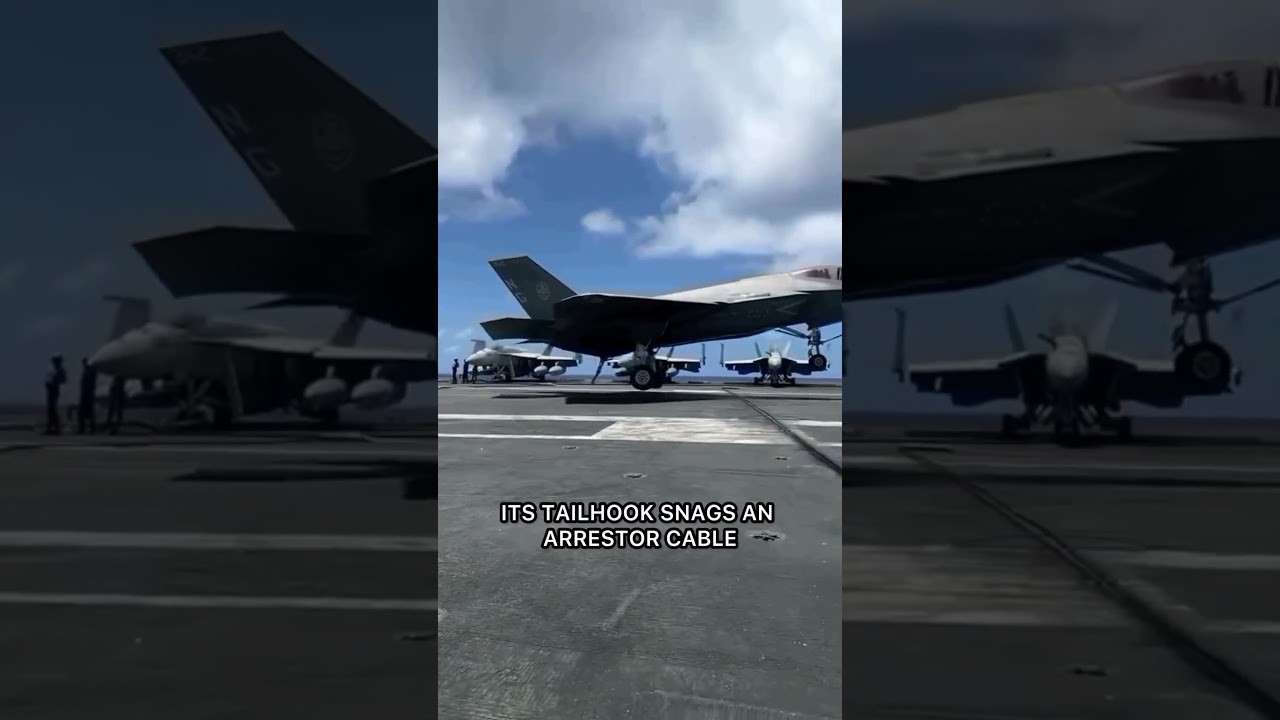
✈️ This is how the F-35 Lightning II lands on an aircraft carrier.
Using its tailhook to snag an arrestor cable, the fighter jet comes to a complete stop in just a few hundred feet — a stunning demonstration of naval aviation precision.
Aircraft carriers are essentially floating airbases, and carrier landings are one of the most challenging maneuvers in aviation. Unlike land runways that are thousands of feet long, a carrier deck provides just a few hundred feet of landing space — and it’s constantly moving with the ocean. That’s where the arrestor cable system comes in.
⸻
⚓ How the F-35 Lands on a Carrier
• The F-35C variant (designed for carrier operations) has a strengthened landing gear and larger wings for more control.
• As the jet approaches the deck, pilots align precisely with the “meatball” landing aid.
• The tailhook, mounted under the jet’s rear, is lowered just before touchdown.
• Upon landing, the hook snags one of the four steel arresting cables stretched across the flight deck.
• Each cable is connected to a hydraulic system that absorbs the jet’s momentum, bringing it from ~150 mph to zero in less than 2 seconds.
• This technique is called an “arrested landing.”
⸻
🛡️ Why It Matters
The F-35’s ability to land on carriers gives navies unmatched global reach and power projection. Aircraft carriers allow fighter jets to operate anywhere in the world — without needing local bases. The precision of the arresting system makes this possible, ensuring safe landings even in rough seas or combat conditions.
⸻
🌊 Carrier Landing Challenges
• Short runway: only a few hundred feet.
• Constantly moving deck.
• Night landings and rough seas push pilots to their limits.
• Only elite naval aviators are trained for this maneuver.
⸻
🔥 Quick Facts
• F-35C max landing weight: ~60,000 lbs.
• Arrestor cable system can stop jets weighing up to 50 tons.
• Tailhooks are titanium-reinforced to withstand extreme forces.
• A single mistake could mean missing the cable (“bolter”) and attempting another landing.
⸻
💡 Question for You:
Would you rather experience the power of an F-35 carrier landing or the thrill of a fighter jet takeoff with a steam catapult? Comment below!
👉 Don’t forget to LIKE, SUBSCRIBE & SHARE for more fighter jet comparisons, aviation history, and military technology shorts.
#F35 #F35LightningII #AircraftCarrier #USNavy #NavalAviation #FighterJets #MilitaryAviation #ArrestorCable #Tailhook #CarrierLanding #AviationHistory #FighterJetShorts #DefenseTechnology #JetLanding #Aviation
F-35 carrier landing, F-35 tailhook arrestor cable, F-35C Lightning II navy, F-35 jet landing aircraft carrier, US Navy F-35 landing, naval aviation F-35, F-35 arrested landing explained, F-35 fighter jet landing carrier, F-35C landing deck arrestor cable, F-35 Lightning II carrier operations, F-35 aircraft carrier short video, F-35 fighter jet shorts, how F-35 lands on aircraft carrier, F-35 military aviation, F-35 landing navy training, tailhook fighter jet explanation
Повторяем попытку...
Доступные форматы для скачивания:
Скачать видео
-
Информация по загрузке: