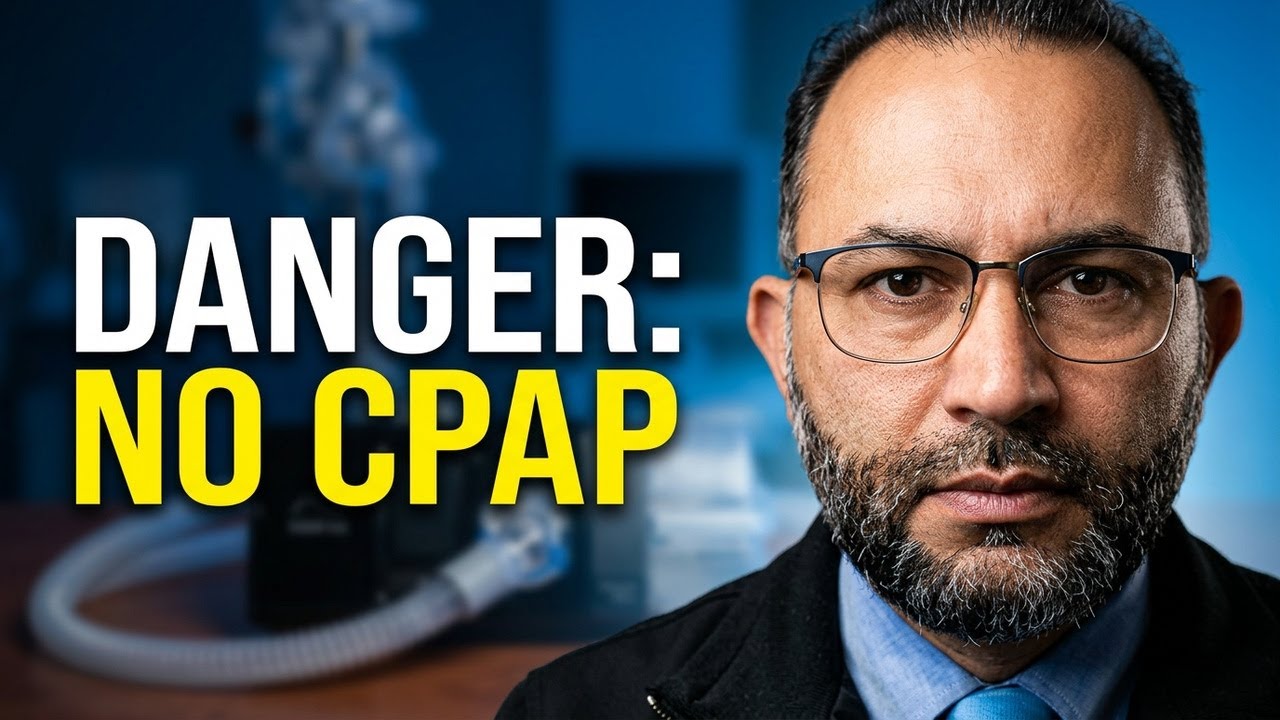
“Ignoring CPAP isn’t just about feeling sleepy : risk of high BP , AFib, stroke, and diabetes.”
Автор: DrPKlyfe : Let The Nature Help Heal You.
Загружено: 2026-03-07
Просмотров: 24
Описание:
Obstructive sleep apnea (OSA) causes repeated airway collapse during sleep, leading to oxygen drops, stress hormone surges, and fragmented sleep. Untreated sleep apnea can raise the risk of high blood pressure, atrial fibrillation (AFib), stroke, heart attack, insulin resistance, type 2 diabetes, and accidents due to daytime sleepiness. In this video, Dr. PK explains the consequences of ignoring CPAP and what to do if you can’t tolerate CPAP (mask fit, humidifier, ramp settings, congestion treatment, and oral appliance options).
Educational only—talk to your clinician for personal advice.
“If you snore loudly and wake up tired… your body may be fighting for air hundreds of times a night.”
“Ignoring CPAP isn’t just about feeling sleepy. It can raise your risk of high blood pressure, AFib, stroke, and diabetes.”
“Many people think CPAP is optional. But for moderate to severe sleep apnea, it can be risk reduction, not comfort.”
“Morning headaches, brain fog, and high BP? The hidden cause might be your sleep.”
“Snoring is the noise… but the real danger is oxygen dropping while you sleep.”
“Hello everyone, I’m Dr. PK. Today we’ll talk about obstructive sleep apnea—OSA—and what can happen if you ignore CPAP.”
✅ What OSA Really Does (0:05–0:55)
Voice:
“Obstructive sleep apnea means your throat airway collapses during sleep.
So you stop breathing for short periods—again and again.
Every time that happens, two big things occur:
Your oxygen level drops.
Your body panics and releases stress hormones—like adrenaline—so you partially wake up to breathe.
You may not remember waking up… but your body does. And this can happen dozens or even hundreds of times per night.”
On-screen text: “Oxygen drops + Stress surges + Broken sleep”
🫀 Heart & Blood Pressure Consequences (0:55–1:55)
Voice:
“Now let’s talk consequences.
First—your heart and blood vessels.
Untreated sleep apnea commonly causes:
High blood pressure, especially high readings in the morning
Hard-to-control hypertension even on multiple meds
Heart rhythm problems like atrial fibrillation
Higher risk of heart attack and stroke
And it can worsen heart failure
Why? Because your body is getting repeated nighttime stress signals—like running mini marathons in your sleep.”
On-screen text: “OSA → HTN • AFib • Stroke • Heart Attack”
🧠 Brain, Mood, and Daily Function (1:55–2:35)
Voice:
“Second—your brain.
Broken sleep leads to:
Daytime sleepiness
Brain fog, memory issues, poor focus
Mood problems—more irritability, anxiety, and depression
And here’s a practical risk many people ignore:
If you’re sleepy during the day, your risk of car accidents and work accidents goes up—because of microsleeps.”
On-screen text: “Brain fog + Mood changes + Accident risk”
🍩 Metabolism & Weight Gain Cycle (2:35–3:10)
Voice:
“Third—your metabolism.
Untreated sleep apnea is linked with:
Insulin resistance
Higher risk of type 2 diabetes
Increased cravings and appetite changes
So people feel tired, crave sugar or carbs, gain weight… and that can make sleep apnea even worse. It becomes a vicious cycle.”
On-screen text: “OSA ↔ Weight gain ↔ Diabetes risk”
😷 So Why CPAP Matters (3:10–4:20)
Voice:
“CPAP works by gently keeping the airway open—so you don’t have those oxygen drops and adrenaline surges all night.
When used consistently, CPAP can:
Improve sleep quality and energy
Help lower blood pressure in many people
Reduce strain on the heart
Improve focus, mood, and daytime function
And in people with heart rhythm issues like AFib, treatment of OSA is often part of the bigger prevention plan.”
On-screen text: “CPAP = Airway open → Oxygen stable → Better sleep”
🛠️ If You Hate CPAP—Don’t Quit, Adjust (4:20–4:55)
Voice:
“Now if you tried CPAP and hated it—you’re not alone. But don’t give up too fast.
Most problems are fixable:
Different mask style: nasal pillows vs full face
Humidifier for dryness
‘Ramp’ settings so pressure starts low
Treat nasal congestion
For some people: an oral appliance or side-sleeping therapy
The goal is not perfection—the goal is consistent treatment.”
On-screen text: “Mask • Humidifier • Ramp • Oral appliance”
✅ Closing + CTA (4:55–5:10)
Voice:
“If you snore loudly, wake up tired, or have high blood pressure—get evaluated for sleep apnea. And if CPAP was prescribed, treating OSA can protect your heart, your brain, and your future.”
CTA:
“Comment ‘CPAP’ and tell me your biggest struggle—mask, dryness, anxiety, or inconvenience. I’ll reply with tips. And follow DrPKLyfe for science-based health education.”
Повторяем попытку...
Доступные форматы для скачивания:
Скачать видео
-
Информация по загрузке: