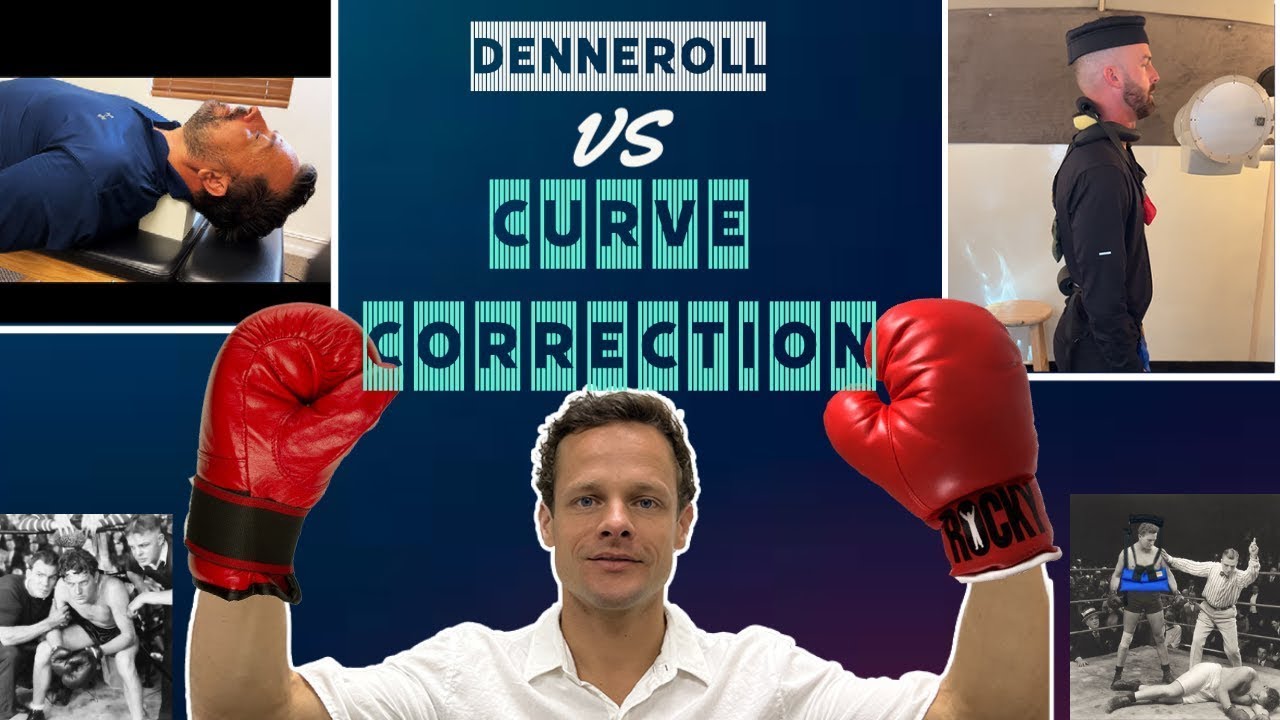
Cervical Curve Correction: Denneroll VS Standing Weights
Автор: Dr. Brian Hutcheson
Загружено: 2023-06-06
Просмотров: 4665
Описание:
Cervical Curve Correction
In this video Dr. Hutcheson shares his perspective on the difference between supine passive traction, Denneroll, etc. and active upright weighted traction therapies - such as the curve correction that Dr. Hutcheson performs.
Over the last several years, many of the denneroll placements that patients came in to my office having been previously prescribed - were causing one of the following:
1) tilting of c1
2) the occiput and posterior arch of the atlas to be touching - compressing C1 nerve root
3) hyperextension of the lower cervical spine, creating a Baastrups syndrome or 'kissing spinous' process presentation.
4) closing the internal jugular veins in the lower cervical spine due to the degree of hyperextension in the lower neck
5) making them feel worse while using it or after using it
6) Creating traction in an area where the individual has instability, over time exacerbating symptoms - most often between C0-C2
If your lower neck is already 'too far forward', denneroll and comparable devices are likely not in your best interest to recover optimally.
Creating the appearance of a lordotic curve alone is not enough to bring neurologic health. You also should consider whether the carotid sheath is experiencing less interference, if the individual feels better while creating this position, and that there aren't any other abnormal pathologies (kissing spines, tilting of c1, C0/C1 hitting, hyperextension, etc.)
Active upright weighted traction therapies also should be tailored to each individual, and similar things considered when prescribing therapy.
If you don't have access to diagnostics, you can still get started by using how the individual feels when using the therapy and immediately after the therapy as a good way to determine if the therapy is providing benefit.
Muscle soreness or tightness could be a good side effect of the spine changing. Bad side effects would be more head pressure, eye symptoms, light headedness that doesn't feel like 'I am lighter and things are easier' but rather an almost fainting type of lightheadedness. Feeling like things are jamming together, etc could all be signs the therapy is not right for you.
To conclude: We seek to research and help guide individuals to rehabilitate completely - bringing stability to their condition and empowering them to be able to self manage it as best as possible with the least amount of care necessary. That being said, how symptoms change from initiating therapy - be it curve correction work, dry needling, adjustments, rehab exercises, etc - provide significant insight into whether the therapy is indeed ideal for that individual.
These videos are educational in nature and do not intend to offer any diagnosis or individual treatments recommendations. Please consult with a licensed physician for individual advice, or reach out to us to schedule a consultation where we will be happy to review your case.
Повторяем попытку...
Доступные форматы для скачивания:
Скачать видео
-
Информация по загрузке: