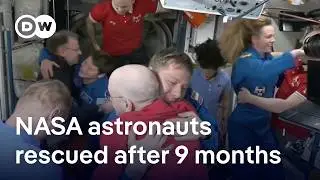
Full Interview: Rescued Astronauts Speak Out on What Can Be Learned from the Mission
Автор: White House Press Secretary Karoline Leavitt
Загружено: 2025-03-31
Просмотров: 34
Описание:
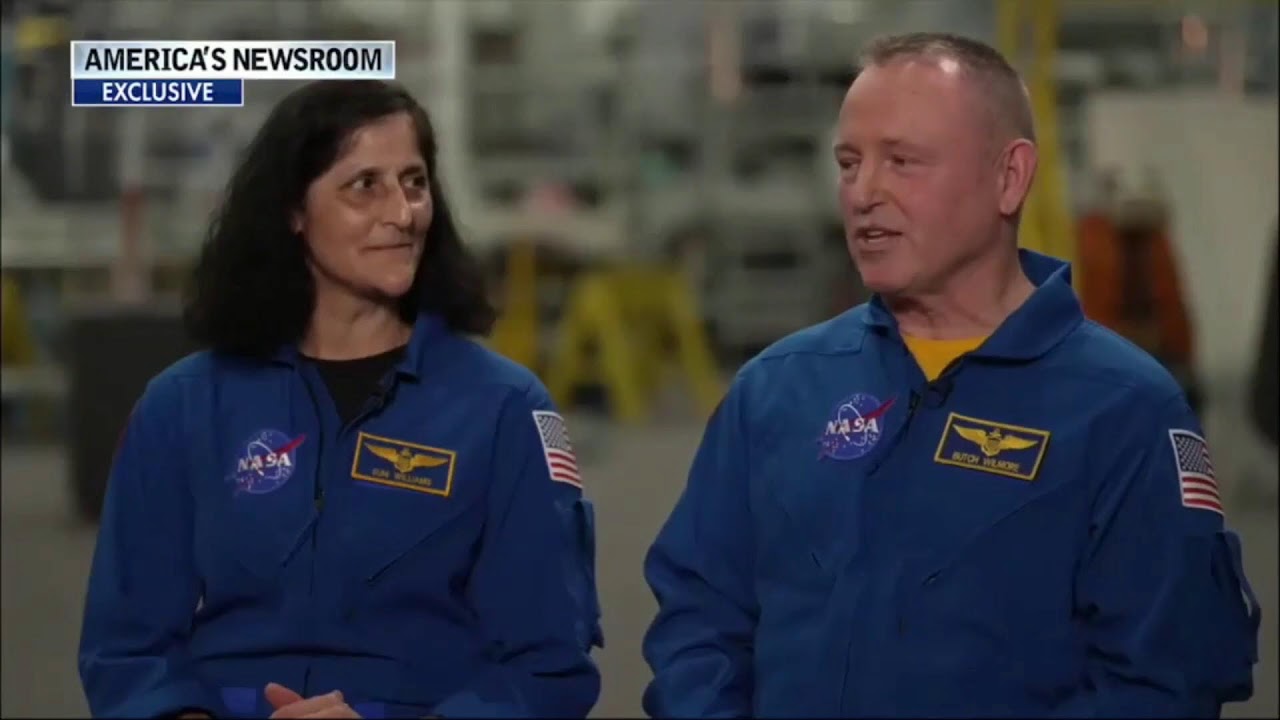
After an unprecedented nine-month ordeal aboard the International Space Station, astronauts Suni Williams and Butch Wilmore have finally sat down for a full interview to reflect on their experience—and the many lessons learned from a mission that far exceeded its original eight-day plan.
A Mission Redefined
In their candid interview, broadcast live on major news networks, Williams and Wilmore detailed the unexpected challenges they faced when technical malfunctions on Boeing’s Starliner forced NASA to extend their mission. “We trained for long stays, but nothing truly prepares you for a sudden shift from an eight-day test to spending 286 days in space,” said Wilmore. The astronauts explained that while the prolonged mission was fraught with personal sacrifice—including missing important family milestones—the experience ultimately deepened their commitment to space exploration and underscored the need for robust safety protocols.
“It’s not about me, it’s about what this human spaceflight program is about. It’s our national goals,” Wilmore stressed during the interview.
The Weight of Extended Spaceflight
Both astronauts discussed the physical and emotional toll of their extended stay. Williams recalled the initial shock of learning about the delay, describing her reaction as a call to “pivot” and focus on the work at hand. “I was like, ‘OK, let’s make the best of it,’” she said. Wilmore, on the other hand, admitted that the personal sacrifices were significant. “Missing my daughter’s high school year was heartbreaking, but I had to set aside my feelings and focus on our mission,” he revealed.
The pair acknowledged that the prolonged mission provided a unique opportunity to study the effects of long-duration spaceflight on the human body. They noted that, while astronauts are trained for such eventualities, the reality of muscle atrophy, bone density loss, and psychological stress in microgravity presented ongoing challenges that future missions—especially those aimed at Mars—must address.
Lessons in Teamwork and Resilience
One of the most striking elements of the interview was the astronauts’ emphasis on teamwork. Both Williams and Wilmore highlighted the indispensable role of mission control and the broader NASA team in orchestrating their safe return. “Every single person played a part,” Williams stated. “From the engineers to the ground crew, it was a collective effort that turned an almost certain disaster into a story of survival and resilience.”
They also discussed the importance of personal accountability. Wilmore candidly acknowledged that some shortcomings in the pre-flight testing and planning were his responsibility as well, urging future crews to learn from his experience rather than point fingers. “We all share a piece of the blame,” he said, adding that the mission’s challenges should serve as an impetus for improved procedures and communication across all levels of the space program.
The Broader Implications
Beyond their personal narratives, the astronauts stressed that the lessons from their mission have far-reaching implications for the future of human space exploration. They emphasized that understanding the physical and psychological effects of prolonged space travel is critical—not only for missions to Mars but also for maintaining the International Space Station as a hub for scientific research.
“Our experience is a stark reminder that space is an unforgiving environment,” Williams explained. “It teaches you the importance of every backup system, every extra test, and the resilience of the human spirit. These lessons will shape how we prepare for the next generation of missions.”
Moreover, their interview touched on the political and administrative dynamics surrounding spaceflight. Both astronauts expressed gratitude for the involvement of national leaders and private industry pioneers like President Trump and Elon Musk, who, according to them, helped bring attention and resources to ensure their safe return. “Their active role is not just a political statement—it’s empowering for all of us involved in human space exploration,” Wilmore noted.
Looking Forward
As the rescued astronauts continue their rehabilitation and reintegration into Earth’s gravity, they remain optimistic about the future of space travel. Their story is one of overcoming unforeseen obstacles and learning invaluable lessons that will help shape safer, more efficient missions in the years to come.
“We’re eager to go back,” Williams concluded. “There’s still so much to learn, and every challenge we faced has prepared us for the next step in humanity’s journey into space.”
Stay tuned for more updates on their recovery and future endeavors as we continue to follow this remarkable story of resilience, teamwork, and the human spirit’s boundless capacity to overcome.
Повторяем попытку...
Доступные форматы для скачивания:
Скачать видео
-
Информация по загрузке:
![Самые ожидаемые космические события и миссии 2026 года [новости науки и космоса]](https://image.4k-video.ru/id-video/YUhh2ORtGiA)