The evolution of KVL and KCL||The evolution of voltage divider rule and current divider rule
Автор: vlsi.vth.prakash
Загружено: 2025-07-10
Просмотров: 1512
Описание:
Class notes+summary+practice question link(5/-Rs):- https://rzp.io/rzp/sqNj54WQ
After payment you will redirect to the material.This is not to sell anything it is to contribute to the channel.If you like the video.
Active vs passive elemments:- https://www.instagram.com/reel/DJy7_n...
Circuit Vs network:- https://www.instagram.com/reel/DJMOkc...
The evolution of KVL and KCL||The evolution of voltage division rule and current division rule
Tags:-What is voltage division rule,What is voltage divider rule,current divider rule and voltage divider rule,kvl and kcl,kvl,kcl, kirchhoff's voltage law, kirchhoff's current law,law of conservation of charge, kirchhoff's voltage law engineering 1st year,Network analysis in Telugu,Free vlsi course in Telugu,Moschip campus placements
my gear:-
my tripod-https://amzn.to/3UPqW6W
my mic-https://amzn.to/3wQOr7E
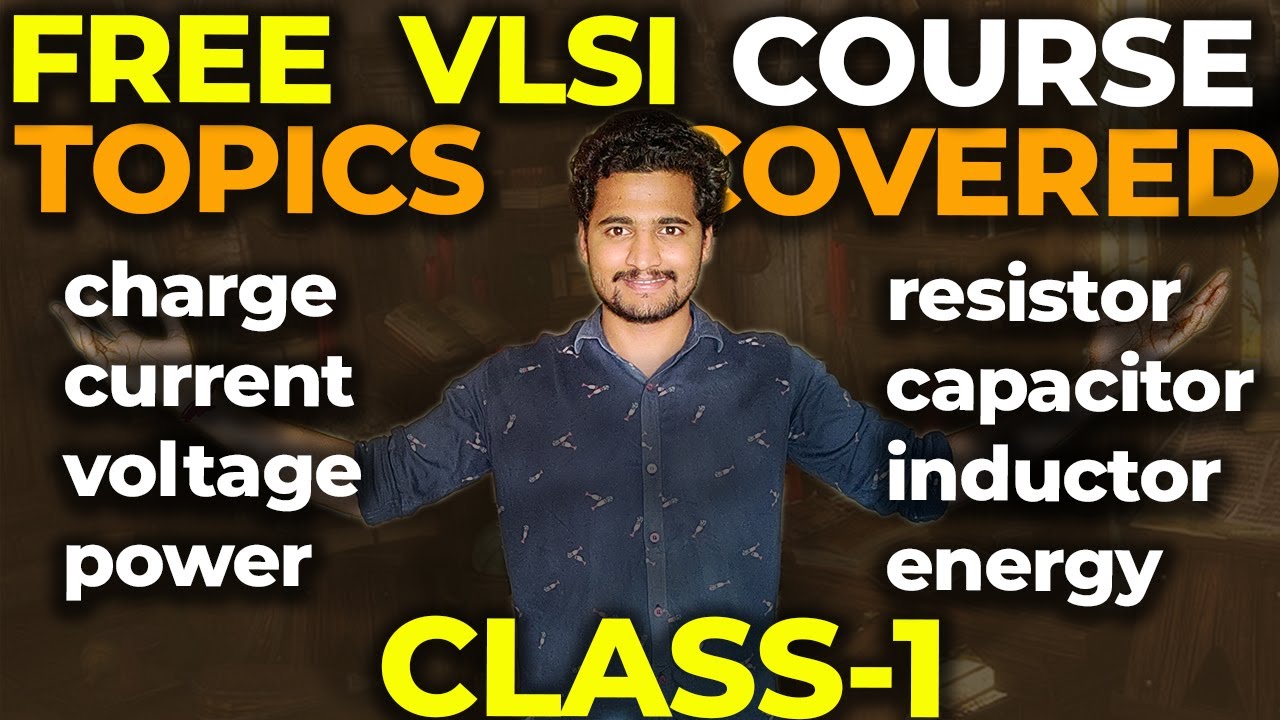
Very-Large-Scale Integration (VLSI) is the process of creating integrated circuits (ICs) by combining thousands to millions of transistors onto a single chip. VLSI technology has revolutionized the electronics industry, enabling the development of compact, powerful, and efficient electronic devices.
The evolution of KVL and KCL||The evolution of voltage divider rule and current divider rule
Key Concepts in VLSI
Integration Levels:
SSI (Small-Scale Integration): Contains tens of transistors.
MSI (Medium-Scale Integration): Contains hundreds of transistors.
LSI (Large-Scale Integration): Contains thousands of transistors.
VLSI (Very-Large-Scale Integration): Contains millions of transistors.
ULSI (Ultra-Large-Scale Integration): Contains over a billion transistors.
VLSI Design Flow:
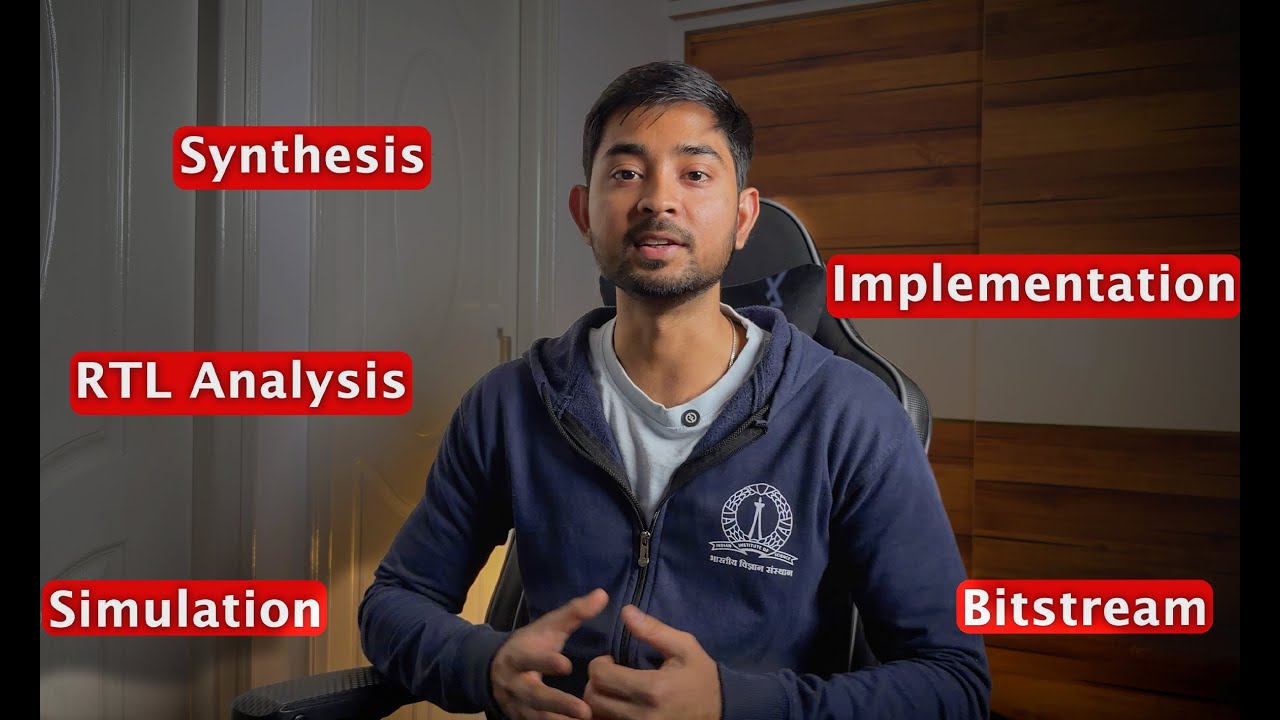
Specification: Define the functionality, performance, and physical constraints of the chip.
Architecture Design: High-level design specifying components and their interactions.
Logic Design: Creating logic circuits that meet the specifications.
Circuit Design: Designing the actual circuits using transistors.
Physical Design: Mapping the circuit design onto the silicon chip.
Fabrication: Manufacturing the chip using semiconductor processes.
Testing: Verifying the chip functions correctly.
VLSI Design Styles:
Full-Custom Design: Every transistor is designed specifically for the application. High performance but costly and time-consuming.
Semi-Custom Design: Uses pre-designed components (standard cells, gate arrays). Balances between performance and design effort.
Programmable Logic Devices (PLDs): Includes Field-Programmable Gate Arrays (FPGAs) which can be programmed by the user after manufacturing.
Applications of VLSI
Microprocessors: The brain of computers and many other devices, containing millions of transistors performing complex calculations.
Memory Chips: Store data in devices such as RAM, ROM, and flash memory.
Digital Signal Processors (DSPs): Specialized for processing digital signals in real-time applications like audio, video, and communications.
Application-Specific Integrated Circuits (ASICs): Customized for specific applications, often used in automotive, medical devices, and consumer electronics.
Advantages of VLSI
High Performance: Enables high-speed operation and processing power.
Miniaturization: Reduces the size and weight of electronic devices.
Lower Power Consumption: More efficient designs reduce energy consumption.
Cost Efficiency: Mass production of chips reduces the overall cost.
Challenges in VLSI
Design Complexity: Managing millions of transistors and their interconnections is complex.
Power Dissipation: Ensuring that chips do not overheat and operate efficiently.
Manufacturing Defects: High precision required in fabrication to avoid defects.
Verification and Testing: Ensuring the chip functions correctly is challenging and time-consuming.
Future of VLSI
Advanced Nodes: Continuing to shrink transistor sizes below 5nm.
3D ICs: Stacking multiple layers of transistors to improve performance and density.
Quantum Computing: Exploring quantum effects to create new types of circuits.
AI and Machine Learning: Specialized VLSI designs for AI and machine learning applications.
VLSI technology remains at the forefront of innovation in the electronics industry, driving the development of faster, smaller, and more efficient devices.
Повторяем попытку...

Доступные форматы для скачивания:
Скачать видео
-
Информация по загрузке: