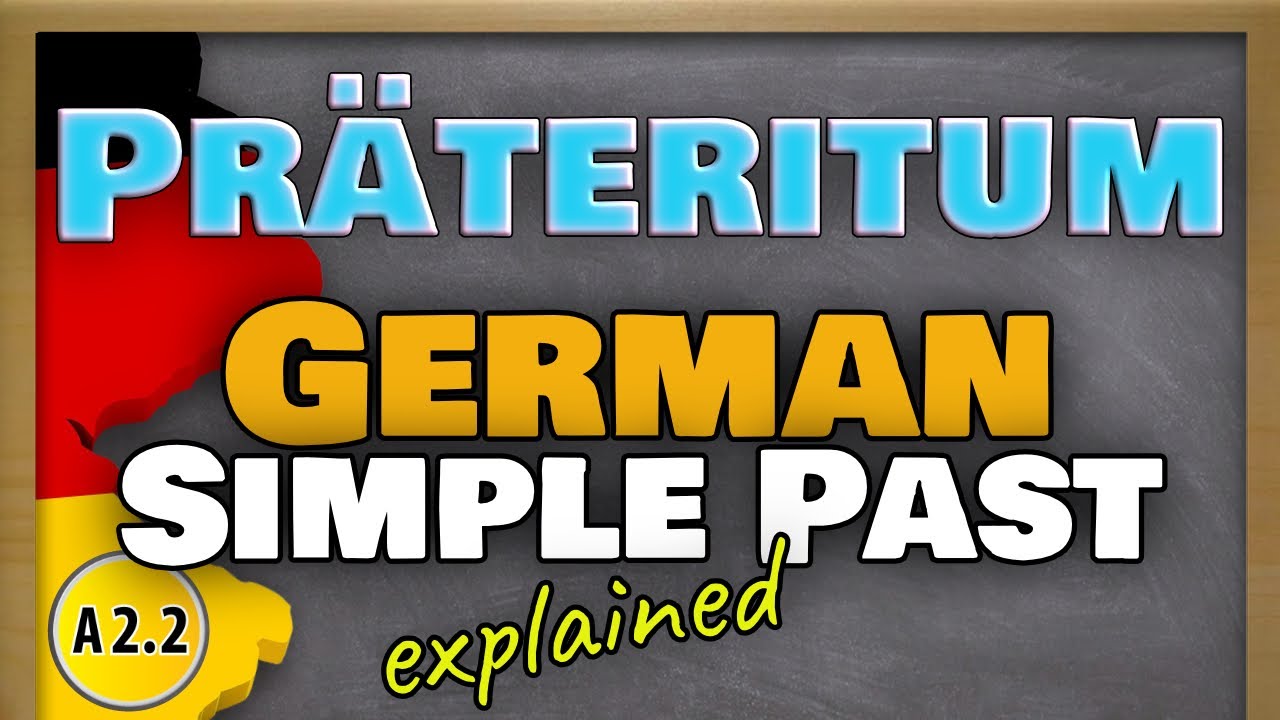
B1 GERMAN PRÄTERITUM | Präteritum Explained | Mastering the Präteritum
Автор: Easy German By Rajveer Sir
Загружено: 2024-10-22
Просмотров: 983
Описание:
The Präteritum, or simple past tense, is a verb form used primarily in written German. It describes actions that have already occurred and are no longer ongoing. Here’s a brief overview:
Formation
1. **Regular Verbs**: Typically add the suffix -te to the stem of the verb.
Example: *spielen* (to play) → *spielte* (played)
2. **Irregular Verbs**: These change their stem vowel and may have different endings.
Example: *gehen* (to go) → *ging* (went)
Usage
**Narrative**: Common in stories, literature, and formal writing.
**Reports**: Used in journalistic and historical contexts.
Examples
*Ich spielte Fußball.* (I played soccer.)
*Er ging nach Hause.* (He went home.)
Comparison with Perfekt
In spoken German, the *Perfekt* (present perfect) is often preferred for past actions, while the Präteritum is more formal. For example:
*Ich habe Fußball gespielt.* (I played soccer.)
*Ich spielte Fußball.* (I played soccer.)
#PräteritumTense #GermanPast #SimplePastGerman #PastTenseGerman #GermanConjugation #GermanLanguageTips #PräteritumRules #LearnPräteritum #GermanGrammarRules #PräteritumPractice
#GermanGrammar #Präteritum #LearnGerman #GermanLanguage #PastTense #GermanLessons #LanguageLearning #GermanVerbs #GrammarTips #SpeakGerman #Deutsch #GermanStudy #LanguageTips #FluentGerman #StudyGerman #GermanForBeginners #GermanPractice #GrammarNerd #LanguageLovers #Linguistics
Повторяем попытку...
Доступные форматы для скачивания:
Скачать видео
-
Информация по загрузке: