Quarantine Qawwali | Tu Kareemi Man Kamina Barda Um
Автор: Mansuri Qawwal
Загружено: 2020-12-20
Просмотров: 6590
Описание:
#rumi #maulanarumi #konya
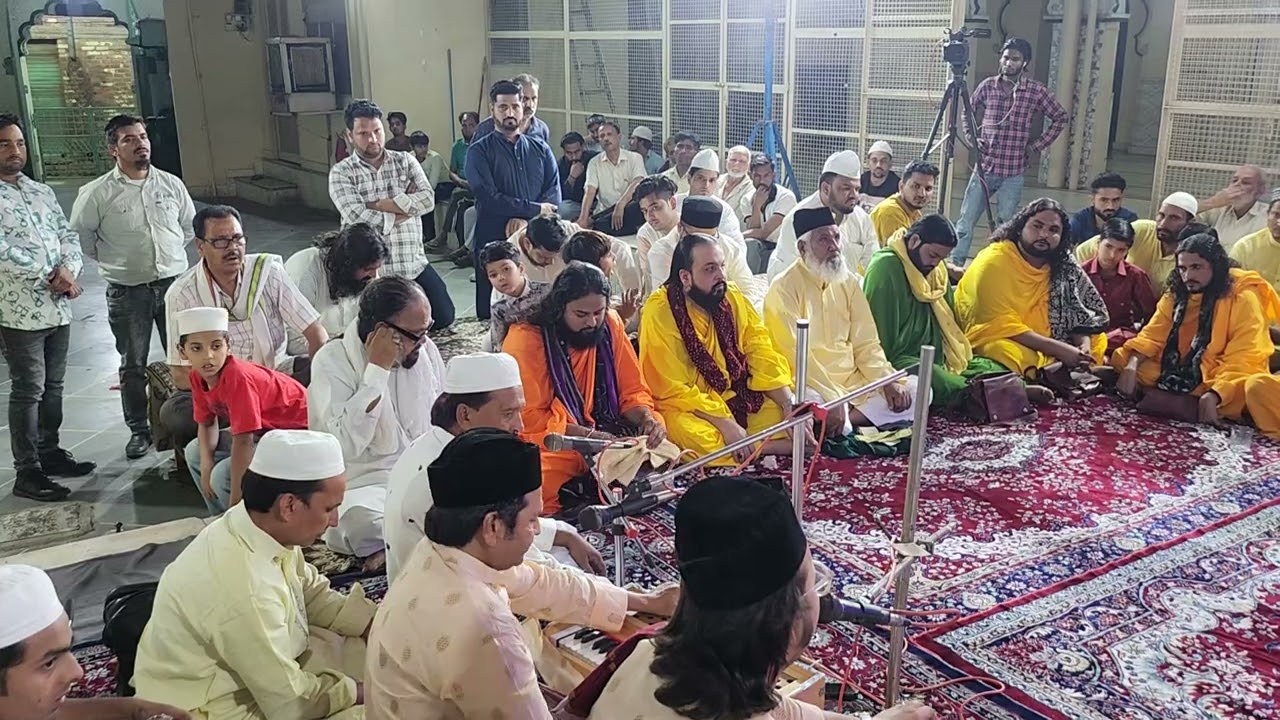
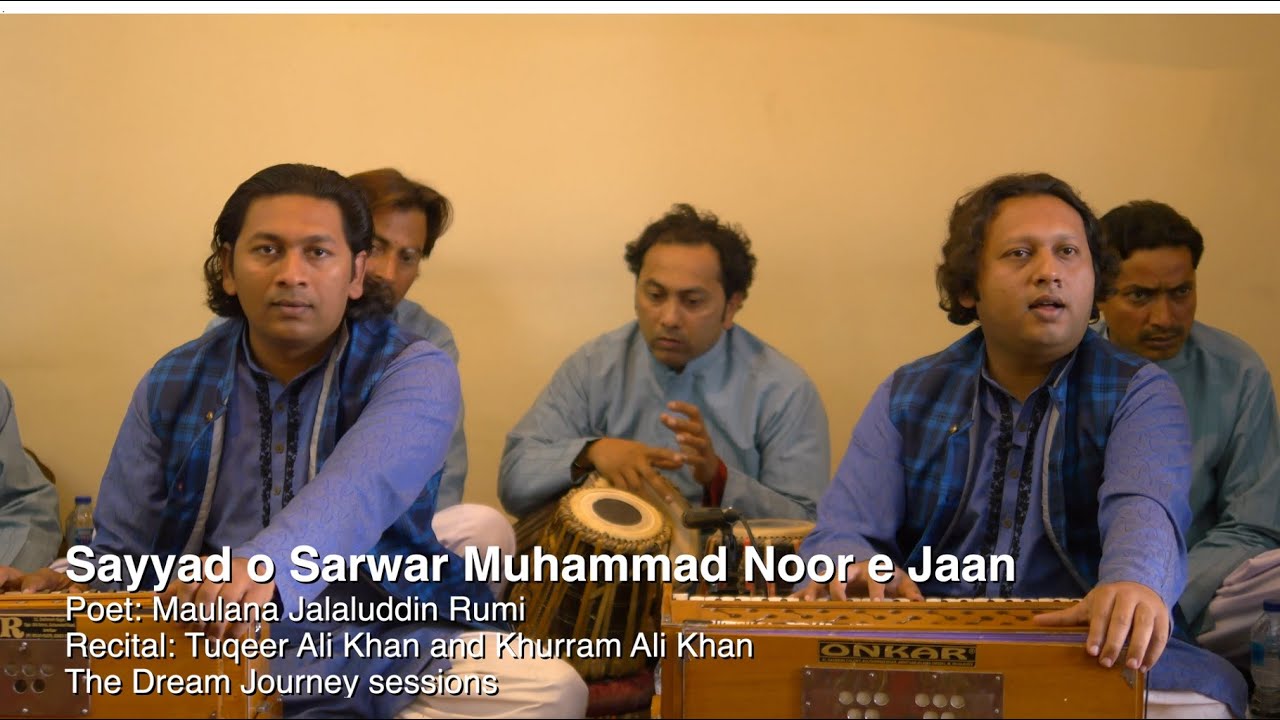
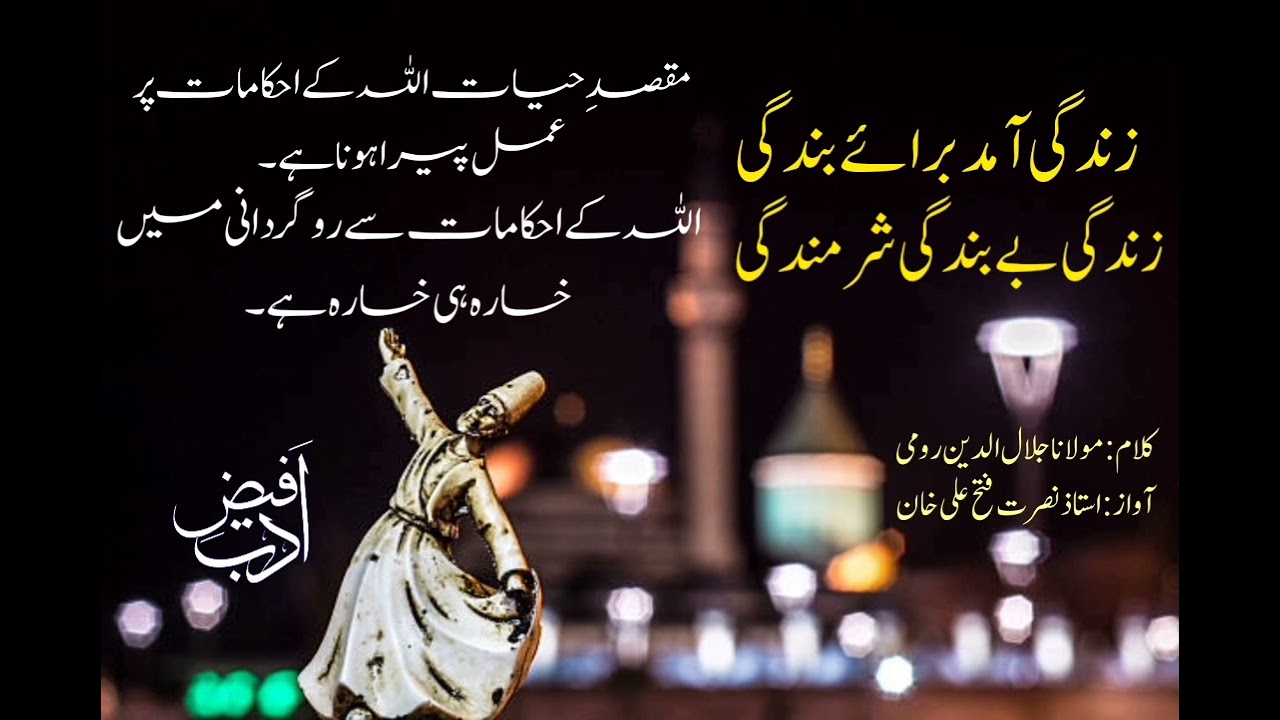
17th December marked the blessed urs celebration of Maulana Rumi RA. Here we present to you some verses of the divine Masnavi Sharif.
We were also blessed with the presence of Syed Sultan Shah Saab of Gulaman e Ahlebait Leicester who shared stories of our Spiritual masters in the sweetest of manner till the early hours of the morning. If you haven’t already, subscribe to their channel / gulamaneahlebaitleicester
The life of Rumi
Jalaluddin Rumi, better known simply as Rumi, was perhaps the finest Persian poet of all time and a great influence on Muslim writing and culture.
Jalaluddin Rumi was born in 1207 in Balkh in present-day Afghanistan. Increasing Mongol incursions when he was around the age of eleven forced his family to leave Afghanistan, who travelled to Baghdad, Mecca, Damascus and finally settled in Konya in Turkey. Rumi lived here for most of his life.
Rumi was the son of a renowned Sufi scholar, and it is more than likely that he was introduced to Sufism from a young age. Sufism is a branch of Islam primarily concerned with developing the spirituality, or more precisely the inner character, of a Muslim.
Both he and his father were firm believers in the revelations of the Quran, but criticised the mere outwardly legal and ritual practice that was being promoted at the time. In fact, much of his work is dedicated to waking people up, and encouraging them to experience life themselves, rather blindly following the scholars of the day.
Rumi spent his early years, like many Muslims of the time, learning and studying Arabic, law, Hadith, history, the Qur'an, theology, philosophy, mathematics and astronomy.
By the time of his father's death he had become an outstanding scholar in his own right, and took over his father's position as one of the highest scholars in the country at the young age of 24.
He spent his time teaching and giving lectures to the public, and until the age of about 35, lived a fairly non-descript life.
Then in 1244 Rumi met a travelling Sufi, called Shams (or Shamsi Tabrizi) and the whole course of his life changed.
Shams became fast friends with Rumi, in whom he recognised a kindred spirit. The two developed a very close friendship and it was at this point that Rumi became more and more secluded, shunning the society of those he previously would discuss and debate matters with.
Rumi wrote numerous lines of love poetry, called ghazals, but though they outwardly seem to be about Shams, it is not difficult to see that they are in fact poems describing his overpowering love of God.
Shams' effect on Rumi was decisive. Whereas Rumi had before preached Islam soberly, he became, through Shams' influence, filled with the love of God. What was inside his soul finally came out.
It is believed that Rumi would turn round and round while reciting his poetry, and it is this dance which formed the basis for the Mevlevi Order, or Whirling Dervishes, after his death. Dervish means doorway, and the dance is believed to be a mystical portal between the earthly and cosmic worlds.
His poetry
Rumi's major works consist of two epic poems. The first is the Diwani Shamsi Tabrizi, named in honour of his friend Shams. It is often abbreviated to Diwan. It consists of about 40,000 verses in a vibrant and energetic style. It has been suggested that the Diwan represents Rumi's feelings while in a dance-induced spiritual state.
Although the Diwan contains many short didactic passages, on the whole it appears as a collection of individual and separate crystallisations and concretisations of spiritual states undergone on the path to God. The overall 'feeling' of the Diwan is one of spiritual intoxication and ecstatic love.
At the end of the Diwan is a collection of poems of four lines, called quatrains. It is believed that about 1,600 can be correctly attributed to Rumi.
The Mathnawi is his other seminal work. It consists of 25,000 verses, in six books of poetry. The Mathnawi was written at the same time as the Diwan, and was probably intended to place the Diwan within the wider context of Islam. It is regarded as an explanation of some aspects of the Qur'an, placed within a more Sufi context.
Indeed, the problem with many translations of Rumi's work is the separation of his poems on love from his belief in God and Islam. Many translations of his work have become mere love poems, and Rumi himself has become known as a love poet. Love is an overwhelming part of Rumi's work, but for Rumi, this love was a higher love for God.
-William Chittick
Urs Mubarak And we also wanted to wish Shabe Yalda Mubarak to all those celebrating one of the most important Persian traditions. On this night families gather and recite Diwan-e-Hafez which is another famous piece of work from Persian poet Hafez Shirazi RA
Instagram:
/ mansuriqawwal
Like share subscribe
Comments, feedback and enquiries at:
[email protected]
Повторяем попытку...

Доступные форматы для скачивания:
Скачать видео
-
Информация по загрузке: