Symmetry: Introduction & Types | Biology| Bio Scholar
Автор: Bio Scholar
Загружено: 2025-06-28
Просмотров: 1711
Описание:
Symmetry: Introduction & Types | Biology| Bio Scholar
Have you ever noticed how a butterfly’s wings or a starfish’s arms look perfectly balanced? That’s not just nature showing off — it’s symmetry. And it plays a key role in how scientists understand, classify, and study living organisms."
🎙️ [WHAT IS SYMMETRY]
"Symmetry, in biology, refers to how body parts are arranged in relation to an imaginary line or plane.
In other words, it’s about whether you can divide an organism into equal parts — like a mirror image. This idea might sound simple, but it reveals a lot about an organism’s structure, movement, and even evolution."
🎙️ [SYMMETRICAL VS ASYMMETRICAL]
"Scientists use the terms symmetrical and asymmetrical to describe how an organism’s body is organized.
If an organism has a random, irregular body shape with no clear pattern, it is called asymmetrical. This means you can’t split it into two equal halves — there’s no symmetry. A common example is a sponge. It has no fixed shape and shows asymmetry.
But if an organism's body shows a regular pattern or balance, then it is said to have symmetry. That symmetry can be further classified into types, depending on how the body can be divided."
🎙️ [TYPES OF SYMMETRY]
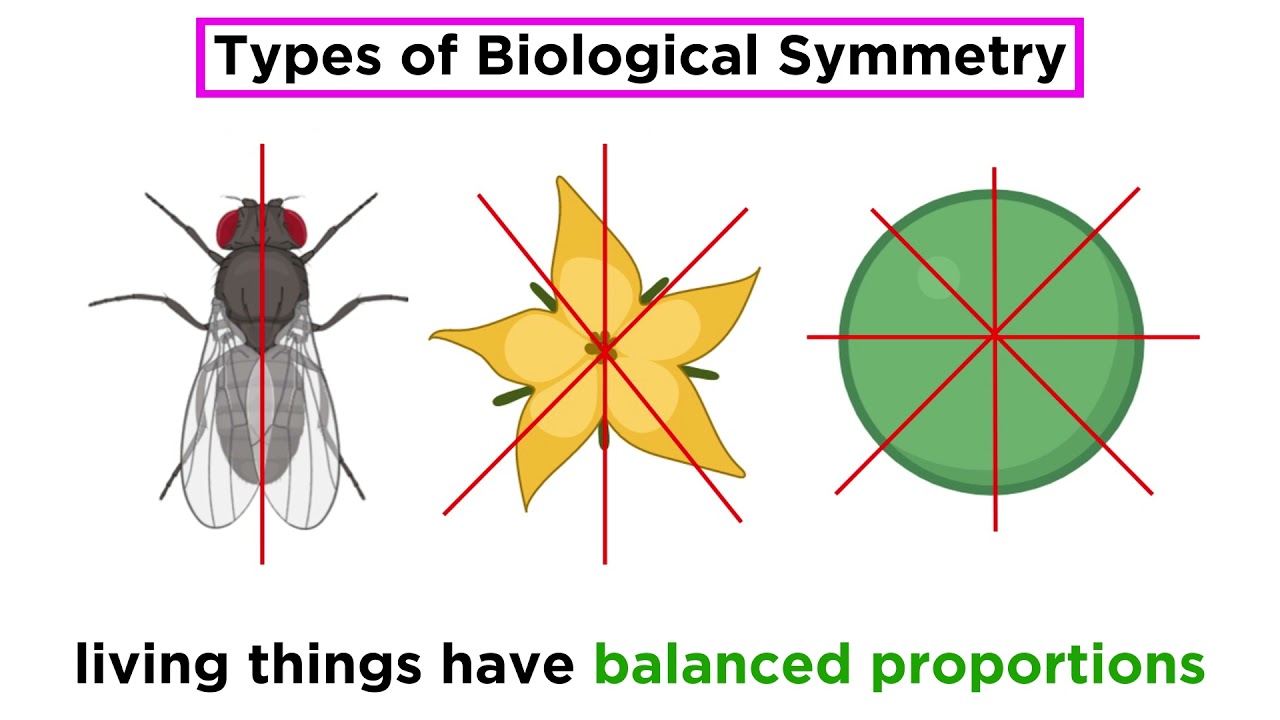
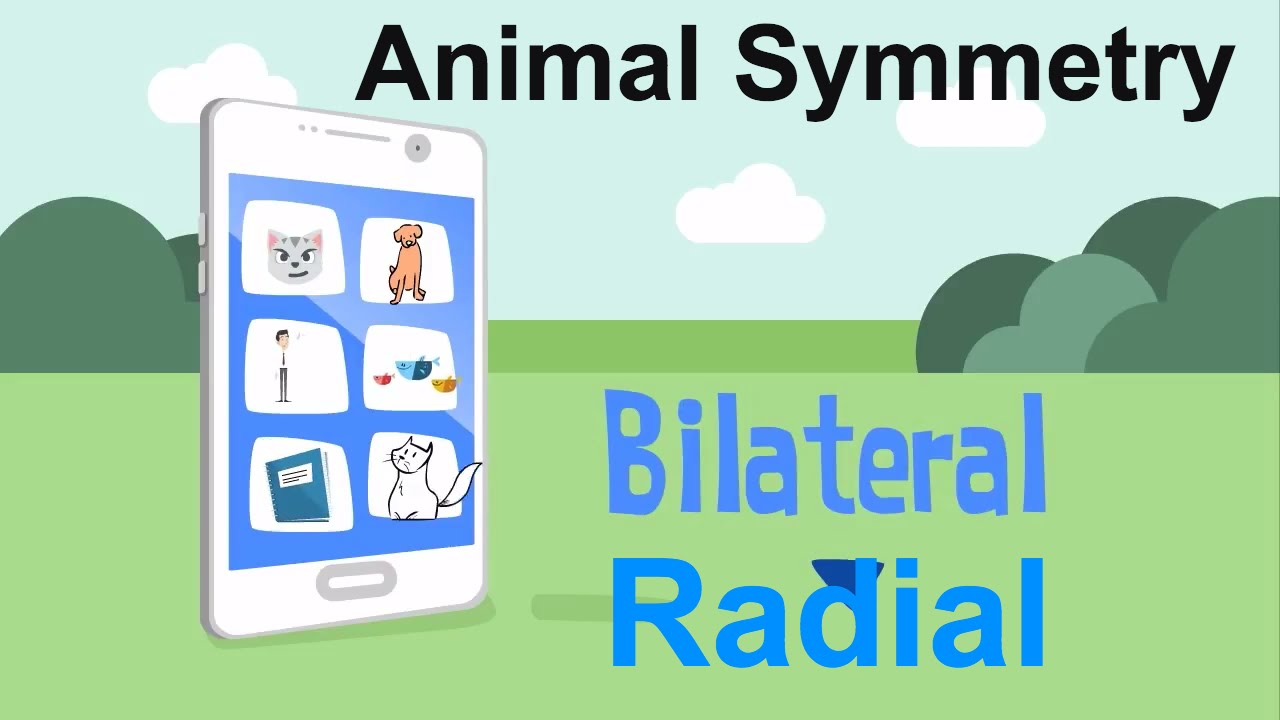
1. Bilateral Symmetry
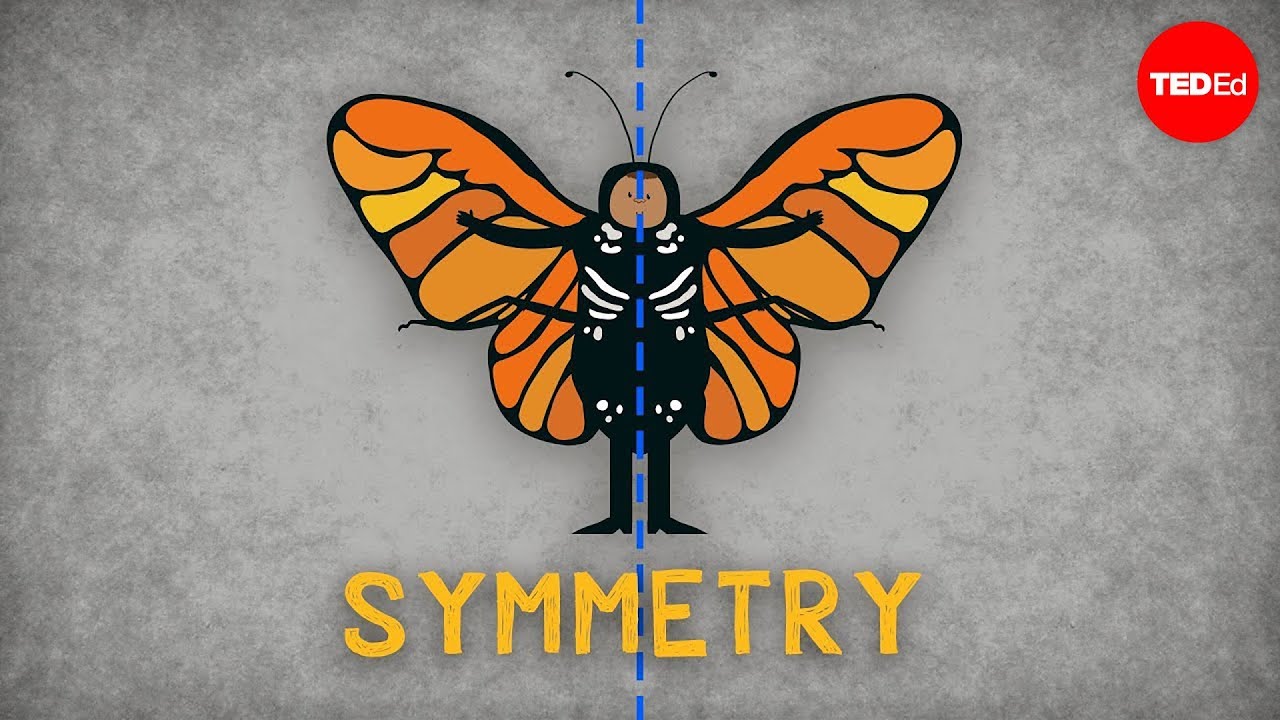
"If the body can be divided into two equal mirror-image halves along a single plane — that’s called bilateral symmetry.
This is the kind of symmetry we humans have. Our left and right sides are nearly mirror images of each other.
Animals like fish, birds, reptiles, and insects all show bilateral symmetry. It’s the most common type of symmetry in the animal kingdom."
2. Radial Symmetry
"But if the body can be divided into more than two equal parts around a central axis — like slicing a pizza — that’s called radial symmetry.
This is seen in animals like jellyfish, sea anemones, and starfish.
These organisms don’t have a left or right side, but instead have body parts arranged in a circle around a center point."
🎙️ [SUMMARY ]
"To summarize:
If the body shape is random and irregular, it’s called asymmetrical.
If the body shows a pattern, it has symmetry, which can be either bilateral or radial.
This feature — body symmetry — is one of the key tools scientists use to classify animals.
#BiologyMadeSimple #AnimalSymmetry #LearnWithBioScholar #ScienceExplained #EducationalContent
📚 Follow Me for More Content:
📌SUBSCRIBE NOW: / @bioscholar971
📌 Facebook: https://www.facebook.com/profile.php?...
-------------------------------------============================---------------------------------------------
📢 Disclaimer:
This disclaimer emphasizes that the videos are not a replacement for medical textbooks, as textbooks are authored by experts, edited, and referenced. The creator of the videos does not claim expertise but draws from multiple sources for information and creates their own illustrations. They stress that any unintentional copyright infringement is accidental and express their sole intention of educating viewers. The videos are not intended for patient education or diagnosis; viewers are advised to consult licensed medical professionals for individual medical concerns. They are specifically aimed at assisting medicine and health sciences students in their studies and should be used solely for that purpose.
Thanks.
Повторяем попытку...

Доступные форматы для скачивания:
Скачать видео
-
Информация по загрузке:









![Пожалуй, главное заблуждение об электричестве [Veritasium]](https://imager.clipsaver.ru/6Hv2GLtnf2c/max.jpg)