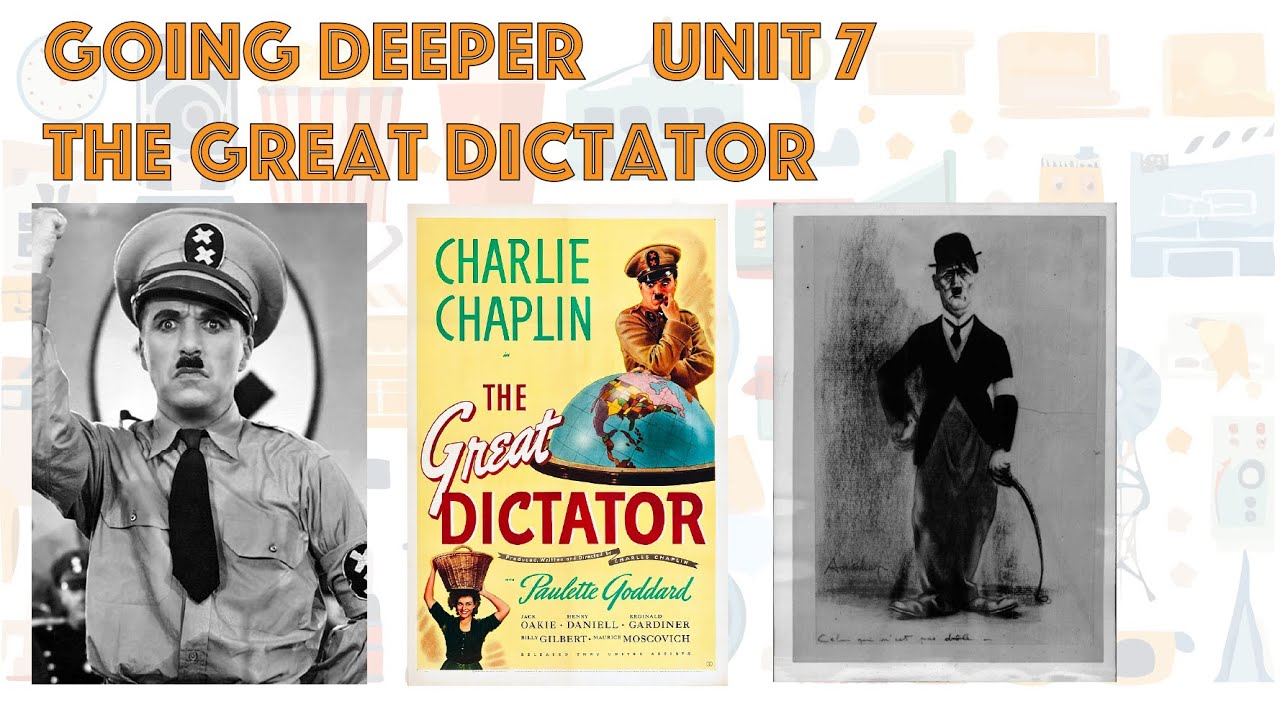
Going Deeper Unit 7: The Great Dictator
Автор: Teaching English in Japan
Загружено: 2025-11-01
Просмотров: 196
Описание:
All visuals are, to the best of the uploader's knowledge, in the public domain. Clips from the following films are used for educational purposes only.
The Kid (Charlie Chaplin, 1921), Gold Rush (Charlie Chaplin, 1925), Modern Times (Charlie Chaplin, 1936), The Great Dictator (Charlie Chaplin, 1940).
Script:
Charlie Chaplin was one of the most successful filmmakers of the silent cinema period and was famous for his physical humor and impressive stunts. But while his films were comedies, they also included complex social commentaries, that were often sympathetic to the working class, many of his films starred Chaplin’s most iconic character, the Tramp, a silent, silly, and big-hearted figure. Chaplin directed his first feature length film in 1921, The Kid, which sees the Tramp care for an abandoned boy, and together they face poverty, illness, and the authorities, who try and take the child to an orphanage. Gold Rush, which Chaplin made in 1925 and explores how workers driven out to the wildest areas of the USA in search of gold faced extreme weather, starvation, and bear attacks. Modern Times, which Chaplin directed in 1936 comments on rapid industrialization, and how bosses in charge of huge factories show little regard for their workers’ safety and privacy, and are focused entirely on profit.
It is no surprise then that Chaplin made a film that mocked some of the most powerful world leaders of the time, namely Adolf Hitler and Benito Mussolini, with the characters of Adenoid Hynkel and Benzino Napaloni, in his 1940 film The Great Dictator. Chaplin plays two characters in the film, Hynkel the dictator and a Jewish barber who is wounded in battle and suffers from amnesia. Some have suggested that this mirrors comments of the time that Chaplin’s Tramp bore a strange similarity to Adolf Hitler, at least in regards to appearances.
The film makes fun of fascism, Nazism and antisemitism, making the dictators of Hynkel and Napaloni appear unhinged, ridiculous, but potentially very, very dangerous. The film was released over a year before the USA declared war on the Axis forces, and while Chaplin had experimented with synchronized sound in the past, it includes a stirring speech at the end of the film, when the barber is confused for Hynkel and pushed on stage, where he addresses a huge crowd, as well as the viewing audience, and calls for more love and peace in the world, and less fear, hatred, and discrimination, a message that was greatly needed at the time, and one that still rings true today.
Повторяем попытку...
Доступные форматы для скачивания:
Скачать видео
-
Информация по загрузке:


![«ФАНТОМАС»🎭😃Как создавали Легендарный фильм с Луи де Фюнесом [Съемки Факты Интересности]](https://imager.clipsaver.ru/IHSXCZ6uiTg/max.jpg)