The Money Masters Explainer
Автор: The Duke Report
Загружено: 2025-11-07
Просмотров: 469
Описание:
1996 Video Recap
https://thedukereport.substack.com/p/...
The Money Masters, directed by William T. Still and produced by Patrick S. J. Carmack, traced the complete lineage of monetary power from ancient systems of debt to the Federal Reserve’s command of twentieth-century finance. The film defined money as the primary instrument of governance, created and withdrawn by private institutions that shaped national destiny through the issuance of credit. Across its structure, the documentary revealed the recurring pattern through which control of money issuance determined political and social outcomes.
The Origin of Monetary Authority
King Henry I of England established the tally-stick system in 1100 AD, transforming wooden notches into official money accepted for taxes. His design created a stable, debt-free medium that sustained England for seven centuries. Private financiers later overturned that stability, promoting credit backed by gold and converting money into debt. By the late seventeenth century, the Bank of England formalized this transformation. In 1694, a royal charter granted private bankers authority to lend money created from nothing to the Crown at interest, institutionalizing permanent public debt. England became the model for a global system of monetary control anchored in credit and taxation.
Merchant banking houses then carried this structure across Europe. In 1743, Amschel Moses Bauer opened a financial enterprise in Frankfurt beneath a sign marked with a red shield. His son, Mayer Amschel Rothschild, built a network of banks in London, Paris, Vienna, Frankfurt, and Naples. The Rothschild family financed wars, lent to monarchs, and collected interest through government borrowing. Their model fused credit, war, and state finance into a single mechanism of control.
The Roman Precedent and the Assassination of Caesar
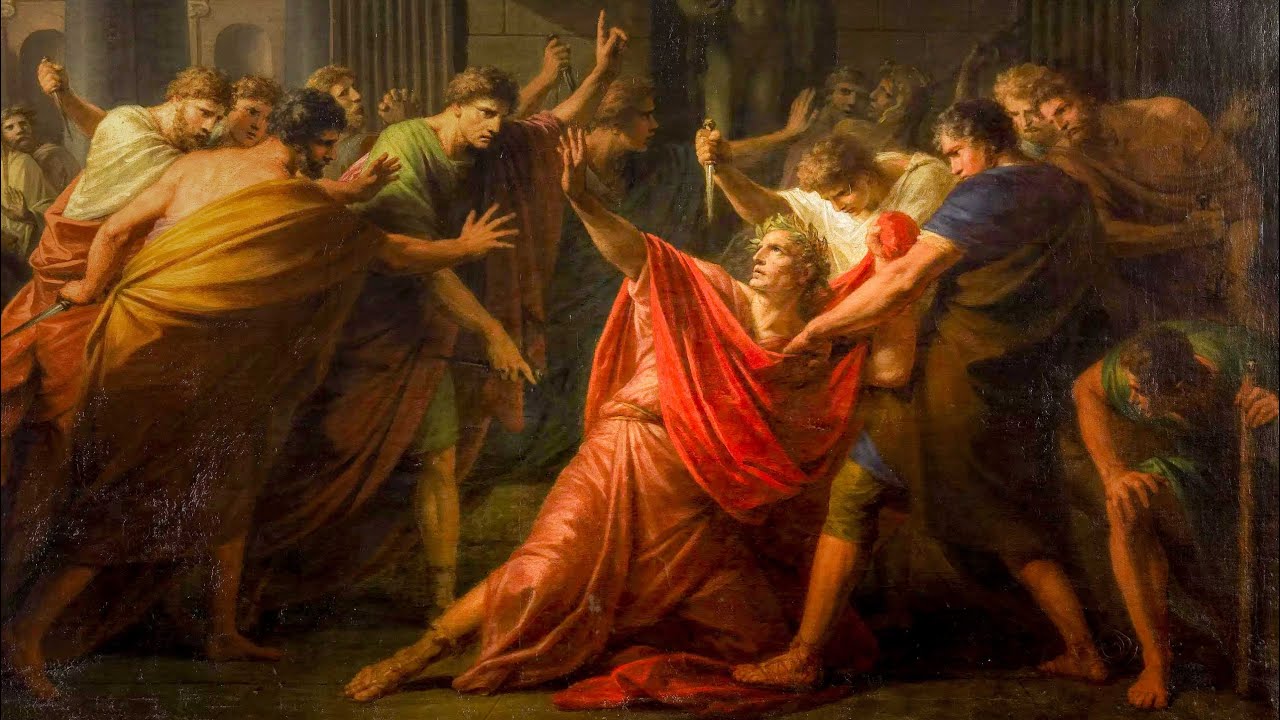
Centuries before England’s banking empire, Rome confronted the same conflict over the power to issue money. Julius Caesar broke the dominance of private money changers by issuing debt-free currency directly from the Roman treasury. His coinage circulated without interest and revived prosperity across the empire. Farmers regained land, commerce expanded, and the economy stabilized. Caesar’s monetary reform transformed Rome from a society ruled by creditors into one supported by productive labor.
The film stated that his assassination ended this policy. The money changers regained control, restricted the money supply, and drove the empire back into debt. The episode served as the first recorded instance of financiers destroying a leader who restored public control of money. The Roman example established the central thesis of the documentary: monetary sovereignty determined national survival.
From Empire to Revolution
In 1764, the Currency Act forbade the American colonies from issuing their own paper money. Benjamin Franklin described this law as the direct cause of colonial poverty and rebellion. Colonial Scrip — debt-free money issued by local assemblies — had maintained full employment and a stable exchange rate. The British restriction forced the colonies to depend on the Bank of England’s credit and drained gold from them. The depression that followed set the stage for revolt.
The American Revolution converted monetary independence into a constitutional principle. The framers granted Congress the authority to coin money and regulate its value, embedding currency sovereignty into the nation’s framework. Yet the young republic soon faced private banking pressure. In 1781, Robert Morris founded the Bank of North America, operating on fractional-reserve banking. The institution issued loans far beyond its deposits, generating profit from interest on imaginary capital. A decade later, Alexander Hamilton created the First Bank of the United States, modeled on the Bank of England. The government borrowed funds that the bankers themselves created.
The Struggle for Control
The War of 1812 and the chartering of the Second Bank of the United States restored private dominance. President Andrew Jackson dismantled the bank in 1836. He withdrew government deposits, vetoed its charter renewal, and declared victory over “the money power.” For a generation, the United States issued its own currency through the Treasury. That sovereignty ended during the Civil War.
When financiers demanded ruinous interest to fund the Union, President Abraham Lincoln bypassed them by printing Greenbacks — debt-free notes created by the Treasury. They circulated successfully and proved that a government could issue money without borrowing. Lincoln’s assassination terminated the experiment. The National Banking Act of 1864 reinstated debt-based currency, tying the money supply to government bonds held by private banks. Money once again equaled debt.
Повторяем попытку...
Доступные форматы для скачивания:
Скачать видео
-
Информация по загрузке: