Guus Janssen - Zoek
Автор: Dutch Composers
Загружено: 2014-09-30
Просмотров: 614
Описание:
Guus Janssen (1951)
Zoek : voor piccolo, klavecimbel en strijkorkest (1993)
Eleonore Pameijer, piccolo
Guus Janssen, harpsichord
Orchestra: Nieuw Sinfonietta Amsterdam
Conductor: Lev Markiz
Program note (Dutch): Het voorstel om een dubbelconcert voor piccolo, klavecimbel en strijkorkest te maken kwam van Eleonore Pameijer. Voor haar piccolo had ik reeds het solostuk Voetnoot 1 gemaakt. Verder had ik voor klavecimbel het stuk Pogo 3 geschreven en heb ik in de laatste jaren een kleine carrière als improviserend klavecinist opgebouwd. Het idioom van de piccolopartij in ZOEK is verwant aan dat van Voetnoot 1 in die zin dat er bij voortduring sprake is van een 'scheve, zoekerige' ritmiek, die vooral bereikt wordt door het veelvuldig gebruik van kwintolen en syncopische accenten. Als ik aan klavecimbel denk, dringen zich grote drieklanken aan mij op en vooral die in D groot. Dit heeft tot gevolg dat ZOEK in D groot staat, hoewel de bij de start duidelijk bevestigde toonsoort tijdens het verdere verloop van het stuk langs alle mogelijke wegen teruggezocht wordt. - GUUS JANSSEN
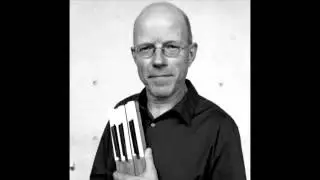
Guus Janssen is a Dutch composer and improviser. At the Sweelinck Conservatory in Amsterdam he studied piano with Jaap Spaanderman and Ton Hartsuiker, and composition with Ton de Leeuw. From the early 1970s he showed a remarkable independence of thought, influenced, among other things, by the improvising methods he, along with his two brothers, developed in his teens. He has always been equally at home working in composed as in improvised music. Early on he played the piano in the Asko Ensemble, which gave the première of his Octet in 1978. The following year he introduced the first of the many improvisation ensembles of which he was to be the nucleus: groups that played a considerable part in the emergence of a characteristically Dutch style of improvisation, where fully notated and free elements are blended to such an extent that the two can hardly be distinguished.
Janssen's solo improvisations, both on the piano and on the harpsichord, show the same playfulness and formal sense that is distilled in his written music. However, his method of composing is anything but improvisatory. Many of his works involve chord tables, numerical patterns and other kinds of self-imposed rules. But these cerebral processes only serve as a mould. At the heart of his thinking lies the notion of approaching different musical traditions and phenomena with an innocent ear. His favourite example, by analogy, is the Flemish painter Roger Raveel, who views and depicts reality as though it were an abstraction. Thus anything can occur in Janssen's music, from jazz chords and Baroque trills to quarter-tones, but always estranged from their origins. The effect can be disconcerting as well as hilarious. Quirky rhythms, dissociated hints of harmony and jagged transitions give Janssen's music a Haydnesque quality, not only in its capacity to surprise, but also in its logical, clearcut construction. His Streepjes (1981) is a fine example of his guileful guilelessness. The fabric consists almost exclusively of harmonics, which nevertheless yield a chromatic scale, because most of the strings have been retuned. As a result, the four players must combine their notes to produce a single melody. The strange sonority, resembling a glass harmonica, is repeatedly interrupted by full, regular vibrato chords. His most successful work is the opera Noach (on a libretto by Friso Haverkamp), staged during the Holland Festival in 1994 with Pierre Audi as director and Karel Appel as designer. Scored for an extended version of Janssen's own ensemble, it contained a vital and moving mix of notated and improvised music.
Повторяем попытку...

Доступные форматы для скачивания:
Скачать видео
-
Информация по загрузке: