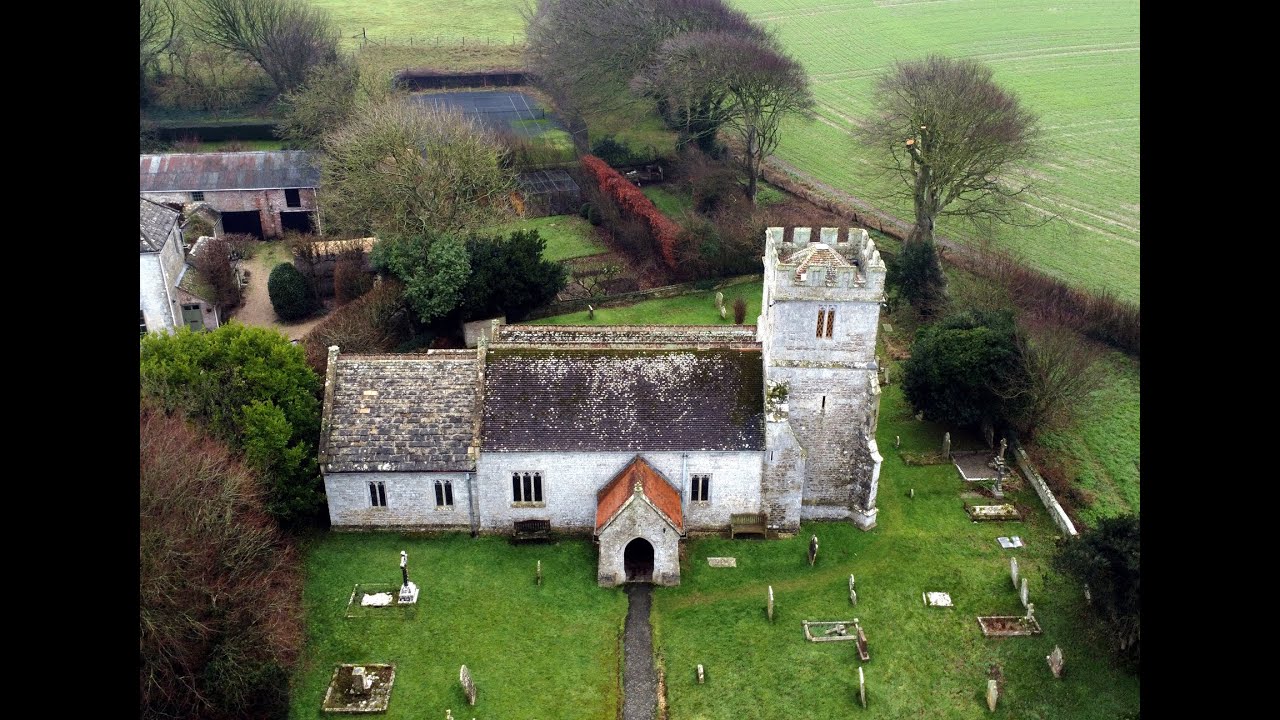
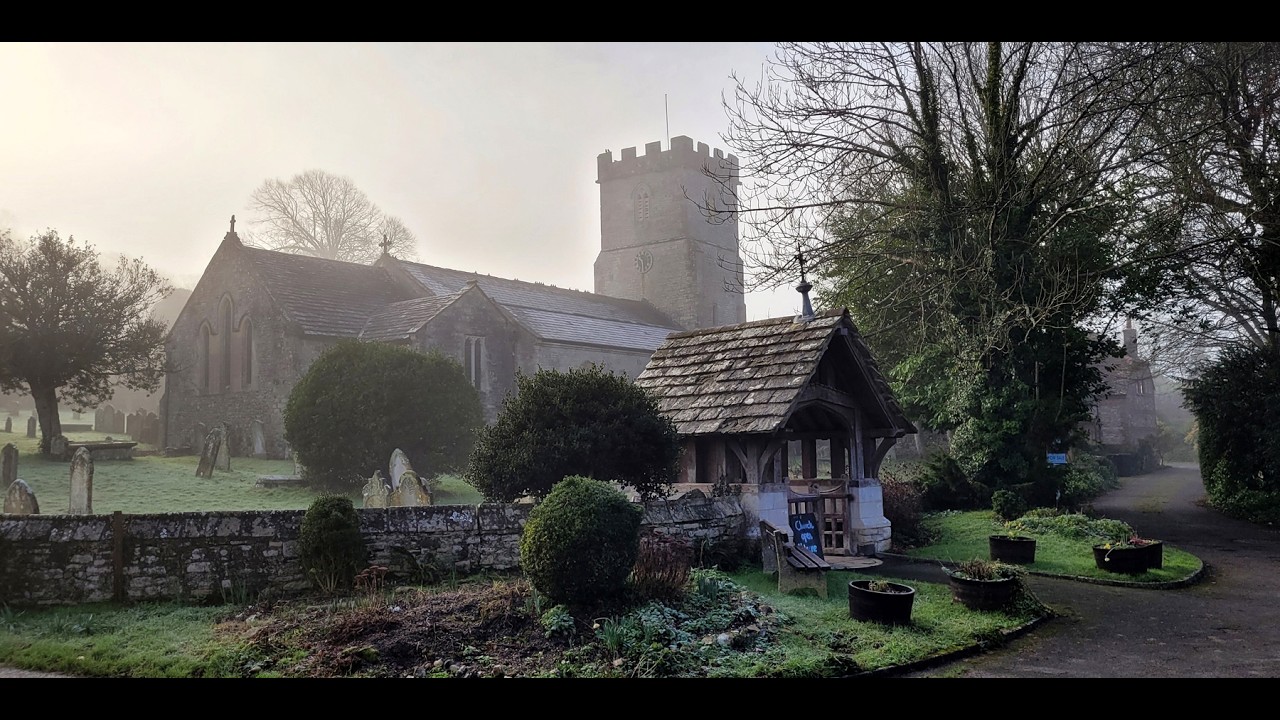
St. Christopher's Church, Winfrith
Автор: IrishMac093
Загружено: 2026-01-31
Просмотров: 102
Описание:
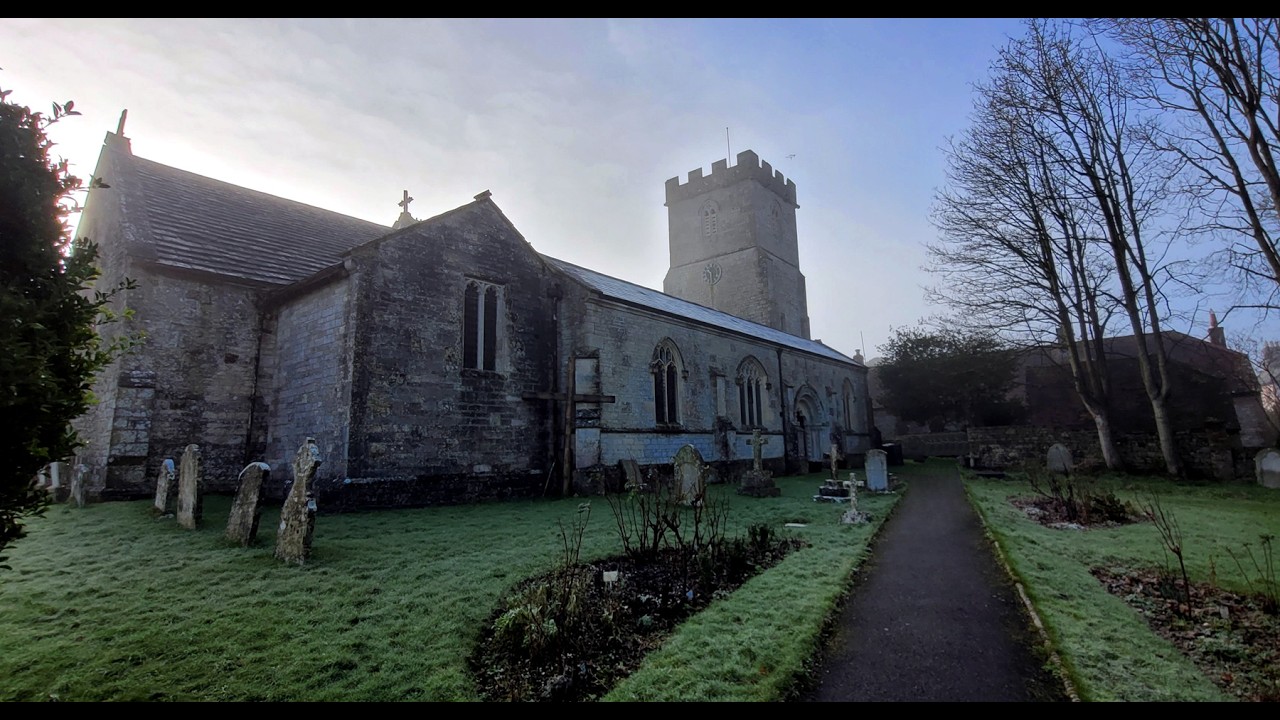
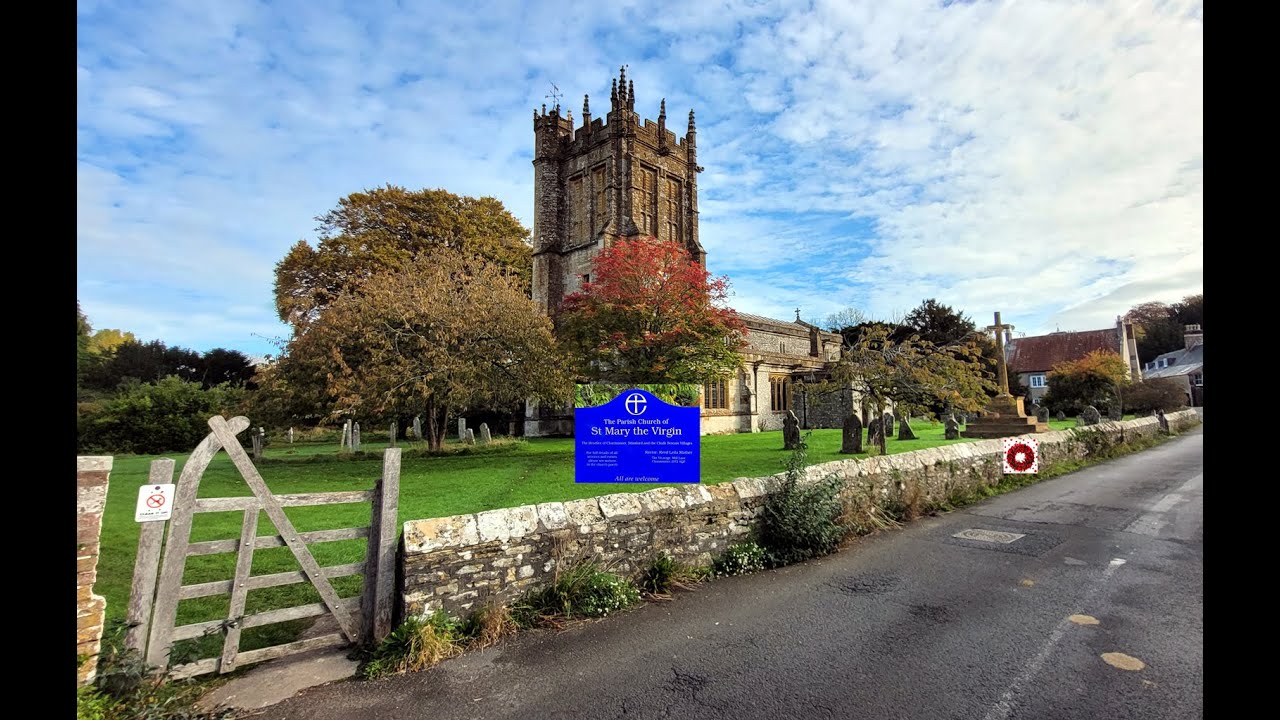
The Church of England parish church of Saint Christopher was extensively restored and enlarged in 1854. At this time the north aisle was added, however some Norman architectural features still remain, the most notable being the north doorway. The parish registers date from 1585. The parish was merged with those of Chaldon Herring, East Lulworth and West Lulworth in 1979. Grade II Listed.
Drone view - • St. Christopher's Church, Winfrith, Dorche...
Description
Only the chancel arch, the possibly reset S door and reused fragments of the N door survive from the 12thc church. The chancel is 13thc, with a 15thc nave, a N aisle of c.1854, a 17thc S porch and a 15thc W tower, all extensively rebuilt.
History
Noted as in the Domesday Book: ‘Bolle the priest has the church of ‘Winfrode’…(he also held the churches at Puddletown, Chaldon and Fleet.)
Glynn visited the church in 1842, before the extensive restoration was carried out, and detailed the appearance of the N door (then covered by a porch) and the chancel arch, which would appear today to match what he then saw.
S doorway (perhaps reset; rebuilt c.1854), inside a locked porch, so not available for survey.
‘...in two orders of which the outer, a semicircular arch with label above, is carried by single nook-shafts with cushion capitals and moulded imposts; the inner order forming a tympanum has been replaced’.
The inner arch is plain and contains with its reveals two unequal steps of possibly 17thc date down into the nave: the ground to the S of the church rises steeply, so the N doorway would presumably been the principal entrance.
The N doorway is of two orders, contained with a pair of stepped and weathered buttresses, extensively rebuilt when it was re-set within the wall of the c.1854 N aisle. However, as it probably replicated the original (cf. Glynne, 1842) a description is given, as follows:
The tympanum undercut is in the form of a trefoil, comprising the two outer sections and a keystone with a suspended cylindrical roundel with a spiral decoration to its end. It sits on abaci comprising a flat face over an angle quirk with a chamfer decorated with small lateral chevron decoration under. Below, either jamb comprises a vertical row of frontal (outward facing) large chevrons stopping short on a plain block, the top of which corresponds to the base of the shafts to the orders. This in turn is set on a plinth with a chamfered arris. The plinth and the abacus both continue in the same style, stepped out across the orders and are returned along the face of the wall. Each of the orders has a base of attenuated bulbous attic type set on a block with a plain shaft and cushion capital with quirks to the corners. The corner between the shafts is plain, the outer order is flanked by a vertical row of frontal (outward facing) chevrons, but shallower than those either side of the door opening. The inner order supports a semi-circular voussoired arch with a roll-moulding with a fillet to its underside, the outer order voussoirs with outward-pointing chevrons. Many of the stones to these arches are the original, reset.
The chancel arch was rebuilt in the 13thc, set off 12thc corbels positioned midway within the reveals. As the arch and the walling it supports are both only about a third the width of the reveals and the walling continues up to the roof, the effect overall is of a full-height recess containing the arch. The jambs to the reveals each has a flat chamfer with a shallow pyramid stop at its base, and is set on a chamfered plinth.
All has deeply claw-toothed chiselled vertical tooling. The arch is two-centred, with chamfered arrises, and springs off a pair of matching corbels. These each have an abacus semi-octagonal in plan comprising a pair of rolls to the face, over a fan-shaped arrangement of flutes which are gathered into trumpet scallops, four at the face, three at the angles and two at the return of the corbel against the reveal. These sit on a necking to a short shaft which in turn rests on a roll and a miniature version of the larger corbel, comprising five trumpet flutes (that to the S being a modern replica). The style of the arch and the vertical claw-toothed chiselled tooling to the reveals both being indicative of the 13thc suggest the 12thc corbels are reused. Beneath the arch are three steps up into the chancel: these would appear to be a part of the c.1854 rebuild.
More information on wikipedia.
Повторяем попытку...
Доступные форматы для скачивания:
Скачать видео
-
Информация по загрузке: