India's Complex Democracy and its Impact on Youth
Автор: METS International
Загружено: 2026-05-04
Просмотров: 8
Описание:
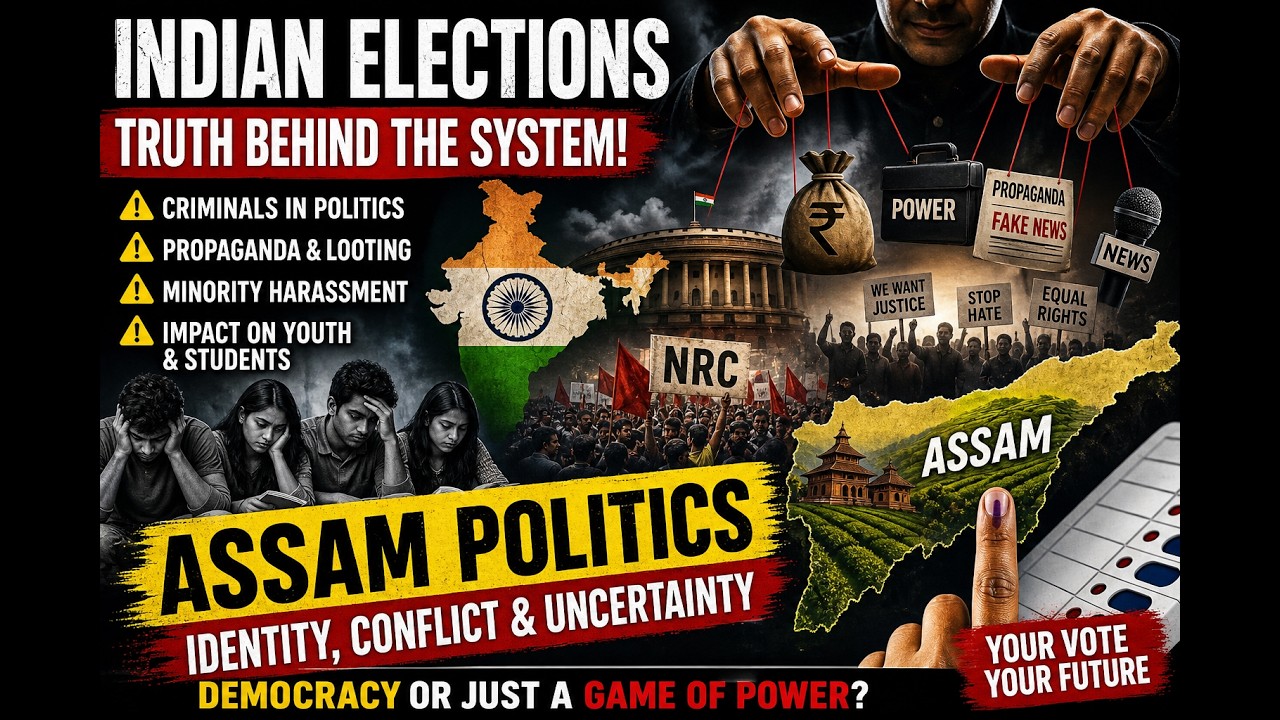
Indian Election System, Politics, and the Crisis of Trust: A Focus on Youth and Assam
India is often celebrated as the world’s largest democracy, where the electoral system enables over 900 million citizens to participate in governance. The framework is overseen by the Election Commission of India, which ensures free and fair elections through constitutional provisions. However, beyond this ideal framework lies a complex and often troubling political reality shaped by power struggles, propaganda, criminalization, and social divisions.
1. Structure of the Indian Election System
India follows a parliamentary system where elections are held at multiple levels—Lok Sabha (national), Vidhan Sabha (state), and local bodies. The first-past-the-post system determines winners, meaning the candidate with the most votes wins, even without an absolute majority.
While this system ensures administrative simplicity, it also creates room for:
Vote fragmentation
Strategic polarization
Candidate selection based on winnability rather than integrity
2. Criminalization of Politics
One of the most concerning issues is the growing involvement of individuals with criminal backgrounds in politics. Various reports over the years have indicated that a significant percentage of elected representatives face criminal charges, including serious ones.
Why does this happen?
Political parties prioritize “strong candidates” who can influence voters
Weak enforcement of legal disqualification until conviction
Use of money and muscle power in elections
This creates a dangerous cycle where:
Lawmakers may themselves undermine the rule of law
Governance becomes influenced by vested interests
Public trust declines
3. Propaganda, Money Power, and Agenda Politics
Modern elections increasingly rely on narrative-building rather than policy debate. Political messaging—especially through social media—often includes:
Emotional manipulation
Selective information or misinformation
Identity-based mobilization (religion, caste, ethnicity)
This propaganda machinery can divert attention from real issues like:
Education quality
Employment
Healthcare
Infrastructure
Instead, voters are often influenced by fear, pride, or perceived threats.
4. Minority Concerns and Social Polarization
India’s diversity is one of its greatest strengths, but it also becomes a political tool. In some cases, minority communities—religious, ethnic, or linguistic—feel targeted or marginalized due to:
Policy decisions perceived as exclusionary
Political rhetoric that creates “us vs them” narratives
Unequal access to opportunities
While it is important to avoid sweeping generalizations, the perception of injustice alone can:
Create social unrest
Deepen mistrust in institutions
Weaken national unity
5. Impact on Youth and Students
Young people form a large portion of India’s population, and they are deeply influenced by political developments.
Positive side:
Increased political awareness
Participation in debates and activism
Digital engagement with governance
Negative impacts:
Exposure to toxic political discourse
Radicalization through misinformation
Shift from critical thinking to blind support of ideologies
For students, politics sometimes:
Distracts from academic and skill development
Encourages division on campuses
Replaces rational discussion with emotional arguments
Instead of becoming informed citizens, some youth become polarized participants in political battles.
6. Assam Politics: A Regional Perspective
The politics of Assam reflects both national trends and unique regional dynamics.
Key Issues in Assam:
Identity and citizenship debates (e.g., NRC process)
Migration concerns
Ethnic and linguistic diversity
Development vs. cultural preservation
Major political players include parties like:
Bharatiya Janata Party
Indian National Congress
Regional forces such as Asom Gana Parishad
Concerns specific to Assam:
Identity politics sometimes overshadowing development
Youth caught between tradition and modern aspirations
Political narratives influencing communal harmony
Despite its flaws, India’s democratic system still holds immense potential. Reforms and responsible participation can strengthen it:
Needed Reforms:
Fast-track courts for cases involving politicians
Transparent political funding
Stronger media accountability
Civic education for youth
Role of Citizens:
Vote based on policies, not propaganda
Question leaders constructively
Promote unity over division
India’s democracy is not broken—but it is under stress. The intersection of politics, propaganda, and power has created challenges that affect governance, social harmony, and especially the mindset of young citizens.
In states like Assam, where identity and diversity play a central role, responsible political discourse becomes even more critical. The future of India depends not just on its leaders, but on how informed, aware, and united its citizens—especially its youth—choose to be.
Повторяем попытку...
Доступные форматы для скачивания:
Скачать видео
-
Информация по загрузке: